Fun-sized relevance: Why the Honda Brio RS still matters
Key Takeaways
- •The Honda Brio RS is still one of the remaining internal combustion small hatchbacks in a segment that has been shrinking.
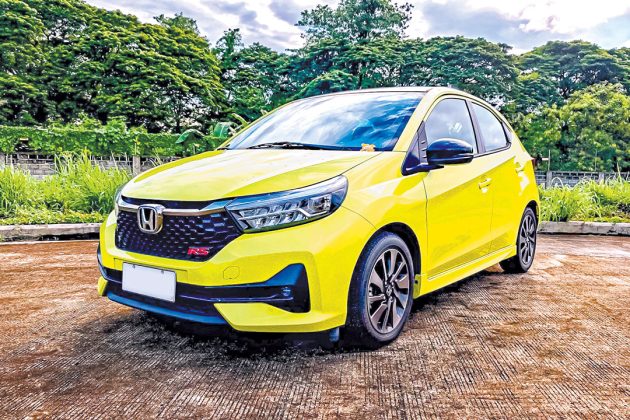
- •The current Brio RS is a heavily facelifted version of the present generation and retains a sporty exterior with RS-specific styling details.
- •Its cabin is basic but practical, and it can carry four adults, a toddler, a stroller, and duffle bags despite its small size.
- •The model uses a 1.2-liter i-VTEC engine with a CVT, produces 89hp and 110Nm, and does not include Honda Sensing features.
- •It delivered 10kpl in Metro Manila traffic and up to 15kpl on highways, but its P863,000 price puts it close to larger sedans with hybrid powertrains.
Why the Honda Brio RS still matters
In the recent past, basic mobility often meant a small hatchback. Today, that idea has changed. Buyers increasingly want larger vehicles, while also weighing sustainability and fuel efficiency. As a result, interest in the entry-level small car has shrunk sharply, even as more manufacturers offer bigger models at nearly the same price.
There are still a few small cars on the market, though many have moved toward electric power. A number of others continue to use internal combustion engines, including the Honda Brio RS. That makes the model something of a test case for a segment that now has to justify itself not just on price, but on packaging, efficiency, and everyday usability.
The Brio RS has not changed much across two generations, with the current version being a heavily facelifted and updated iteration of the present generation. That is not necessarily a drawback, given that the Brio remains a good-looking hatchback. It has sculpted side lines and a sporty front fascia. The rear is clean and simple, while the top-of-the-line RS version adds a rear spoiler and side skirts that complete the look.
One notable detail is the rear window wiper, something not all brands include anymore. It is a reminder that Honda still values rear visibility at this price point. The Electric Lime Metallic color, described as tennis ball yellow, does not look as good in person as it does in photos.
Inside, the Brio RS is basic in every respect. It includes only what is needed and nothing more. Apple CarPlay and Android Auto are available, but the USB port for connecting a phone is located inside the glove compartment, which makes the setup feel like an afterthought and leaves an unsightly cable running out of the compartment toward the device. Other features include digital climate control and steering wheel controls.
Space is one of the Brio’s strengths. Despite being a small hatchback, the cabin is more than decent in size. It can comfortably carry four adults and a toddler, along with a stroller and duffle bags in the trunk. That is impressive for a vehicle of this size, and it helps explain why small cars can still make sense for buyers who need a compact footprint without giving up everyday practicality.
The Brio RS is powered by a 1.2-liter i-VTEC four-cylinder gasoline engine that produces 89hp and 110Nm of torque. Power is sent to the front wheels through a CVT. The Brio RS does not include Honda Sensing features, but it does have basic safety equipment such as ABS and airbags.
Driving is where the Brio makes a strong case for itself. Honda has long emphasized that its cars should be engaging to drive, and the front-wheel-drive Brio fits that description. The CVT is among the better examples in the segment, delivering smooth operation and brisk acceleration. One missing feature is a manual mode. The absence of a manual transmission can be forgiven, but the Brio RS would benefit from paddle shifters.
Even so, the car makes up for it in handling. The steering is surprisingly well weighted and full of feel, and the chassis and suspension work together well enough to let the Brio be driven confidently through corners. The ride has some harshness, though not to an excessive degree, which is understandable given the need to strengthen the underchassis for rough roads.
The 1.2-liter engine also performs well. It has more than enough power even with four passengers and cargo. It is not fast, but it is adequate and very fuel-efficient. During one two-hour stretch of Metro Manila gridlock, it still recorded an impressive 10kpl, while highway driving can yield as much as 15kpl. Although that is not on par with hybrid efficiency, it is strong for a simple internal combustion engine.
The question remains: does the Brio RS still have a market, and is it attractive enough for today’s motorist? The answer is yes and no. For buyers who want a fun, simple, and well-equipped small car, the Brio RS is among the best in the group. However, at P863,000, it is priced close to larger sedans, some of which offer hybrid powertrains and more features.
Ultimately, it depends on what the buyer wants and needs. But as a basic mobility option with a touch of Honda character, the Brio RS remains a fun, no-compromise point-A-to-point-B choice.
