HMRC Sent 81,172 Crypto Tax Warning Letters in 2025/26, Nearly Tripling the 2023/24 Volume
Key Takeaways
- •HMRC issued 81,172 crypto tax warning letters in 2025/26, up 25% from roughly 65,000 the previous year and nearly triple the 27,714 recorded in 2023/24.
- •The nudge letters give taxpayers the option to voluntarily disclose unpaid tax before HMRC opens a formal investigation, and the campaign draws on UK customer records obtained from crypto exchanges, including Coinbase data covering 2019 to 2021.
- •The Capital Gains Tax annual exempt amount was cut to £3,000 from April 2024, down from £6,000 in 2023/24 and £12,300 before that, exposing more everyday crypto holders to reporting obligations.
- •HMRC treats selling tokens, swapping one token for another, spending crypto on goods or services, and gifting tokens to anyone other than a spouse or civil partner as taxable disposals.
- •Under HMRC's Cryptoasset Reporting Framework, UK crypto service providers must collect and report user and transaction data for 2026 activity, with the first reports due between 1 January 2027 and 31 May 2027 and penalties of up to £300 per user for failures.
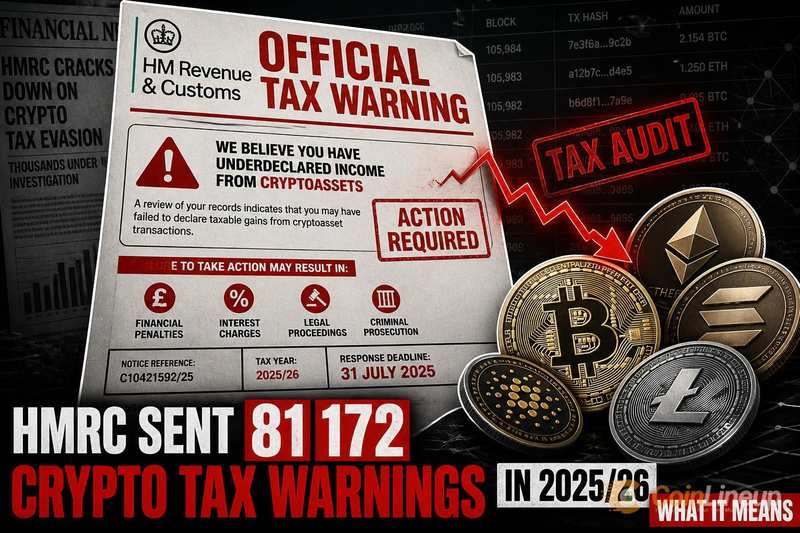
HMRC sent 81,172 crypto tax warning letters in the 2025/26 financial year, a sharp escalation in the UK tax authority's push to bring digital asset investors into compliance and a signal that undeclared crypto gains are drawing far closer scrutiny than before.
What the 81,172 HMRC warnings show
The tax authority issued 81,172 warning letters to crypto investors in 2025/26, cautioning recipients that they may owe unpaid tax on their holdings. The so-called nudge letters give taxpayers the option to disclose voluntarily before HMRC opens a formal investigation.
The figure marks a steep climb from earlier years. Accountancy firm UHY Hacker Young says HMRC sent about 81,000 letters over the last 12 months, up 25% from roughly 65,000 the previous year, based on figures it obtained. The baseline just two years earlier was far lower, with 27,714 letters recorded in 2023/24 — meaning the annual volume of warnings has nearly tripled across the period.
Nudge letters are a long-established HMRC tactic, previously aimed at undeclared offshore income and gains, and the authority has already obtained UK customer records from crypto exchanges — including Coinbase, which provided data covering 2019 to 2021 after an information notice — giving its outreach a documentary basis rather than guesswork.
Why HMRC is tightening its focus on crypto reporting
A warning campaign at this scale signals that HMRC views crypto reporting gaps as material rather than marginal. The outreach reflects stronger enforcement intent rather than a routine market update, and it arrives as digital asset ownership has spread across UK households.
The stakes for investors are concrete. Crypto disposals fall under Capital Gains Tax, and the tax-free annual exempt amount was cut to £3,000 from April 2024 — down from £6,000 in 2023/24 and £12,300 before that — which means far more everyday holders can have reportable disposals on activity they assumed was below the threshold.
Part of the reason so many investors are exposed is that HMRC treats a wide range of routine crypto actions as taxable disposals. According to the agency's cryptoassets manual, these include selling tokens for money, swapping one token for another, spending crypto on goods or services, and gifting tokens to anyone other than a spouse or civil partner.
The pressure is set to intensify as new reporting infrastructure comes online. HMRC's Cryptoasset Reporting Framework requires UK crypto service providers to collect user and transaction data, with the first report covering activity from 1 January 2026 to 31 December 2026 and due between 1 January 2027 and 31 May 2027, per HMRC guidance. Failures under the framework can attract penalties of up to £300 per user.
The enforcement drive fits a broader pattern of regulators tightening crypto oversight, echoing moves abroad such as BitGo Korea securing virtual asset service provider (VASP) registration ahead of tougher rules. Data-sharing frameworks like CARF — the Cryptoasset Reporting Framework developed by the OECD, which more than 60 jurisdictions have committed to implementing with exchanges beginning in 2027 — give tax authorities visibility they previously lacked.
What UK crypto investors should take from the warning surge
For anyone holding or trading crypto in the UK, the surge underscores the value of accurate recordkeeping across every disposal, including crypto-to-crypto swaps that many investors overlook. Each taxable event needs a documented cost basis and disposal value.
Gains above the annual exempt amount are taxed at capital gains rates of 18% for basic-rate taxpayers and 24% for higher earners on most assets, including crypto, following the October 2024 Budget increase to both bands.
Investors who filed in prior years may want to review whether earlier crypto activity was reported correctly, given that the nudge letters offer a window to disclose before a formal investigation begins; HMRC points voluntary disclosures to routes such as its Digital Disclosure Service. The choice to act sits with each taxpayer, and this coverage is informational rather than legal advice.
The timing also matters against a firmer market backdrop. Bitcoin traded at $74,801, with the Fear & Greed Index at 72, or Greed — conditions under which realized gains, and the tax bills attached to them, tend to grow. Wider enforcement themes are visible elsewhere as well, from US market-rule debates to high-profile fraud prosecutions.
Disclaimer: This article is for informational purposes only and does not constitute financial or investment advice. Cryptocurrency and digital asset markets carry significant risk. Always do your own research before making decisions.

