Retired three-star general and Sen. Angus King warn Trump's military strategy could embolden Russia and China
Key Takeaways
- •Retired Lt. Gen. Mark Hertling and independent Sen. Angus King published a joint essay in The New York Times warning that the Trump administration's military strategy could embolden Russia and China.
- •The authors argued that reduced U.S. support for Ukraine and troop reductions in Germany and Eastern Europe may convince Vladimir Putin that Washington will not defend allies if aggression extends beyond Ukraine.
- •They claimed the roughly seven-month war with Iran depleted U.S. munitions stockpiles and exposed the vulnerability of American regional bases, giving Putin and Xi Jinping insight into U.S. military limitations.
- •The essay pointed to intensified Russian provocations, including drones over Romania, sabotage operations in Germany, and missiles entering Polish airspace, as heightening the risk of a NATO confrontation.
- •Hertling and King urged the administration to renew support for Ukraine, enforce sanctions against Russia more rigorously, and reverse American troop withdrawals from Eastern Europe.
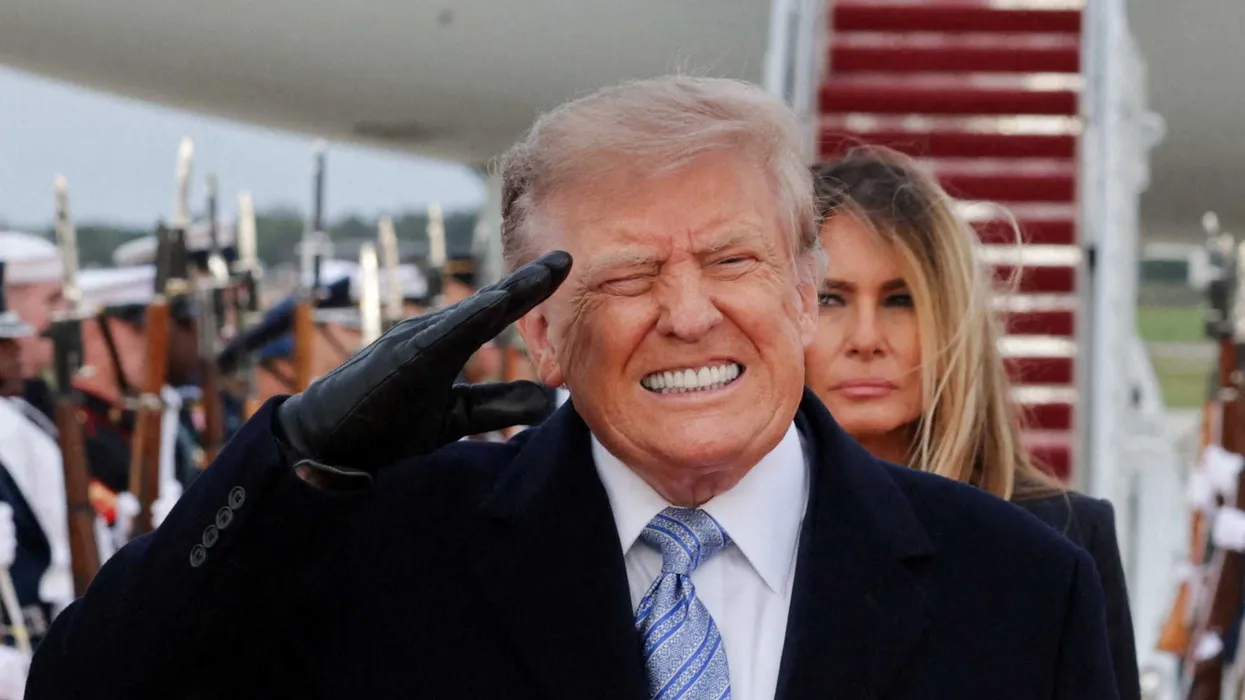
A retired three-star Army general and an independent U.S. senator are warning that President Donald Trump's military strategy could embolden Russia and China and leave the United States and its NATO allies facing greater risk.
In a joint guest essay published Monday in The New York Times, retired Lt. Gen. Mark Hertling and Sen. Angus King of Maine argued that the Trump administration has eroded America's credibility through its "inexplicable abandonment of the strategy." Deterrence, the two authors wrote, rests on two pillars: having the military capability to respond to hostile aggression, and convincing adversaries that Washington is prepared to use it. Trump's approach, particularly regarding Iran, has left the United States exposed, they argued.
The essay points to a pattern of intensified Russian provocation across NATO territory, including drones flying over Romania, sabotage operations in Germany, and missiles entering Polish airspace. Such incidents carry particular sensitivity inside the alliance, whose founding treaty commits members to treat an armed attack against one ally as an attack against all. These incidents, the authors wrote, have heightened the danger of a confrontation involving the alliance.
Hertling, a former commander of U.S. Army forces in Europe, and King, who sits on the Senate Armed Services and Intelligence committees, cited the administration's reduced support for Ukraine amid the ongoing Russian conflict as evidence of declining American resolve. They also criticized the reduction of U.S. troop levels in Germany and the curtailment of rotational deployments in Eastern Europe, arguing that such moves could convince Russian President Vladimir Putin that Washington will not stand behind its allies if he extends aggression beyond Ukraine.
The war with Iran, they wrote, has exposed a different weakness. The depletion of U.S. munitions stockpiles after roughly seven months of fighting, combined with the vulnerability of American regional bases to attack, has revealed shortcomings to U.S. adversaries. Stockpile levels are widely treated as a barometer of military readiness because replenishment depends on defense production capacity that cannot be restored quickly. In their words, Iran has given Putin and Chinese President Xi Jinping a "tutorial in our tactics and the limitations of our military power." The authors added that Trump has largely failed to achieve his military objectives in the conflict.
They also pointed to last year's 52-day bombing campaign against Houthi forces in Yemen, which they said has done little to eliminate the group's ability to threaten shipping through the Red Sea.
Taken together, the authors warn, these factors could lead adversaries to conclude that the United States lacks the resources or the resolve to sustain a prolonged war — a judgment they say carries greater weight given that the military capabilities of Russia and China far exceed those of Iran.
Hertling and King urged the administration to renew support for Ukraine, enforce sanctions against Russia more rigorously, and reverse American troop withdrawals from Eastern Europe. They also called on Trump to stop undermining the United States' longstanding alliances with Europe. Those prescriptions offer readers concrete signposts to watch: the level of U.S. military aid to Ukraine, the rigor of Russia sanctions enforcement, and the scale of American troop deployments in Europe are all areas where shifts in administration practice would speak directly to the concerns raised in the essay.
Failing to restore credible deterrence, they argued, could carry severe consequences. Abandoning Ukraine, they wrote, sends a message that is "closer to an invitation" to further aggression. The two concluded that the administration's emphasis on "lethality and testosterone" has not offset what they view as damaging military and diplomatic decisions.

