Retired Gen. Mark Hertling Has a Theory About Who Damaged Eisenhower's WWII Globe in Hegseth's Office
Key Takeaways
- •The damaged globe was one of the World War II artifacts used by Dwight D. Eisenhower.
- •The Washington Post reported that Hegseth wanted the globe displayed in his office for visitors.
- •Hegseth’s staff reportedly moved the globe themselves instead of relying on trained curators.
- •Retired Gen. Mark Hertling said the incident demonstrated careless handling of an important historical artifact.
- •Hertling speculated that lieutenant colonels in Hegseth’s outer office may have carried out the move.
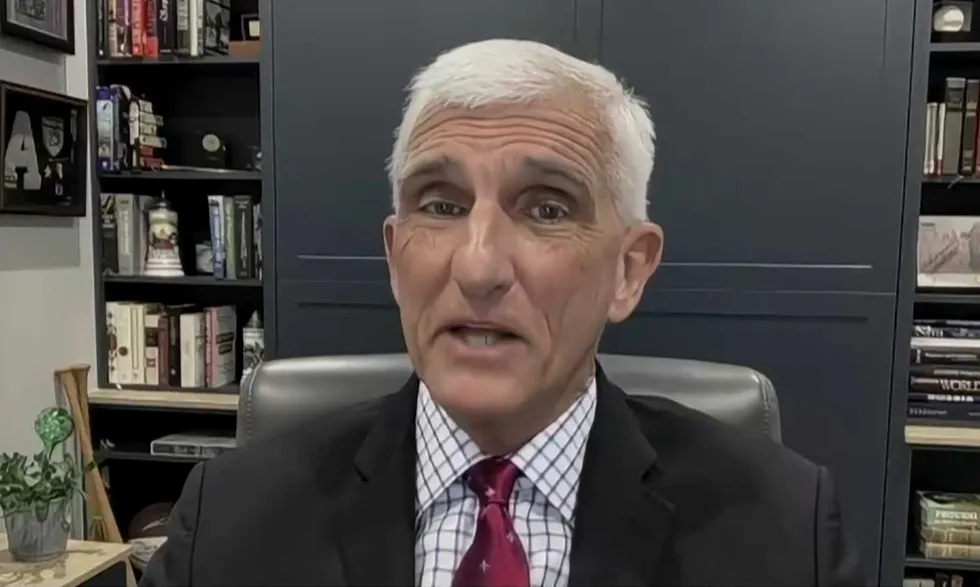
Retired Gen. Mark Hertling has a guess about who was moving the historic globe, and he shared it on Thursday's episode of The Bulwark's "Command Post" podcast.
Speaking with The Bulwark's Ben Parker, Hertling reacted to reports that Secretary of Defense Pete Hegseth's staff broke one of the World War II globes used by Gen. and President Dwight D. Eisenhower. According to The Washington Post, Hegseth decided in February that he wanted one of the Eisenhower globes in his office to show off to guests. Instead of waiting for trained curators, who are known for the deliberate process of handling priceless artifacts, the staff attempted to move it themselves. The result was not merely a scratch, but a large hole in Antarctica.
The globes date to World War II, when Eisenhower commanded Allied forces in Europe before going on to serve two terms as president. Artifacts that have survived roughly 80 years are precisely the kind that institutions entrust to trained curatorial staff, because mishandling can inflict damage that is difficult or impossible to reverse.
"It's been safe in the Pentagon for 80 years but didn't last one day with Pete Hegseth before they broke it," Parker joked.
Hertling called the episode careless and stressed the artifact's importance.
"It's careless and this is a historical and important artifact," he said. "It's something that I think would be, certainly if it was in the secretary of defense's office he could point to if his visitors came and said, this was President Gen. Eisenhower's globe during World War II. And it would be an oh, wow, moment for anyone who saw it. But again, these kinds of artifacts are taken care of by historians. Great care is taken when you move those."
Hertling recounted a similar experience of his own, though nothing ended up broken. While working in Europe at the Noncommissioned Officer Academy (NCOA), he discovered desks that Gen. George Patton had used, as well as one used by German Field Marshal Erwin Rommel. A high-level official in the United States decided they wanted one of the desks for their own office. Hertling said he and everyone in his office did whatever they could to put barriers in the way, even getting the German government involved on the grounds that the transfer would amount to raiding its historic artifacts. In the end, the official forgot about the request or moved on. Still, he noted, transporting something so valuable across the world only to leave it in someone's office was probably not the best way to preserve an artifact. The anecdote illustrates the institutional gatekeeping that normally protects such items — a layer of defense that, per The Washington Post's account, was skipped when the globe was moved.
As for the globe, Hertling offered his own guess about who carried out the move, name-checking Kalshi — the prediction-market platform where users trade contracts on real-world outcomes — as the place he might put his wager.
"I can probably bet that the guys who were told to go move it were a couple of lieutenant colonels in Hegseth's outer office who are doing nothing but posting trash on X all day long and attacking people," he said. "I bet it's the same guy. I'm going to see if Kalshi would take me up on that bet."
Parker, meanwhile, trailed off mid-thought while describing what he viewed as "the symbolism of Hegseth destroying a piece of military history simply to decorate his office" consulting the people whose job it is to handle such items with care.
Hertling drew a parallel to President Donald Trump tearing down the East Wing of the White House, the giant arch being built, and the removal of historic cherry blossoms. These kinds of symbols, he explained, are part of the history and tradition of the United States, and they are worth looking back on.
"You want to portray the standards, first of all," Hertling added. "You want to portray the professionalism of the force, but you also want to use examples of others that used the military in the right way. Who lived by the values, who did what was right for the country, who stood up for the Constitution."
This article is based on reporting from Alternet.

