Ethics Watchdogs Scrutinize Hegseth's Defense Policy Board Appointments Over Defense Industry Ties
Key Takeaways
- •The Defense Policy Board provides the defense secretary with outside expertise and grants members security clearances along with access to nonpublic briefings on Pentagon programs and procurement plans.
- •Newly appointed board members Marc Andreessen and Blake Masters have financial ties to defense contractors through investments connected to Donald Trump Jr.'s fund, 1789 Capital.
- •Andreessen Horowitz and 1789 Capital co-invest in major defense contractors including Anduril Industries and SpaceX, both of which have received billions in federal contracts during Trump's second term.
- •Ethics advocates warn that conflict-of-interest rules under the Federal Advisory Committee Act can be weakened by waivers and disclosure gaps, especially when financial interests run through venture funds rather than direct employment.
- •Approximately half of the current board's members come from the defense industry and maintain active ties to defense contractors, drawing comparisons to conflict-of-interest concerns raised during the George W. Bush administration.
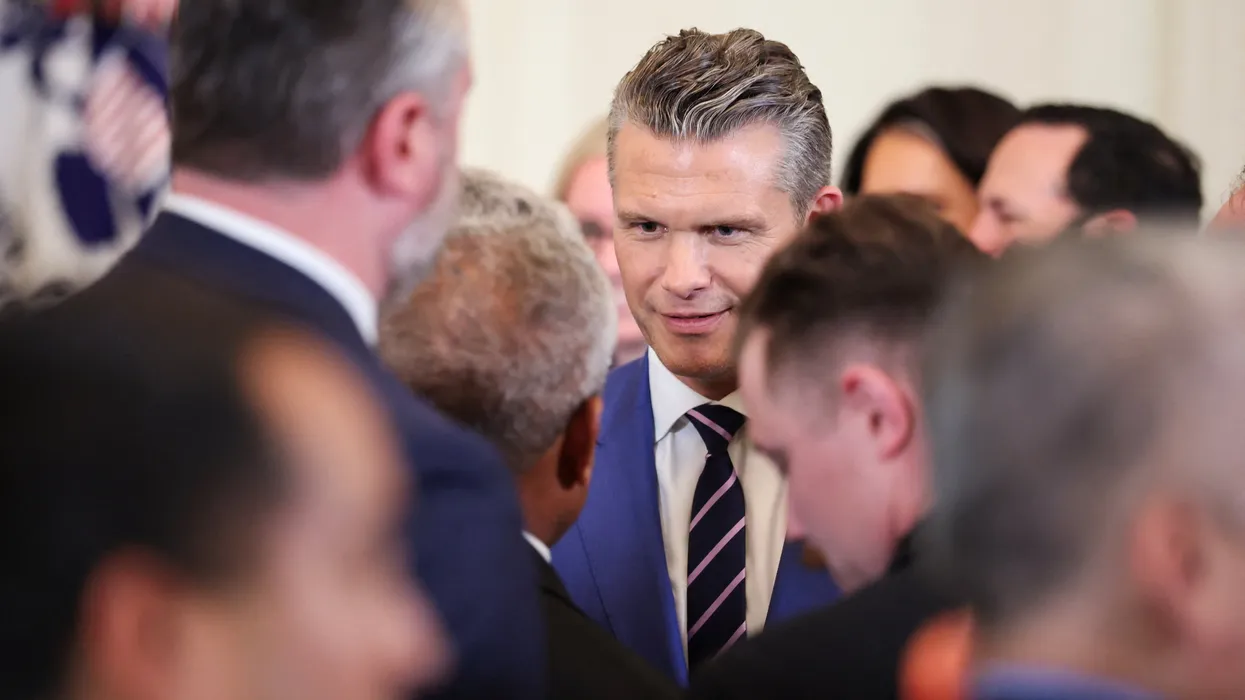
Government ethics watchdogs are raising alarms over Defense Secretary Pete Hegseth's latest appointments to the Pentagon's Defense Policy Board, warning that several new members hold direct financial stakes in the defense industry they are now tasked with advising on.
The Defense Policy Board is a federally chartered advisory panel that provides the defense secretary with outside expertise on strategic priorities, technology trends, and force posture. Its members hold security clearances and receive nonpublic briefings on Pentagon programs and procurement plans — access that ethics experts say heightens the risk when members are simultaneously invested in companies competing for defense contracts.
Among the newly appointed board members are venture capitalist Marc Andreessen and former Republican Senate candidate Blake Masters, both of whom have ties to companies that overlap with Donald Trump Jr.'s investment fund, 1789 Capital, which holds major investments in military and space technology, The Guardian reported.
Andreessen's venture capital firm, Andreessen Horowitz (a16z), co-invests alongside 1789 Capital in at least three major defense contractors, including autonomous weapons manufacturer Anduril Industries and SpaceX. Masters, meanwhile, sits on three boards connected to 1789 Capital through blank-check companies tied to the fund's co-founder.
Both men now serve on a board that advises the defense secretary on strategy and the defense-technology sector — the same sector where their financial interests, and those of the president's son, are deeply embedded. Their appointments reflect a broader convergence of Silicon Valley venture capital and the Pentagon, as the Defense Department increasingly turns to commercial tech firms for capabilities like artificial intelligence, autonomous systems, and satellite networks that were traditionally developed by established prime contractors.
"A lot of the people appointed to them are seeking government business — specifically seeking business with the agency they're serving," said Scott Amey, general counsel at the Project on Government Oversight, which tracks conflicts of interest on federal advisory panels. "So you worry, are some of these people here to raid the cupboards and learn as much as they can to give a competitive advantage to their employer or clients? Or are they trying to push contracts in a way that would benefit an employer or client?"
Amey emphasized that advisory committee members are often actively pursuing government contracts with the very agencies they serve.
Companies jointly backed by a16z and 1789 Capital have already collected billions in federal contracts and loans since the start of Trump's second term. Anduril's federal funding surged from roughly $760 million to approximately $1.25 billion in comparable periods before and after the transition, while SpaceX has secured contracts worth billions more, including missile-tracking satellite work tied to Trump's "Golden Dome" initiative.
"About half of this board comes from the defense industry and they're actively working in the defense industry," said Nick Cleveland-Stout of the Quincy Institute for Responsible Statecraft. Cleveland-Stout drew a comparison to the board under President George W. Bush, when a third of members maintained active ties to defense contractors.
In the lead-up to the 2003 Iraq invasion, an investigation found that at least nine of the board's 30 members held ties to contractors with billions in Pentagon business, and its chairman ultimately resigned amid conflict-of-interest allegations.
Federal advisory board members are subject to conflict-of-interest rules under the Federal Advisory Committee Act, but ethics advocates have long noted that waivers and disclosure gaps can blunt their effectiveness, particularly when members' financial entanglements run through venture funds or investment vehicles rather than direct employment.
The Department of Defense did not respond to requests for comment on the new appointments. Andreessen Horowitz also did not respond to inquiries.

