Analysts Warn Rushed Impeachments of Trump Officials Could Backfire on Democrats
Key Takeaways
- •Hakeem Jeffries has publicly supported impeaching Defense Secretary Pete Hegseth after Democrats regain control of the House.
- •Removing an impeached official requires a two-thirds Senate vote, meaning Democrats would need 11 Republican votes to remove Hegseth.
- •The House has impeached only one Cabinet secretary, William Belknap, whose Senate trial ended in acquittal after his resignation in 1876.
- •Critics warn that multiple unsuccessful impeachment efforts could make Democrats appear focused on political retaliation rather than voters’ financial concerns.
- •Hegseth’s Pentagon tenure has included the removal, replacement, or early retirement of several senior military officers, including the chairman of the Joint Chiefs and other top commanders.
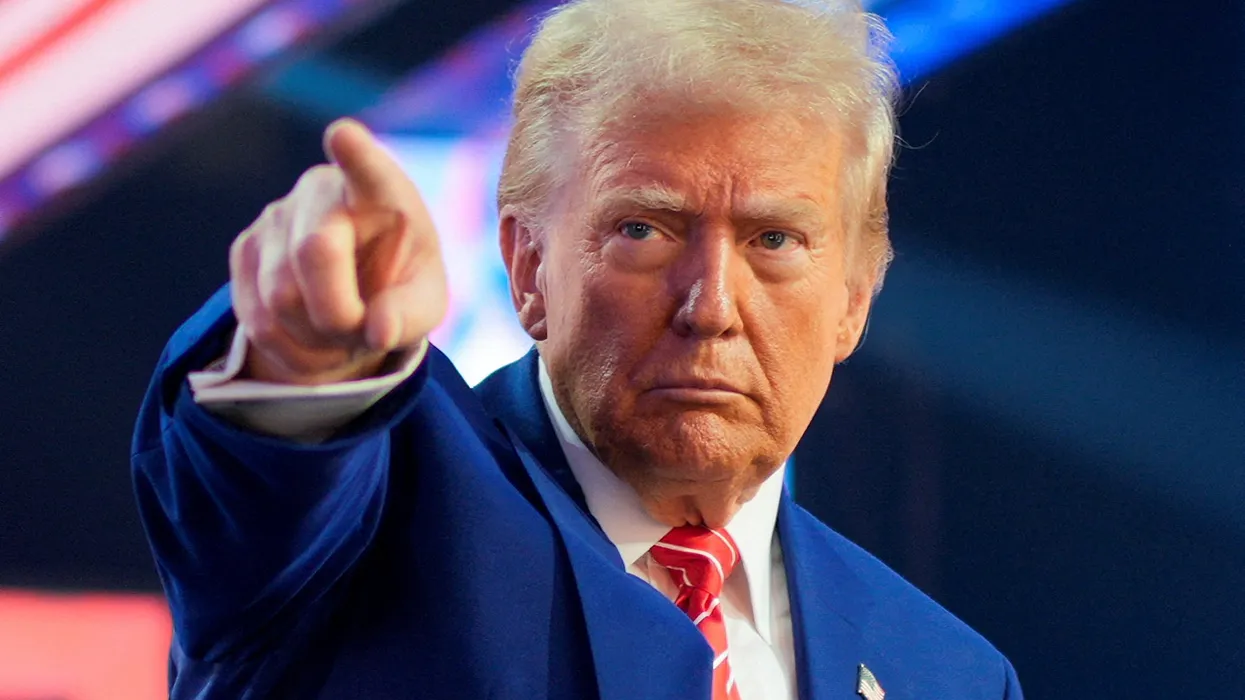
As Democrats prepare to reclaim control of Congress, a growing movement within the party is pushing to impeach President Donald Trump's top officials — beginning with Secretary of Defense Pete Hegseth. Commentators, however, are warning that a rapid series of impeachment attempts could turn into a political trap for the incoming majority.
Writing in The New Yorker on Sunday, columnist Ruth Marcus recounted the run-up to the vote. "The morning of the impeachment vote, Hegseth held a news conference, his first in six months, portraying the attempt to oust him as an assault on the President and the troops," she reported. "'This is not patriotism—this is sabotage,' he said. After the vote, through a spokesman, Hegseth declared 'total victory,' while Trump lauded the 'EXONERATION of a Great American Patriot.'"
Marcus added that such endorsements from Trump tend to be short-lived. "But, as anyone who has watched Trump understands, his loud professions of support are good for that moment only—a particular risk for Hegseth given the unpopularity of the war," she wrote.
Democrats, she noted, seem in no mood to back off once they take over in January — "if they still have Hegseth to kick around then." Hakeem Jeffries, the incoming Speaker of the House, has declared himself a "hard yes" on Hegseth's impeachment. A Cabinet impeachment has almost no historical precedent: the only Cabinet secretary the House has ever impeached was Secretary of War William Belknap, in 1876, who resigned, though the Senate still held a trial and voted to acquit.
Marcus nevertheless cautioned that impeachments could politically backfire. "Come January, oversight and its offspring, accountability, will be essential," she wrote. "Democrats will have a chance—despite how much Trump will resist—to document his Administration's cruelty, incompetence, and corruption, not just for the historical record but to understand how such behavior can be stopped."
"The range of seeming malfeasance is staggering: granting pay-to-play pardons, issuing no-bid contracts, exploiting government service to amass enormous personal wealth," she continued. "Then there are questions of policy, such as the Administration's treatment of immigrant detainees and its dealings with Nvidia."
"Democrats must exercise their power with caution," Marcus argued. "For the new majority, the next two years will entail navigating the tension between holding the Trump Administration accountable for its actions and delivering tangible results for voters."
The arithmetic, in her view, is unfavorable: "In the case of impeaching Hegseth, the process is unlikely to succeed. Even with the Democrats' fifty-six-seat Senate majority, removing him would require eleven Republican votes. Pursuing an effort destined to end in defeat could make the Democrats appear fixated on administering political payback rather than addressing voters' pressing financial concerns. The damage could be mitigated, though, if Hegseth is the only official whom they attempt to remove. Another failed impeachment of Trump would merely help him play the victim." The gap reflects the Constitution's design: a simple majority in the House is enough to impeach an official, but removal from office requires a two-thirds vote of the Senate in a trial that follows — a threshold that has never been reached for a Cabinet secretary. Trump is himself the only U.S. president the House has ever impeached twice, in 2019 and 2021, and the Senate acquitted him both times.
Hegseth has proven a historically unpopular leader at the Pentagon — especially within the building itself, where he has carried out mass purges of military officers. "Since January 2025," wrote Michael N. Schmitt, a law professor at New York University, in an essay for Just Security, a national security law and policy publication, earlier this month, "the Defense Department has removed, replaced, or forced the early retirement of a remarkable concentration of operationally experienced senior officers. Among them are the chairman of the Joint Chiefs, the chief of naval operations, the chief of staff of the Army, and the commander of U.S. Cyber Command, who concurrently serves as director of the National Security Agency. Most recently, Gen. Christopher Donahue, one of the most decorated and combat-experienced officers of his generation, has been forced out as commander of U.S. Army Europe and Africa and, in his NATO (North Atlantic Treaty Organization) role, as commander of Allied Land Command. Public explanations have been sparse and, to the extent they have been offered, largely general."

