GOP Insider Says Hegseth's Plan to Livestream Execution Reflects 'Insecurity and Imposter Syndrome'
Key Takeaways
- •Sofia Kinzinger, who served as communications director in President Trump's first administration, said Hegseth's decision to livestream an execution stems from insecurity, imposter syndrome, and a need to overcompensate.
- •The U.S. military plans to livestream the December 3 firing squad execution of Nidal Hasan, the former Army major sentenced to death in 2013 for killing 13 people and wounding more than 30 in the 2009 Fort Hood attack.
- •The execution would be the military's first of an American service member since 1961, its first use of a firing squad since World War II, and the first livestreamed execution in U.S. history.
- •The United States has not held a public execution since 1936, and the plan would place it among a small group of nations that still allow them, including Iran, Afghanistan, Somalia, and North Korea.
- •Hegseth defended the decision as showing serious consequences, while human rights professor Jon Yorke questioned whether safeguards would prevent children from watching, calling the move a return to medieval times.
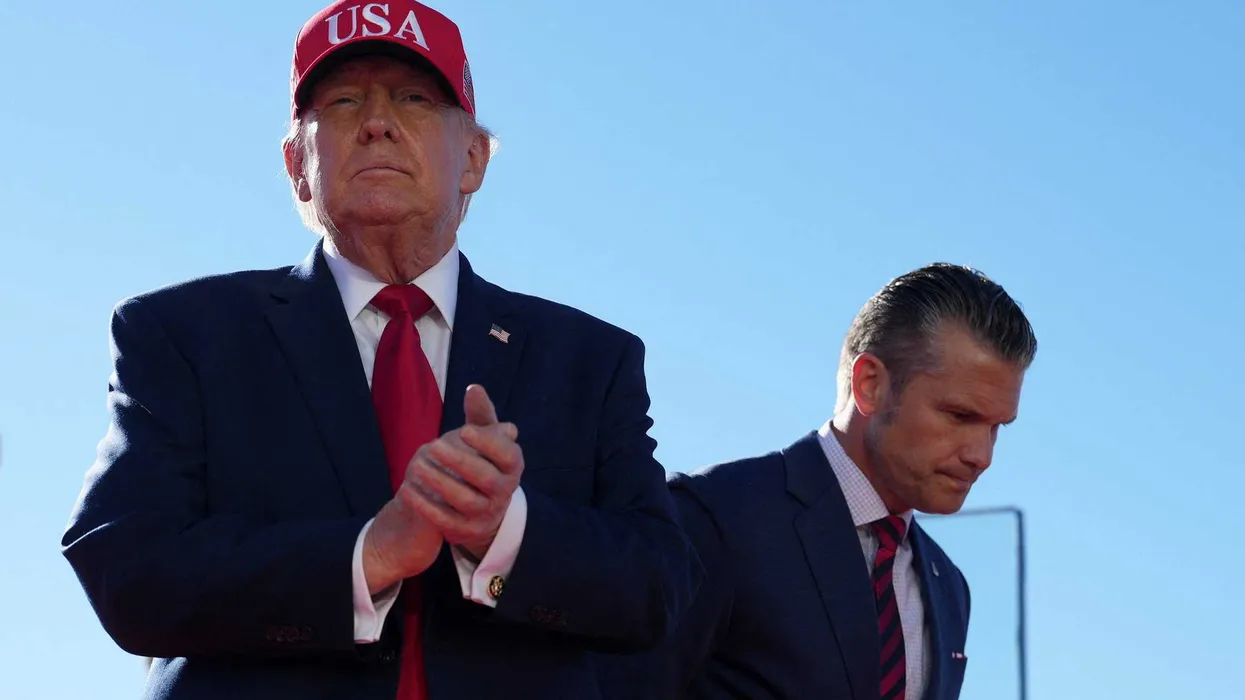
A longtime Republican insider who served in President Donald Trump's first administration accused Defense Secretary Pete Hegseth on Friday of acting out of "insecurity and imposter syndrome" in making his latest, what she called, "deeply unsettling" move.
Sofia Kinzinger, who served as communications director for the first Trump administration after years working throughout the GOP, said Hegseth's decision to livestream an execution stems from a need to "overcompensate."
Kinzinger was responding to a CBS report that the U.S. military plans to livestream the firing squad execution of Nidal Hasan, the former Army major convicted of killing 13 people and wounding more than 30 others in the November 5, 2009 attack at Fort Hood, a U.S. Army post in Texas. Hasan, who was sentenced to death by a military court-martial in 2013, is scheduled to face the firing squad on December 3. The execution will be the military's first of an American service member since 1961, when Army Private John Bennett was hanged at Fort Leavenworth, Kansas, and its first use of a firing squad since World War II. Firing squads have been exceptionally rare in the United States in recent decades; the method was used in 2025 for the first time in 15 years. The last firing squad execution before that was carried out in Utah in 2010. If Hegseth's plan goes through, it will be the country's first livestreamed execution. No American execution has ever been broadcast to the general public; the closest precedent came in 2001, when hundreds of survivors of the Oklahoma City bombing watched Timothy McVeigh's federal execution over a closed-circuit video feed.
"Absolutely surreal that this even crossed their minds," Kinzinger wrote in a post on X. "But perhaps not surprising when you consider how someone who knows deep down he's unfit for the job might overcompensate. Desperate to project control, prove how 'amazing' he is, and take credit for everything. Hence the need to livestream it all. Classic signs of insecurity and imposter syndrome. All while being completely oblivious to how deeply unsettling this is to so many Americans."
According to The Washington Post, the United States has not held a public execution in nearly a century. As the Post explains, "The hanging of Rainey Bethea in Kentucky in 1936 is widely considered the last high-profile public execution in the U.S... Bethea, who was black, was publicly hanged for rape, after he confessed to the rape and murder of a 70-year-old white woman, Lischia Edwards, although he was never charged with murder, according to the nonprofit Death Penalty Information Center, which monitors capital punishment[.] Up to 20,000 people were estimated to witness his death. An image from the scene shows a large crowd surrounding the gallows to watch, and reports from the time described a carnival atmosphere. Rachel Abbott, who witnessed it, told WKU Public Radio in 2016 she recalled watching it as a five year old and had nightmares about it years later. 'I still have tears running when I think of it,' she said." Executions in the United States were moved behind prison walls over the course of the 20th century, ending a practice that had once drawn crowds by the thousands.
While global data on public executions is sparse, the United States would join a small number of nations that still allow them, including Iran, Afghanistan, Somalia and North Korea.
Hegseth defended the decision, arguing "people need to understand that there's serious consequences for these types of things."
Experts have pushed back. Jon Yorke, a professor of human rights at Britain's Birmingham City University, questioned whether safeguards would be put in place to prevent children from watching. "My immediate reaction is this has taken us back to medieval times," he said. Yorke's concern echoes the Post's account of 1936, in which observers described a carnival atmosphere and a woman who attended as a five-year-old recalled years of nightmares.

