US Defense Secretary Hegseth Restricts Certain Military Ties With Canada: Washington Post
Key Takeaways
- •US Defense Secretary Pete Hegseth issued a directive that restricts certain military engagements with Canada, as reported by The Washington Post.
- •The details of the restrictions remain classified, but Pentagon sources confirmed that defense-intelligence sharing through NATO and NORAD will remain unaffected.
- •The move reflects ongoing US-Canada tensions driven by trade disputes and American pressure on Ottawa to meet NATO's 2%-of-GDP defense spending benchmark.
- •The directive narrows specific military engagements without amounting to a comprehensive withdrawal from continental defense cooperation.
- •Market pricing indicates a moderately lower probability that Hegseth will be removed as Secretary of Defense by the end of the year.
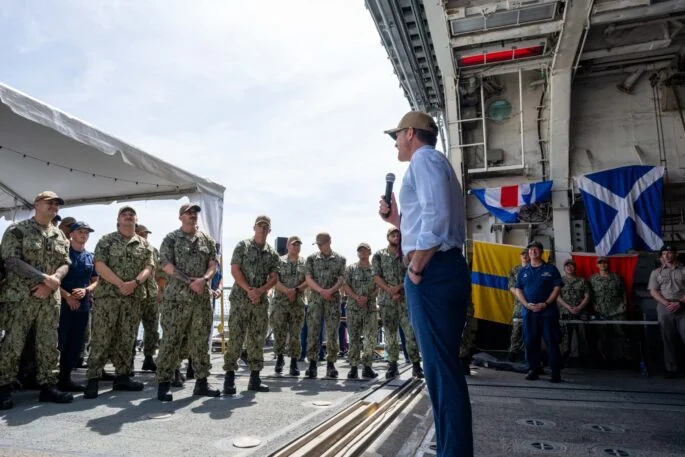
US Defense Secretary Pete Hegseth has issued a directive restricting certain military ties with Canada, The Washington Post reported. The move comes amid ongoing tensions between the Trump administration and Ottawa, which have been exacerbated by disputes over trade and defense spending. Canada is one of the United States' closest defense partners—a founding member of NATO, home to the world's longest international border with the US, and a regular coalition partner in alliance operations. Like other NATO members, Ottawa has faced sustained pressure from Washington to raise defense spending toward the alliance's 2%-of-GDP benchmark, a long-running friction point between the two governments.
The specifics of the restrictions remain classified. However, Pentagon sources have clarified that core defense-intelligence sharing through NATO and the North American Aerospace Defense Command (NORAD) will remain unaffected, indicating continuity in the two countries' longstanding cooperation frameworks. NORAD, established in 1958, is a bi-national US-Canada command responsible for aerospace warning and control over North America, and its day-to-day functioning depends on the continuous exchange of tracking and intelligence data between the two countries' air forces.
According to the report, the directive narrows specific military engagements rather than signaling a comprehensive withdrawal from continental defense cooperation.
The report also noted that market pricing suggests a moderate decrease in the likelihood of Hegseth's removal as Secretary of Defense by year-end.
Observers are expected to watch for official statements from the White House or further clarifications from the Pentagon regarding the scope and impact of the directive. Any significant changes in Hegseth's public profile or in President Trump's stance could further influence perceptions about his tenure. Developments in US-Canada diplomatic relations may also play a role in shaping future defense policies.

