CNN's Enten: Hegseth's Net Approval Sinks to Rumsfeld-Era Lows Amid Iran War
Key Takeaways
- •Pete Hegseth’s net approval rating has fallen to minus 25, matching Donald Rumsfeld’s rating before the 2006 midterms.
- •Hegseth’s approval was already minus 20 before the Iran war began, according to Harry Enten.
- •Independent voters rate Hegseth at minus 43, indicating that his unpopularity extends beyond Democratic voters.
- •The Iran war has a net approval rating of minus 23 and is described as a greater political drag than the Iraq War was in 2006.
- •Speaker Mike Johnson sent House members home early after Rep. Thomas Massie introduced Articles of Impeachment against Hegseth.
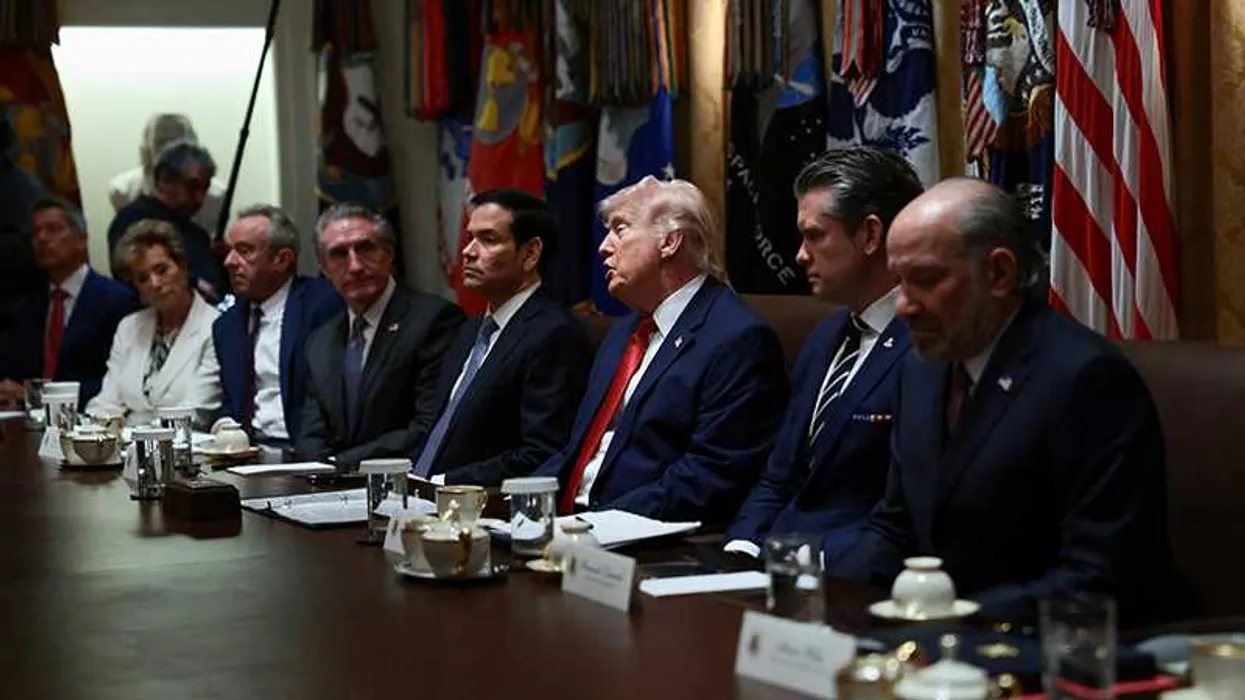
CNN data analyst Harry Enten on Thursday laid out the extent of the likability problem facing one of President Donald Trump's most senior officials: Defense Secretary Pete Hegseth, whose net approval rating has fallen to levels last recorded when then-Defense Secretary Donald Rumsfeld led the Pentagon during the unpopular Iraq war ahead of the 2006 midterms.
Speaking during a CNN appearance, Enten said voters and defense insiders view Hegseth as placing his own culture-war politics, personal loyalty, and public spectacle above core military priorities such as readiness, competent management, and transparent accountability. As the Iran war grinds on and more evidence emerges about how poorly the United States is faring, Enten suggested Hegseth could ultimately be left holding the bag.
"You know, we start off the title slide asking who hates Hegseth? And basically everyone," Enten said. "If you're the American public, no wonder, no wonder the speaker sent everybody home. Because just take a look here. Hegseth net approval: You know, back before the Iran war started back in January of 2026, right? It was minus nine points. You think that's tough?"
Net approval subtracts the share of Americans who disapprove of a political figure from the share who approve, so a negative reading means unfavorable views outnumber favorable ones. Hegseth now stands at minus 25 — precisely the level Rumsfeld reached just before the 2006 election, when Democrats ended Republican control of government. Rumsfeld was ultimately fired by then-President George W. Bush, with the announcement coming the day after the midterms, and his rating later sank to an all-time low of -38 points, a floor Hegseth has not yet hit.
Enten noted that Hegseth's weak numbers also reflect the unpopularity of the Iran war itself and the controversy over his treatment of senior leaders. Even before the war began, Hegseth was carrying a -20 point score, Enten said, and his standing is not merely a Democratic phenomenon: he is underwater with Independents — voters unaligned with either major party — by -43 points.
The political sensitivity of those figures was on display Wednesday, when Speaker Mike Johnson (R-La.) sent House members home early after Rep. Thomas Massie (R-Ky.) introduced Articles of Impeachment against the secretary.
"No wonder Speaker Johnson did not want his Republican representatives to actually have to vote on this, because if they voted with the president, they'd be voting against the American public," Enten said. "Because the bottom line is, Pete Hegseth is hated by basically everyone."
On The Bulwark podcast, ex-Republicans Tim Miller and Bill Kristol recalled that ahead of the 2006 election, Bush was desperate to dismiss Rumsfeld but held off, saying he did not want to hand Democrats ammunition. Both argued that was a mistake.
"So, you see this comparison between Pete Hegseth and Donald Rumsfeld, right? And you say, okay, how are the wars actually being judged?" Enten said. "And this, to me, is probably one of the most dangerous signals for Republicans as they head into this midterm election, because it was the Iraq War that was part of the reason that Republicans lost those House and Senate majorities."
The scale of that exposure is set by the calendar: midterms, held halfway through a president's term, put every House seat and roughly one-third of the Senate on the ballot, and the party that wins a chamber's majority controls it for the next two years.
There is one notable difference between the two eras: the Iraq War was not especially unpopular in September 2006, while the Iran war currently registers at -23 points — nearly identical to Hegseth's own net approval, which Enten put at between -23 and -25.
"Very similar to what Pete Hegseth's own net popularity rating is," Enten said. "The Iran war is actually a bigger drag, at least in the abstract, than the Iraq war was. And so you see this right here: You see Pete Hegseth's unpopularity."
He reiterated that this is why Republicans are eager to avoid answering for Hegseth.
"And again, I just say Republican representatives do not want to have to answer for Pete Hegseth or this war when it comes to the midterm election because if they do, you can say, 'see you later. Goodbye' to that House majority, for sure," Enten concluded. "And that Senate majority may be as well. It is not good news for Republicans when it comes to this war or Pete Hegseth individually."
The analysis was reported by Alternet.

