White House Adviser Kevin Hassett Signals Pause in Federal Reserve Rate Hikes Amid Dovish Outlook
Key Takeaways
- •White House Senior Adviser Kevin Hassett stated that current economic data may not justify further interest rate increases, signaling a dovish tilt in monetary policy discussions.
- •The Federal Reserve has held its benchmark rate unchanged at a target range of 3.50% to 3.75% following a rapid tightening cycle that started in 2022.
- •Prediction markets have reflected a diminishing probability of an additional rate hike occurring in 2026.
- •Hassett's public commentary on Fed policy breaks with the longstanding convention of administrations avoiding direct input on the central bank's independent rate-setting process.
- •Market participants are closely watching upcoming speeches by Fed Chair Jerome Powell, the next FOMC meeting, and the Summary of Economic Projections for further policy signals.
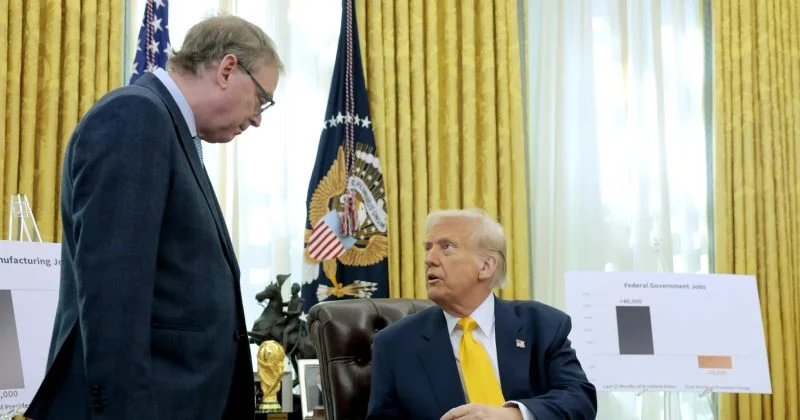
White House Senior Adviser Kevin Hassett indicated that current economic conditions make it difficult to justify further increases in interest rates, offering remarks that market participants have interpreted as reinforcing a dovish tilt in U.S. monetary policy discussions. The comments are notable given the longstanding norm of administrations avoiding direct commentary on the Federal Reserve's independent rate-setting process, a convention that has occasionally created tension when political and monetary priorities diverge.
Hassett, who serves as a senior economic adviser to the Trump administration and previously chaired the Council of Economic Advisers during Trump's first term, made the comments against the backdrop of ongoing deliberations over the Federal Reserve's policy trajectory in 2026. His public engagement with monetary policy matters is consistent with the administration's broader pattern of articulating its economic preferences, even as the Fed operates under its congressional dual mandate independently of executive branch direction.
The Federal Reserve's most recent decision left the benchmark federal funds rate unchanged, with the target range currently set at 3.50% to 3.75%. The rate has held at that level following a series of adjustments earlier in the cycle. For context, the federal funds rate sat near zero as recently as 2022 before the Fed embarked on one of the fastest tightening cycles in decades to combat inflation that reached four-decade highs.
Hassett's remarks align with a broader narrative that the central bank may be approaching a pause in its rate-hiking campaign. Current data on inflation and employment, key components of the Fed's dual mandate of price stability and maximum employment, may not provide sufficient justification for the Federal Open Market Committee (FOMC) to pursue additional aggressive rate increases.
Prediction market pricing has reflected a declining probability of a rate hike occurring in 2026, with YES odds for such an outcome diminishing in recent sessions.
The Federal Reserve's policy decisions are informed by a range of economic indicators, including the Consumer Price Index (CPI), the Personal Consumption Expenditures (PCE) price index, monthly employment reports from the Bureau of Labor Statistics, and GDP growth figures. The central bank's ongoing balance sheet reduction program, known as quantitative tightening, also factors into overall monetary conditions.
Market observers are now focused on upcoming Federal Reserve communications, including speeches by Federal Reserve Chair Jerome Powell and other FOMC members, as well as forthcoming economic data releases that could shift expectations. The next scheduled FOMC meeting will provide an additional opportunity for the committee to signal its policy intentions, accompanied by the Summary of Economic Projections, which outlines individual members' forecasts for growth, unemployment, inflation, and the appropriate path of the federal funds rate.
Any significant changes in labor market indicators or inflation readings in the coming weeks could alter the probability calculus for future rate adjustments, potentially influencing both equity and fixed-income market pricing.

