Sen. Maggie Hassan Demands Answers After Trump Diverts Secret Service Funds to White House Ballroom
Key Takeaways
- •Sen. Maggie Hassan is formally pressing the Secret Service to explain how redirected funding affects both its protective mission and its financial-crime investigations.
- •Approximately $415 million in Secret Service funds was diverted to the ballroom construction, nearly half of the structure's projected $927 million total cost.
- •At least $396 million appears to have been moved in June 2026 from a $1.17 billion Secret Service appropriation in the 2025 'One Big Beautiful Bill Act.'
- •Trump initially planned to finance the project entirely through donations, then turned to Congress by describing it as a 'military center' tied to White House national security.
- •Hassan also requested written correspondence between the Secret Service and the Office of Management and Budget regarding any advance notice or rationale for the fund diversions.
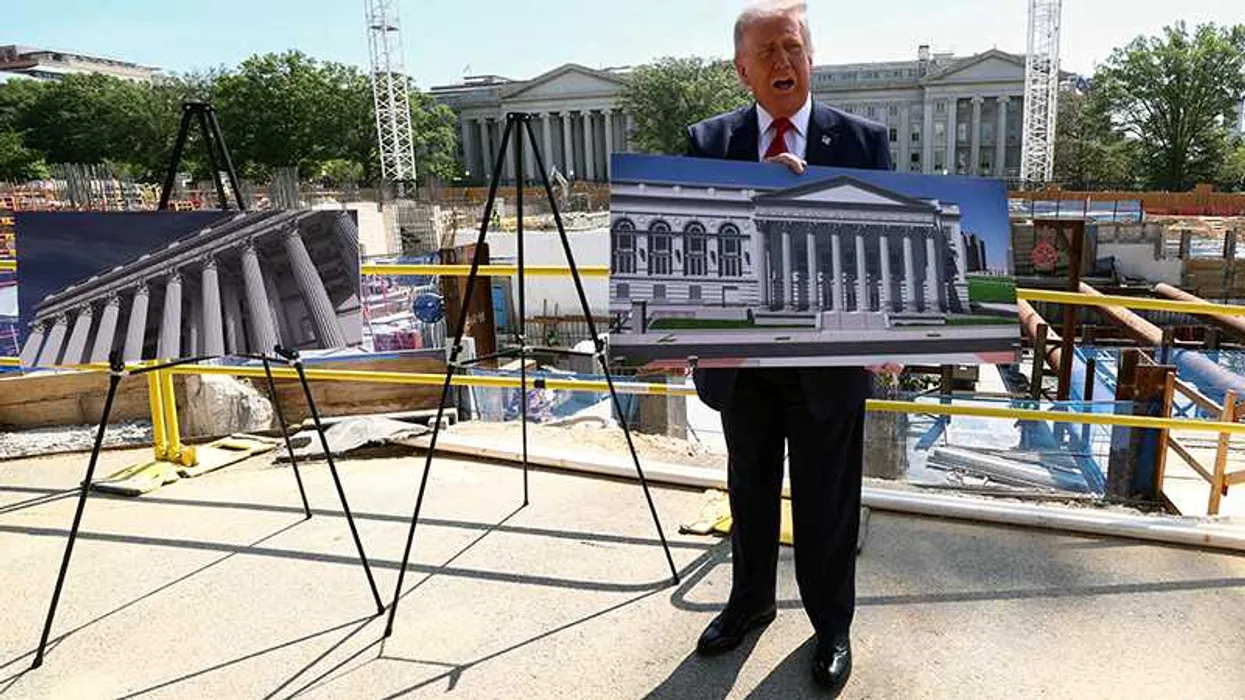
Sen. Maggie Hassan (R-N.H.) is pressing the U.S. Secret Service for specifics about its spending after President Donald Trump diverted funds from the agency to bankroll his White House ballroom project.
According to court filings and Trump's own personal statements, the president is renovating and expanding the presidential bunker that once sat beneath the East Wing of the White House. Trump bulldozed the East Wing late last year and has rushed to complete his preferred structure as a legal effort to stop the project works its way to the U.S. Supreme Court.
Trump initially pledged to fund the project entirely through donations, but he was unable to raise all of the necessary money. He then asked Congress for funds, claiming that the ballroom project is now a "military center" and part of the White House's national security. Trump was rushed to the bunker in 2020, when Black Lives Matter protests roughly two blocks away were making the Secret Service nervous. Trump maintains that he was not rushed to the bunker and was simply looking at it.
Congress has been unable to pass much legislation over the past two years, and the $1 billion in funding the House added to a budget bill was ultimately removed. Trump instead shifted approximately $351.6 million from U.S. Secret Service funds into White House security upgrades — and even that is not the full amount, according to the senator. Federal agencies spend money appropriated by Congress, and how those dollars are reallocated falls within Congress's oversight authority.
"I seek information on how the recent Secret Service funding diversions to the White House projects impact the ability of the Secret Service to carry out its essential responsibilities to protect the president as well as to safeguard the U.S. financial infrastructure," Hassan wrote.
That financial-infrastructure reference points to the agency's dual mission. Created in 1865 to combat currency counterfeiting, the Secret Service investigates financial crimes alongside its protective duties, which is why funding losses can reach beyond the president's security detail.
Roughly $927 million in total costs are expected for the structure. Citing a Washington Post report, the senator said that $415 million in Secret Service funds were diverted to the ballroom construction projects — a sum equal to nearly half of the projected price tag.
"At least $396 million in funding appears to have been redirected in June 2026 from a $1.17 billion appropriation for the Secret Service in the 2025 'One Big Beautiful Bill Act,'" her letter continued.
Hassan noted that the Secret Service was already raising concerns about the lack of resources it needs to function properly. She is requesting a specific accounting of the agency's budget and where the money has gone.
She further asked whether there have been terminations or disruptions of existing investigations as a result of the lost funding, and whether there have been reductions in personnel or hours for staff working on financial crimes. She also asked whether outside partners — including those at the state, federal, local, and even foreign government levels — have been affected.
In her two final requests for documents, Hassan asked the Secret Service to "explain whether the Secret Service received any advance notice from the Office of Management and Budget prior to the diversion of funds or a rationale for this action. If so, please describe these communications. Please provide copies of any written correspondence between the Secret Service and the Office of Management and Budget, as well as any other relevant White House offices, regarding the diversion of funds." The Office of Management and Budget is the executive-branch office that oversees the implementation of federal spending, which is why any pre-diversion communications between it and the agency are central to her inquiry.
Hassan's letter is a standard instrument of congressional oversight, and the next developments to watch are the Secret Service's response to her questions and how the Supreme Court challenge to the ballroom project proceeds.
Source: Alternet

