Two Recent Incidents Show Hardware Wallets Can Stay Secure While Users Lose Funds
Key Takeaways
- •Two recent incidents demonstrated that hardware wallets can remain technically uncompromised while attackers steal funds by targeting the user, companion software, or the transaction approval process rather than the device itself.
- •A hardware wallet signs whatever instruction it receives, so a user tricked into approving a fraudulent transaction experiences the same outcome as direct theft even though the private keys were never stolen.
- •The CISA identifies social engineering as the primary attack technique, which in crypto contexts includes fake support agents requesting recovery phrases, phishing sites that mirror legitimate wallet interfaces, and malicious token approvals.
- •Anyone who obtains a wallet's 12- or 24-word recovery phrase can recreate the wallet on any device and move funds without physical access to the original hardware, and no hardware feature protects a phrase surrendered voluntarily.
- •Recommended safeguards include never entering recovery phrases into any website, app, or support channel, verifying transaction details on the hardware wallet's own screen before signing, and obtaining software and firmware exclusively from official manufacturer sources.
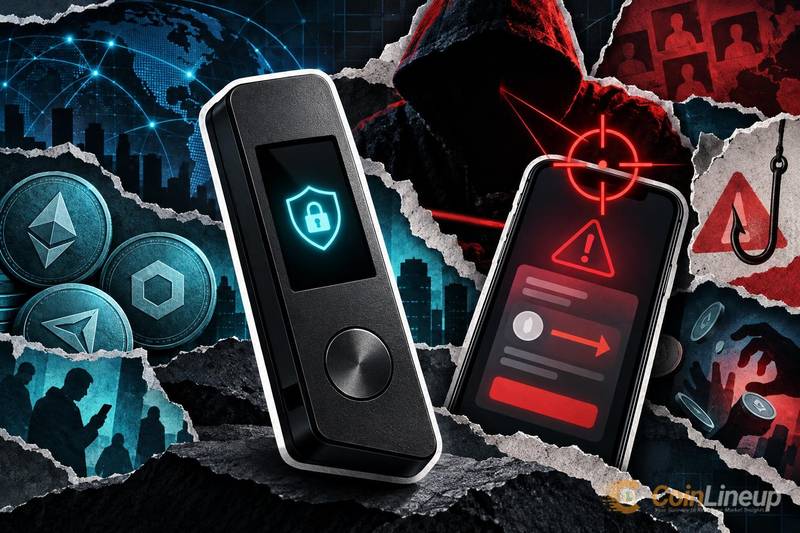
Two recent incidents involving cryptocurrency wallet users have underscored a persistent reality of crypto security: a hardware wallet can remain technically uncompromised even as an attacker walks away with the funds. In such cases, the weak point is rarely the device itself. More often, it is the person holding it, the software connected to it, or the transaction being approved through it.
What the Incidents Reveal About Hardware Wallet Security
Hardware wallets store private keys offline, physically separated from internet-connected devices. That design protects the keys themselves. But as CryptoSlate has reported, a hardware wallet can stay secure while everything around it fails.
The recent incidents follow a pattern seen repeatedly in crypto security: the device is never touched. Instead attackers target the user, the companion app, or the moment a transaction is submitted for approval. A hardware wallet signs whatever instruction it receives. If that instruction is fraudulent, the outcome is identical to a direct theft.
The pattern is especially relevant for users who believe owning a hardware wallet removes most of their risk. It significantly reduces one category of risk — the theft of private keys — but it does not eliminate the risk of deception. Supply chain attacks, in which malicious actors tamper with hardware or software before it reaches the user, remain a separate but related concern, as in reporting on a $7 million crypto theft operation targeting wallet supply chains.
Why a Secure Device Does Not Guarantee a Safe Transaction
The core issue is that a hardware wallet confirms what it is told to confirm. If a user is tricked into approving a transaction that drains their funds, the wallet performs exactly as designed. The keys were never stolen; the user authorized the transfer.
Attackers use several methods to reach this outcome. The U.S. Cybersecurity and Infrastructure Security Agency (CISA) identifies social engineering as the primary technique: manipulating a person into taking an action or disclosing information they otherwise would not. In a crypto context, that can mean a fake support agent asking for a recovery phrase, a phishing site that mirrors a legitimate wallet interface, or a malicious token approval embedded in what looks like a routine transaction.
Recovery phrases — the 12- or 24-word sequences used to restore a wallet — are the most sensitive piece of information a hardware wallet user controls. Anyone who obtains the phrase can recreate the wallet on any device and move the funds without physical access to the original hardware. No hardware security feature protects a recovery phrase that the user hands over voluntarily.
Token approvals pose a subtler risk. When a user interacts with a decentralized application — a program running on a blockchain that executes automatically without an intermediary — they are often asked to approve the application's access to their tokens. A malicious approval can grant an attacker unlimited access to a specific asset. The hardware wallet will display a confirmation prompt, but users who do not read it carefully may approve without understanding what they are signing.
Steps That Reduce Exposure
The most direct protection is a firm rule about recovery phrases: never enter them into a website, mobile app, browser extension, support chat, or any online form. Legitimate wallet manufacturers and support teams do not ask for recovery phrases under any circumstances. Any request for one is an attack.
Before signing any transaction, users should verify the details on the hardware wallet's own screen, not just the software interface on the connected computer or phone. The wallet's display shows the actual instruction being signed. If the details do not match what was expected, the transaction should be rejected. Unfamiliar token approval requests deserve particular scrutiny.
Software used alongside a hardware wallet, including companion desktop apps and browser extensions, should be downloaded only from official sources. Firmware updates should come exclusively through the manufacturer's official update process. The approach taken by hardware wallet makers such as BitBox, which avoids requiring a new backup phrase for expanded features, reflects a broader industry awareness that reducing recovery-phrase exposure is itself a security improvement.
Wallet addresses, support contacts, and software links should also be independently verified before use. Attackers frequently register domains and social accounts designed to look like official channels. A brief confirmation step — checking a manufacturer's official website directly rather than following a link from an email or social post — removes a large category of risk without requiring technical expertise.
Hardware wallets remain among the strongest tools available for protecting cryptocurrency holdings, and their protection is meaningful. But that protection covers the private key, not the decisions made around it. Keeping those decisions deliberate and skeptical is the part no device can do for the user.
Disclaimer: This article is for informational purposes only and does not constitute financial or investment advice. Cryptocurrency and digital asset markets carry significant risk. Readers should do their own research before making decisions.

