GOP Insiders Warn Private Polling Is Worse Than Public Numbers Suggest Ahead of 2026 Midterms
Key Takeaways
- •Mark Halperin's Daily Mail column asserts that the Republican Party's public confidence conceals deeper private alarm about the 2026 midterm environment.
- •Steve Deace said internal GOP polling shows districts Trump won by 15 points are now within the margin of error, and Republicans in districts he carried by 10 or more points are likely losing.
- •Deace warned the 2026 climate could prove worse for Republicans than 2006, when the party lost control of both the House and Senate under President George W. Bush.
- •The Cook Political Report reportedly moved the Kansas Senate race from likely Republican to lean Republican after Democrat Adam Hamilton entered against Sen. Roger Marshall, who was booed during his first debate.
- •Some Republican candidates, including Marshall with his call for ICE to coordinate with local law enforcement, have begun distancing themselves from Trump on signature issues such as immigration.
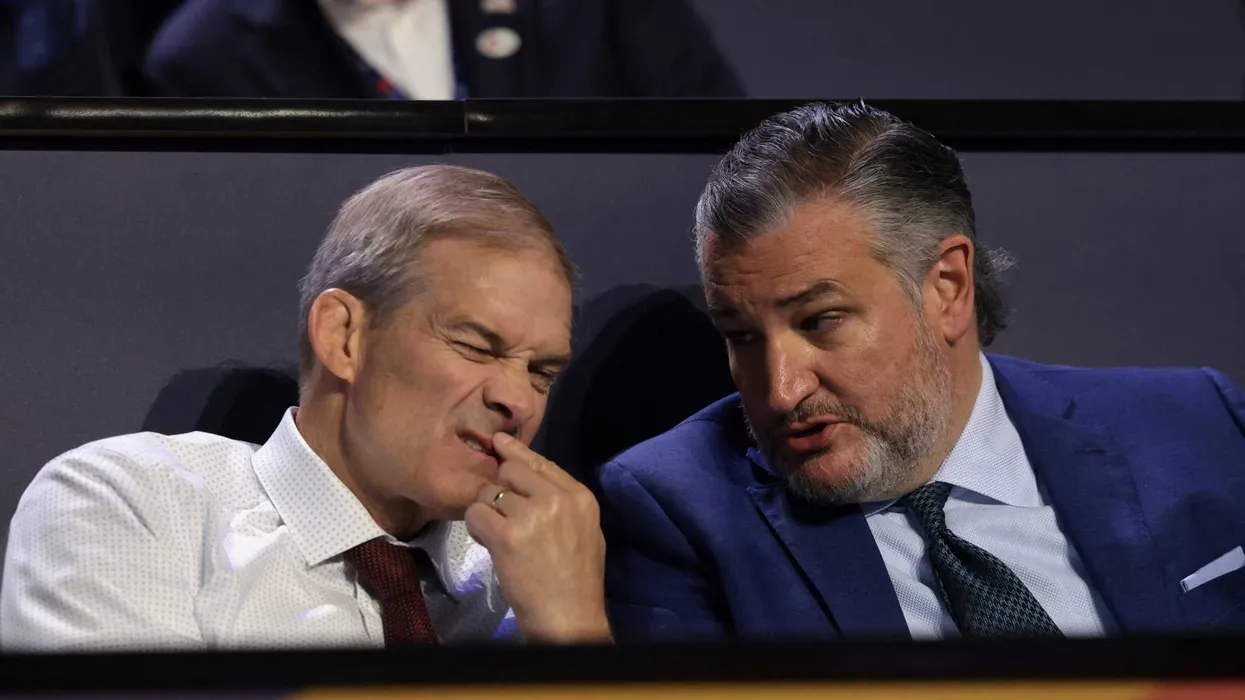
Republicans were already bracing for a difficult midterm cycle, but party insiders say the political environment has deteriorated beyond what even they expected — and some warn the full extent of the threat may still be underestimated.
Writing in his Daily Mail column, Beltway commentator Mark Halperin recalled an investment banker friend who once told him that there are situations in which panic really is the appropriate response. In his judgment, Republicans have reached that point. Describing the moment as a "rancid stew for the president's party," Halperin argued that the GOP's confident public posture conceals a far more troubling private reality. "Too bad for them, bravado is no match for reality," he wrote.
Publicly, the party's messaging remains assured. Trump-aligned candidates, party officials and White House representatives point to strong fundraising, heavy campaign spending, extensive voter-contact operations and persistent Democratic weaknesses. They also note that Republican candidates remain competitive in several blue and swing-state races, including contests in Maine, New Hampshire, Michigan and Minnesota. Halperin observed that the public face of the party consists of "muscular TV ads, press releases and social media posts, almost all of which project the confidence of the man who leads them."
Behind the scenes, Halperin reported, he is hearing something different. One of the starkest warnings came from Steve Deace, a conservative radio host in Iowa, who said GOP House candidates are being told by their own pollsters that districts President Donald Trump carried by 15 points are now within the margin of error, and that Republicans in districts won by Trump by 10 or more points are likely losing. Because internal campaign surveys are rarely released publicly, such claims cannot be independently checked, leaving public race ratings and officials' on-record statements as the main verifiable signals available to outside observers.
Deace cautioned that the midterm climate could prove even worse for Republicans than in 2006, when President George W. Bush's party lost control of both the House and Senate. The comparison carries weight against a well-documented backdrop: the president's party has lost House seats in nearly every midterm election since World War II, and Republicans enter 2026 defending an unusually narrow House majority in which a shift of only a handful of seats determines control.
The sources of voter frustration are, in Halperin's telling, plain to see: gas prices, the Iran war, tariffs driving up prices, fears about AI and data centers, White House corruption, and steadily growing unease with Trump's behavior and leadership on those issues. In such an environment, he suggested, forceful television ads and projected confidence may not be enough.
Halperin pointed to the Kansas Senate race as an illustration. No Democrat has won the seat since 1932, and Sen. Roger Marshall (R-Kansas) appeared headed for another easy win until Democratic pastor Adam Hamilton entered the race., in Halperin's account, was not prepared for the challenge — a weakness that has shown in his public appearances, including an event at which he was booed during his first debate. The Cook Political Report, a nonpartisan election forecaster that grades congressional races on a competitiveness scale, has reportedly moved the race from "likely Republican" to "lean Republican." That does not mean the Democrat will win, Halperin wrote, but it signals that even in deep-red Kansas, furious voters want more from their lawmakers than Marshall is currently willing or able to provide.
The historical parallel is pointed. In 1932, Herbert Hoover occupied the White House, and his tariff policies became associated with the economic collapse of the Great Depression. Trump, Halperin noted, is well aware of the comparison and has said openly that he wants to avoid it. "I have one primary wish as president, in terms of people: I never want to be the late, great Herbert Hoover," Trump told Axios reporter Marc Caputo during a show in June, according to Halperin's recollection.
Perhaps most telling, the column said, Republican candidates have begun distancing themselves from Trump on his signature issues, including immigration — historically one of his greatest strengths. Marshall's call for Immigration and Customs Enforcement (ICE) to coordinate with local law enforcement was cited as one example of a Republican softening or separating from the Trump line. Further shifts in nonpartisan race ratings, and any additional Republicans who follow suit in contested districts, will offer the clearest public markers of the trend Halperin describes.
Halperin closed with a blunt summary: "While public polls are horrendous for Republicans, the private ones are worse." He noted that over the past few weeks, as he has written about possible Democratic wins, not a single GOP strategist has reached out to quibble with his statements — a silence, he observed, that contrasts with their earlier responsiveness. If voters show up at the polls, he argued, a "Blue tsunami" could be real.

