Poll Finds Half of US Service Members Want to Quit Over Politicization Under Trump
Key Takeaways
- •Fifty-three percent of active-duty respondents said politicization is prompting them to consider leaving sooner.
- •Sixty-seven percent said decisions affecting service members are motivated by political gain rather than mission readiness.
- •Trump and Hegseth received disapproval ratings of about 50% and 50%, respectively, compared with stronger approval for senior uniformed commanders.
- •Hegseth has dismissed or sidelined more than 80 generals and admirals, representing about 10% of the force.
- •The survey’s authors and experts characterized the personnel concerns as a readiness crisis amid depleted munitions and ongoing conflict with Iran.
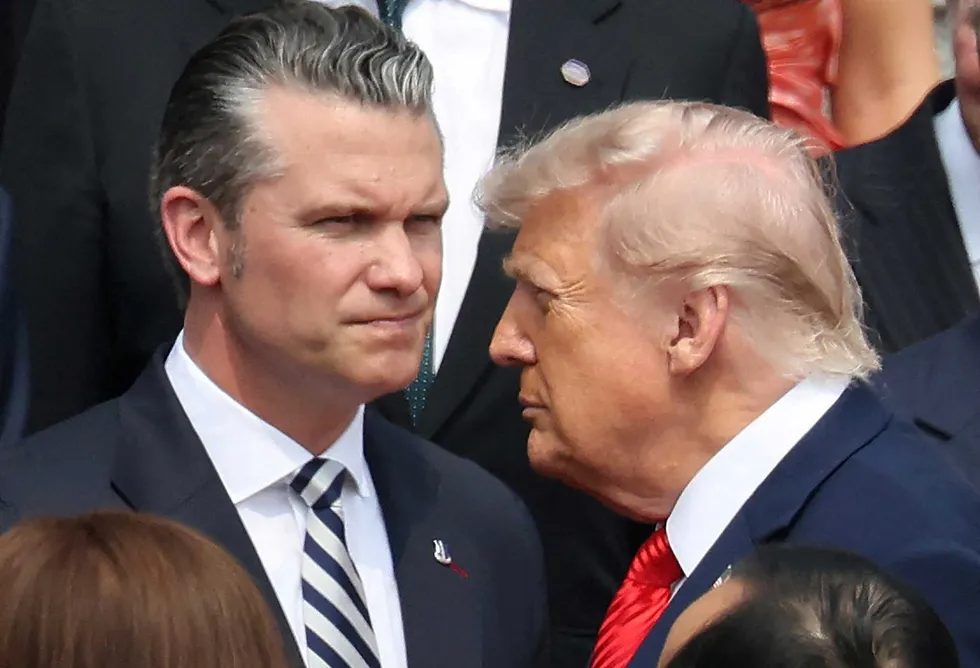
A new survey released Monday found that roughly half of U.S. armed forces service members want to leave the military, citing the policies and leadership of President Donald Trump and his administration. Experts warn the situation has become a full-blown “readiness crisis” that is reducing the country’s military capabilities.
According to Military.com, a poll conducted by Common Defense, a veteran-led advocacy organization, found that 53 percent of active-duty service members want to separate from service sooner because they said the military is becoming more politicized. The survey also showed that 45 percent of service members are considering quitting specifically because of policy changes and uncertainty under the Trump administration, while 67 percent agree that decisions affecting service members are being made for political gain, not mission readiness, compared with 25 percent who disagreed.
The willingness of troops to walk away carries particular weight in an all-volunteer force: the United States ended conscription in 1973, so the armed forces depend on service members choosing to remain in uniform rather than being compelled to serve.
The findings come amid Trump’s ongoing conflict with Iran, and as the president considers resuming an all-out war following this week’s midterm elections.
“Veterans know what real leadership looks like: you take care of the people under your command and you keep politics out of the mission,” said Jose Vasquez, a U.S. Army veteran and executive director of Common Defense. “Right now, nearly 8-in-10 veterans and military families say they’re being left behind, and active-duty troops are telling us that politicization is pushing them toward the exit. That’s not a talking point; it’s a readiness crisis.”
Service members were also direct about which leaders they blame. According to the poll, roughly 50 percent of veterans and active-duty service members said they disapproved of Trump as commander-in-chief, while 47 percent said they approved of him. Secretary of Defense Pete Hegseth registered a similar rating: about 45 percent of respondents said they approved of him, while 50 percent said they disapproved. Senior uniformed military commanders, such as top generals and admirals, fared better, with 56 percent saying they approved and 27 percent saying they disapproved.
Over the past two years, Hegseth has driven major shakeups across the military, placing emphasis on culture war issues while ousting top generals and other leaders with a lifetime of service behind them. Last week brought another example: Lt. Gen. Brett Sylvia, a highly regarded officer and combat veteran, was fired from his position as Joint Staff Director of Strategy over leaking accusations.
According to the New York Times, “The general’s dismissal shocked and angered many current and retired senior Army officers. They described him as a loyal officer who had served bravely in combat and thought deeply about how the military needed to adapt and embrace new technology to fight future wars.”
As the Times notes, “Hegseth has dismissed or sidelined more than 80 generals and admirals, or about 10 percent of the force. In most cases those officers were fired without being told the reason.”
At the same time, reporting has revealed that under Trump and Hegseth’s leadership, the military’s ability to respond to threats has been greatly diminished by depleted munitions stockpiles and other failings, while the war in Iran has spiraled into a disaster of historic proportions.

