Gulf States Turn to China to Pressure Iran Over Critical Maritime Routes
Key Takeaways
- •Gulf Arab states are calling on China to utilize its economic influence with Iran to help secure vital maritime trade routes.
- •Beijing has strong commercial interests in keeping regional waterways open due to its heavy dependence on Middle Eastern crude oil.
- •Houthi militant attacks near the Bab el-Mandeb Strait have severely disrupted global shipping since late 2023, significantly increasing freight costs.
- •Prediction markets currently reflect deep skepticism regarding a swift resolution, pricing the likelihood of normalized maritime traffic by August 31 at only 6.5 percent.
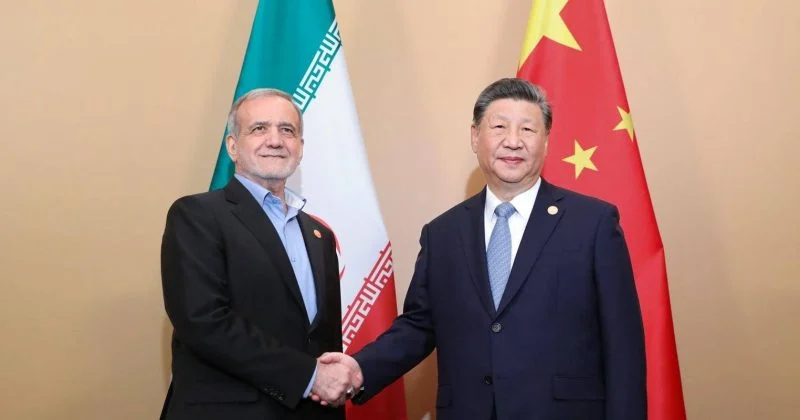
Gulf Arab states are reportedly urging China to use its substantial economic leverage over Iran to help reopen critical maritime routes, including the Strait of Hormuz and the Red Sea. The appeal comes amid escalating tensions across the region involving Iran, Israel, and the United States, with significant implications for global trade, particularly in energy markets.
China occupies a unique position in this dynamic. As Iran's largest trading partner and a major economic actor within the Gulf Cooperation Council (GCC), Beijing maintains deep commercial ties with both Tehran and its regional rivals. The GCC — comprising Saudi Arabia, the United Arab Emirates, Qatar, Kuwait, Bahrain, and Oman — represents a critical bloc in global energy supply and maritime commerce. The Strait of Hormuz, located between Oman and Iran, is one of the world's most important oil transit chokepoints, through which roughly a fifth of global petroleum consumption passes. The Red Sea disruptions stem largely from Houthi attacks on commercial vessels near the Bab el-Mandeb Strait, with the Iran-backed group having forced widespread rerouting of cargo around Africa's Cape of Good Hope since late 2023, adding weeks of transit time and sharply raising freight costs.
China's own dependence on Middle Eastern energy imports gives Beijing a direct economic stake in keeping these waterways open — the majority of China's crude oil imports transit through the Strait of Hormuz — even as it maintains close energy and trade ties with Iran. Gulf states have in recent years diversified their security and economic partnerships beyond the United States, deepening commercial and diplomatic engagement with Beijing, which may inform their expectation that China could play a mediating role.
However, Beijing's historical reluctance to engage directly in military conflicts or security disputes may limit expectations of how far China is willing to go in applying pressure on Tehran. China has consistently emphasized non-interference in the internal affairs of other nations as a cornerstone of its foreign policy.
Gulf states' appeal to Beijing represents a strategic effort to leverage China's influence over Iran, potentially affecting the status of the Strait of Hormuz and Red Sea shipping lanes. Disruptions to these routes have reverberated across energy markets and global supply chains, raising shipping costs and insurance premiums.
Market pricing currently reflects skepticism about a near-term resolution. Prediction-market participants are pricing only a modest expectation of increased traffic normalization by August 31, with the probability of a successful outcome at approximately 6.5%. Participants appear to be weighing the likelihood of concrete Chinese action against the backdrop of ongoing and deeply rooted regional tensions.
Observers are closely watching for any official statements from Beijing or Tehran that could signal a shift in the geopolitical landscape. An announcement from China supporting Gulf states' demands could bolster confidence in a resolution, while any reinforcement of maritime disruptions by Iran — particularly through military channels — could further erode market expectations. Additionally, developments in US-Iran negotiations are widely viewed as a potential bellwether for broader changes in the situation.

