What Guardiola and Mourinho Teach Business as Premier League Managerial Turnover Hits a Record
Key Takeaways
- •A record nine Premier League clubs begin the season with a new manager, including Tottenham, which parted with Ange Postecoglou weeks after he ended the club's 17-year trophy wait by winning the Europa League.
- •Chelsea have worked through five managers — Thomas Tuchel, Graham Potter, Frank Lampard, Mauricio Pochettino and Enzo Maresca — since Todd Boehly and Clearlake Capital's takeover in 2022.
- •Weller argues that Mourinho's back-to-back Chelsea titles in 2004-05 and 2005-06 and Guardiola's six Premier League crowns in nine seasons at Manchester City demonstrate that sustained projects outperform quick fixes.
- •Chelsea's signings of Jordan Henderson, who captained Liverpool to the 2019-20 Premier League title, and Danny Welbeck, part of Manchester United's 2012-13 title-winning squad, illustrate the business case for bringing in experienced personnel.
- •Weller advises business leaders to diagnose root causes and favour incremental change, warning that constant reorganisation breeds employee 'change fatigue'.
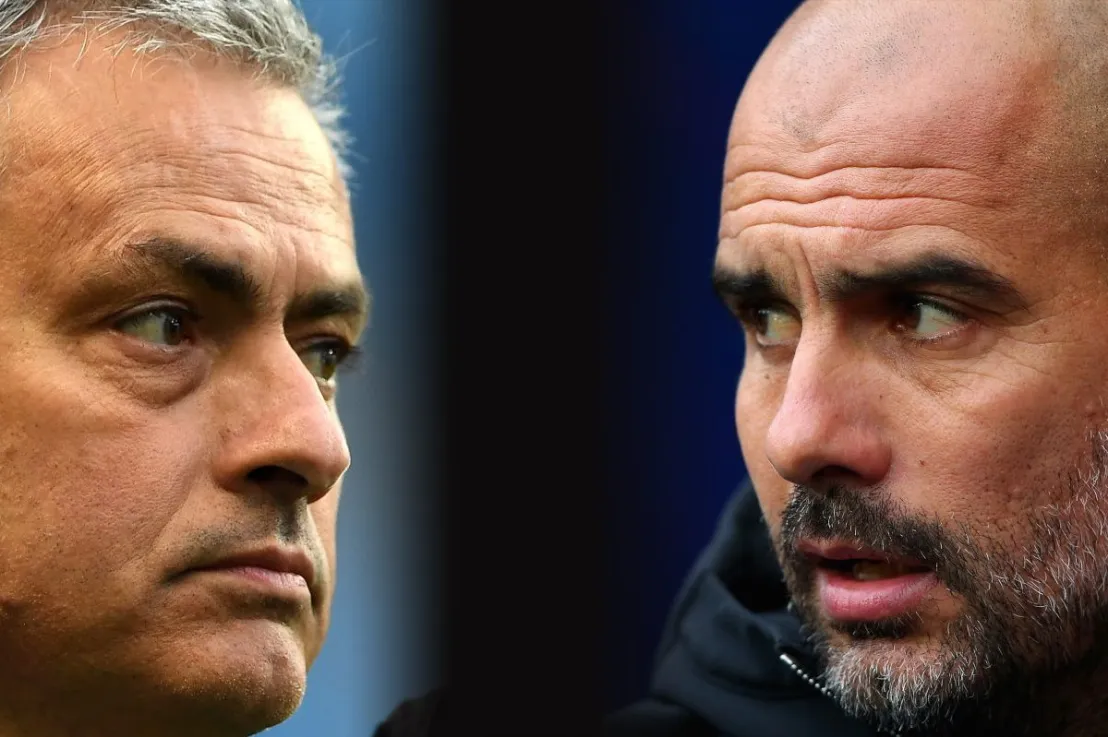
As the Premier League returns, Dean Weller asks what Pep Guardiola and Jose Mourinho can still teach the world of business.
Nine Premier League clubs will kick off their season today with a new manager — a new record, though one that should not come as a surprise given the level of instability in the league recently. That instability has already produced some stark decisions: Tottenham parted company with Ange Postecoglou only weeks after he ended the club's 17-year wait for silverware by winning the Europa League, while Manchester United, West Ham, Leicester and Southampton all changed managers mid-season last term.
As a Chelsea fan, Weller — founder and CEO of Generation Media — says he has witnessed the death of continuity first hand. The club has gone from appointing a new manager every six years to having someone new in the dugout every six months; since Todd Boehly and Clearlake Capital's takeover in 2022, Chelsea have worked through Thomas Tuchel, Graham Potter, Frank Lampard, Mauricio Pochettino and Enzo Maresca.
While that is symptomatic of the modern game, where managers are often given less than ten games to implement a new direction, quick-fire managerial change often backfires. And as a business leader, he argues, there are parallels in any sector around change — when it is needed, and how it impacts momentum.
Movement doesn't equal progress
Tell me if this sounds familiar, Weller writes: a club brings in a new manager, new tactics, new players and a so-called philosophy, hoping to reverse its fortunes. But the players often struggle to adapt quickly enough, having to determine where they fit in a system while building a new relationship with the manager. Performance and results frequently flatline after an initial, short-lived run of good results.
It is the same in business. Companies experiencing sustained pressure believe the best response is to switch strategies overnight. Done with good intentions — but practically speaking, a misstep.
There are plenty of ways these changes can manifest: onboarding a fresh creative direction, rebranding, or replacing members of the leadership team, all done in the name of taking "decisive action". However, if everything is changed at once, you are left with potential chaos and uncertainty. Employees, like players absorbing yet another new system, can slide into what organisational researchers call "change fatigue", where each fresh initiative lands on an increasingly sceptical audience.
Good leaders evolve to understand the difference between necessary change and disruption caused by someone looking to shake things up in the wrong way. It involves understanding that the best decisions sometimes require incremental change — figuring out the root cause, identifying whether it is strategic, organisational or determined by external factors such as market conditions, and using this to identify solutions.
Manager change can save the season
That does not mean dramatic change is never good. In football, the best managers have pulled it off. Look at the two documentaries out now about Jose Mourinho and Pep Guardiola. Both have cemented their positions on the Mount Rushmore of managers by dealing with pressure from fans and boards, as well as player egos — all whilst delivering results with unique styles.
Crucially, both built that standing on sustained projects rather than quick fixes. Mourinho's Chelsea delivered back-to-back titles in 2004-05 and 2005-06 — two of his three Premier League crowns across two spells at Stamford Bridge — while Guardiola's Manchester City collected six titles in nine seasons, including a record four in a row, even though his first campaign in 2016-17 ended without a trophy and the record 100-point league season arrived only the year after.
Change done by the right leader can bring in width and depth. This can be exactly what an organisation gone stale needs, because it forces everyone to look differently. It can feel like shedding the skin of the company to reinvigorate thinking — or, as Weller calls it, pulling a "Crazy Ivan", an old Soviet term for when a submarine suddenly zig-zags to avoid detection, memorably dramatised in the film The Hunt for Red October.
Fresh eyes and deep tactical change can often work. But only as long as leaders motivate through change to give existing team members a new reason to be engaged.
Don't underestimate experience
Despite the move being mocked, Chelsea's decision to sign seasoned players like Jordan Henderson and Danny Welbeck this summer represents a positive step, Weller argues. After all, the club's struggles in recent years have been largely down to a young squad. Plus, he notes, Welbeck always scored against Chelsea, so it is a potential six points versus last season. Between them, the pair know what a title-winning dressing room looks like: Henderson captained Liverpool to the 2019-20 Premier League title, and Welbeck was part of Manchester United's 2012-13 title-winning squad.
Just as investing in experience in football can pay dividends, businesses should recognise the value of adding seasoned team members. When you are looking to shake things up, experienced staff already have a better sense of what is going wrong and what needs fixing. Likely, they know what has already been tried, what failed the first time — and maybe even how to fix it.
Young staff have seen change far more often than before, so prioritising bringing in experience can bring stability and better support them to perform their best.
With kick-off only a few hours away, it is too early to call which manager will stand atop the Premier League victorious, and which is headed for the chop. What can be said, though, is that there is a formula they can all follow in their bids for glory. The most successful playbooks call for agility and experimentation; the ability to evolve and adapt to shifting conditions cannot be underestimated. But that does not mean ripping up the strategy the moment something unexpected happens.
Dean Weller is founder and CEO of Generation Media.
