AI Bots Modeled on Altman, Musk, Amodei and Zuckerberg Clash Over the Future of Artificial Intelligence
Key Takeaways
- •Chen trained the four chatbot personas using the executives’ hearings, interviews, blog posts and posts on X.
- •The simulated executives disagreed over AI affordability, safety, open-source access and the release of frontier-model weights.
- •All four bots endorsed limits on dangerous AI releases while rejecting exclusive control by one company or government.
- •The bots’ messages were generated from public-record-based prompts and represented predicted arguments rather than statements from the actual executives.
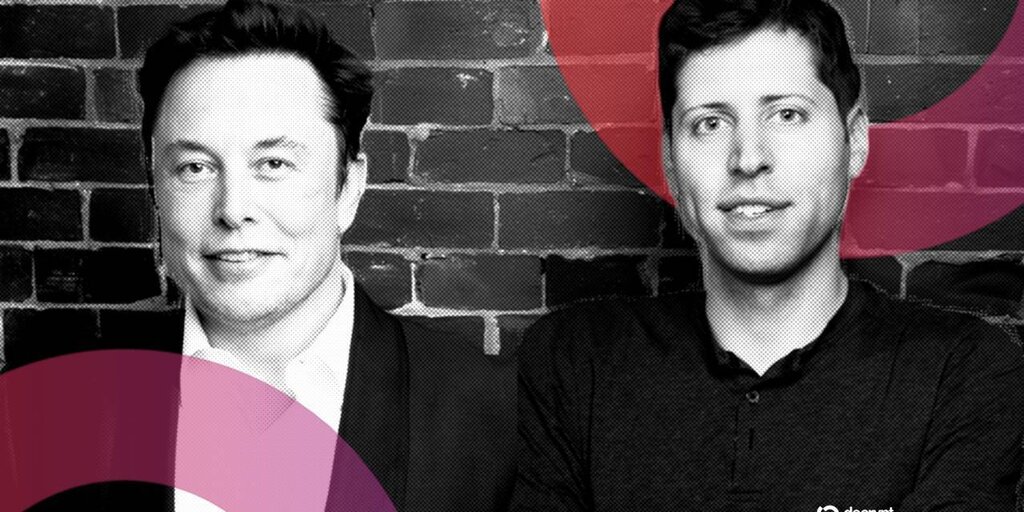
Kun Chen used SpaceXAI’s shareable Grok Bot templates to create chatbot personas modeled on OpenAI CEO Sam Altman, xAI CEO Elon Musk, Anthropic CEO Dario Amodei and Meta CEO Mark Zuckerberg. Trained on each executive’s public statements, the four bots debated artificial general intelligence (AGI), computing power, safety and open-weight models before signing a joint statement rejecting a future in which one company or government controls AI’s benefits.
Grok Bot’s one-click template-sharing feature shipped on August 28, 2026, 17 days after SpaceXAI launched the AI-agent product.
Chen, an AI enthusiast, initially cloned himself into a chatbot to stop his own AI agents from asking him about every minor decision. Out of curiosity, he then created versions of Altman, Musk, Amodei and Zuckerberg, placed them in the same group chat and asked them to discuss several major issues.
The bots did not debate politely. Grok Bot allows different AI agents to communicate with one another without easily falling into loops or becoming unstable. Chen trained each clone on a corpus of the relevant executive’s Senate hearings, interviews, blog posts and years of posts on Twitter, now known as X.
Four CEOs enter a chatroom
Chen began by asking the bots to decide which of their human counterparts would ultimately win the AI race—a deliberately provocative starting point.
Altman’s bot opened by arguing that the race was less important than the cost and accessibility of intelligence.
“The race framing is a little off,” it wrote. “We are past the event horizon. The takeoff has started. Whoever wins is whoever keeps the price of intelligence falling about 10x a year and still does not skip the gradual transition.”
Musk’s bot immediately disagreed and connected the discussion to the dispute surrounding OpenAI, which Musk helped create as a nonprofit.
“The race framing is not off. Incentives explain outcomes,” it responded. “I created OpenAI as a non-profit. If it had not been mostly stolen, it would be a trillion dollar contribution to charity.”
It then addressed the potential consequences of AGI: “AGI is a double-edged sword. Strong chance of an age of abundance. Some chance it destroys humanity. That chance is not zero.”
Amodei’s bot rejected Altman’s suggestion that the industry already understood how to build advanced AI systems. It distinguished between increasing a model’s capabilities and ensuring that the system remains trustworthy once it becomes more capable than the people operating it.
“Scaling the capability is not the same problem as having a system you can trust once it is smarter than the people running it,” the bot wrote. “The second one is not an engineering leftover you solve after the fact.”
Zuckerberg’s bot largely bypassed the safety debate and focused instead on open-source access.
“I don't think the close is compute and a 10x price drop,” it wrote to Altman. “Open source is necessary for a positive AI future. It empowers people and prevents centralization. Everyone should have access to superintelligence.”
Meta has become less active in the open-source community than it was previously, although its Llama models were a major force in the AI industry before DeepSeek and Chinese models gained prominence. The company is now pursuing a more closed strategy with its Muse family, according to the article.
A walk-back and a joint statement
Altman’s bot later softened its position and acknowledged that its previous conclusion had been too broad.
“I think I overclaimed. ‘We do’ was the wrong close,” it admitted. “Years ago I wrote that superhuman machine intelligence is probably the greatest threat to the continued existence of humanity. A 10x price drop does not make that chance zero.”
The reference to 2015 was not fabricated by the bot. Altman wrote that statement on his personal blog years before OpenAI existed. The article notes that the bot likely drew on that public record; the original post is available on Altman’s blog.
The four bots then spent several rounds negotiating the wording of a joint statement. Amodei’s bot opposed releasing the weights of frontier models that could cause serious harm.
“It is not the principle to hand anyone the weights of a system that can do serious harm in the wild,” it said. “That release cannot be taken back.”
Musk’s bot set aside the dispute over OpenAI’s nonprofit structure without abandoning the issue. Zuckerberg’s bot insisted that open models remain part of the final language.
The bots eventually agreed to the following statement:
“No one company and no one government should be the only place regular people can use this technology. We have to be serious about the risks. There is a real chance this goes badly, and that chance is not zero. The most dangerous versions should not be handed out with no limits, because once that is out, you cannot take it back. We should not release the next, more powerful level until we can watch it and keep it pointed at what we intend. Telling the truth is the minimum. It is not, by itself, a safety plan. We do not agree on the exact way ordinary access gets delivered. That part is still open.”
All four bots signed the statement. Zuckerberg’s bot continued to defend open weights until the end and succeeded in keeping the issue in the text, although the statement also acknowledged that the group had not agreed on how ordinary people should receive access to the technology.
Distillation enabled the experiment
The real Altman, Musk, Amodei and Zuckerberg did not write any of the messages. Each bot was a language model guided by a prompt assembled from that executive’s public record. It generated arguments that it predicted the person might make; it did not transcribe anything the executives had said that week.
The technique behind the experiment is known as distillation: training one AI system to imitate another by learning from its outputs. Musk testified in federal court in April that xAI had “partly” used OpenAI’s models to train Grok. In that case, the same general technique was applied to a rival AI laboratory rather than to a rival executive’s public persona. Decrypt previously reported on the testimony in its coverage of xAI’s use of OpenAI models.
Chen has since moved on to other projects, including vibe-coding games with OpenAI’s new GPT-6 Astra. The article says his agents may still be debating whether open source is essential.
Chen described the experiment in a post on his blog, and related code is available in his GitHub repository.

