Grok 4.5 Forecasts Year-End 2026 Prices for Bitcoin, Ethereum, XRP, and LiquidChain
Key Takeaways
- •A firmware vulnerability in Coldcard hardware wallets led to the theft of over $100 million in Bitcoin.
- •The US Senate has delayed its final vote on the CLARITY Act until after the August recess.
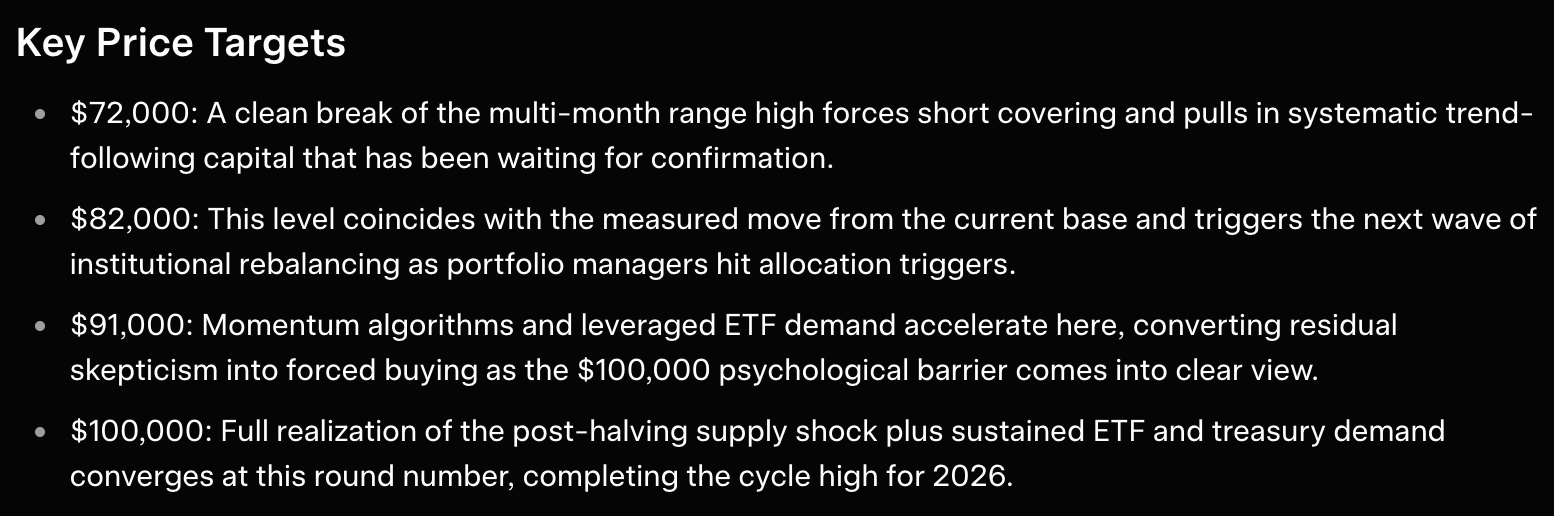
- •Grok 4.5 forecasts a base case price of $100,000 for Bitcoin by the end of 2026.
- •The AI model predicts Ethereum will reach $3,250 and XRP will hit $2.30 by the close of 2026.
- •LiquidChain, a presale-stage Layer 3 network, received a projected 10x return prediction from Grok 4.5.
Cryptocurrency markets have navigated a barrage of overlapping developments over the past week, highlighting both ongoing risks and deepening institutional engagement. A long-standing firmware vulnerability in Coldcard hardware wallets resulted in the theft of more than $100 million in Bitcoin. Meanwhile, the US Senate postponed a final vote on the CLARITY Act until after its August recess, leaving the industry's central market-structure bill in legislative limbo. On the regulatory front, the Securities and Exchange Commission scheduled a meeting to advance its first formal crypto rulemaking proposal, and spot bitcoin ETFs recorded $708.86 million in net inflows so far this month.
These events underscore the sheer volume and velocity of information that traders and investors must now process. It also explains the growing appeal of AI-based tools as practical instruments for navigating market complexity. Large language models such as SpaceXAI's Grok can synthesize regulatory and market news in real time, evaluate sentiment shifts, and detect patterns across price, flow, and narrative data — tasks that would otherwise demand significant human bandwidth. In a market shaped by rapid, multi-factor developments, these capabilities enable participants to make faster, more informed decisions. It is worth noting, however, that AI-generated forecasts draw on historical data and current narratives, meaning outputs can reflect biases embedded in training material and cannot account for unprecedented events such as sudden regulatory bans or unforeseen protocol failures. Analysts increasingly treat LLM price predictions as one data point among many rather than a standalone decision-making tool.
Against this backdrop, Grok 4.5 was queried for its end-of-year price predictions across four assets: Bitcoin, Ethereum, XRP, and LiquidChain (LIQUID). LiquidChain is a new presale project preparing to launch a Layer 3 chain later this year. Layer 3 networks — which build on top of existing Layer 2 scaling infrastructure — have attracted growing developer interest as a way to offer application-specific environments with low fees while inheriting security from established base layers. Because LiquidChain is designed to combine the full capabilities of BTC, ETH, and Solana, Grok assigned it a potential 10x gain by the end of December — the highest projected upside among the four assets. As with any presale-stage project, LiquidChain carries distinct risk characteristics compared to established assets like BTC or ETH, including the absence of a live mainnet, limited track record, and token liquidity that does not yet exist on public exchanges.
Bitcoin (BTC)
"Bitcoin remains fundamentally bullish because its fixed supply of 21 million coins continues to tighten against rising demand more than two years after the 2024 halving," Grok stated. "Miner issuance has settled at the lowest daily rate in the asset's history, while long-term holders keep removing coins from liquid markets. This imbalance forces BTC's price higher, as every incremental buyer must bid against a shrinking float of available supply."
"Institutional capital is still in the early innings of allocating to Bitcoin as a non-sovereign reserve asset," Grok continued. "Spot ETF flows, corporate treasury purchases, and growing interest from pension funds and sovereign entities create a steady absorption of supply that retail cycles alone never produced. These buyers operate on multi-year horizons and treat drawdowns as accumulation opportunities — and their continued presence removes the classic late-cycle distribution pattern and replaces it with higher floor prices."
Furthermore, Grok predicted that "macro liquidity conditions will favor Bitcoin into the end of 2026, making a move to $100,000 the base case. Central banks have already begun easing, real yields are compressing, and the dollar's reserve-currency status is under pressure from fiscal expansion across major economies. In that environment, capital seeks scarce, portable, verifiable stores of value, and Bitcoin sits at the top of that list."
Ethereum (ETH)
"Ethereum stands apart through its role as the foundational execution environment where the majority of decentralized applications and smart contract logic actually run," the AI explained. "Every new protocol, tokenized asset, or automated market that chooses this base layer increases the amount of economic activity denominated in ETH. That activity generates continuous demand for Ethereum's blockspace, turning the ETH cryptocurrency into an indispensable medium of exchange inside a growing digital economy rather than a passive store of value."
"The expanding universe of Layer 2 networks that inherit security from Ethereum's Layer 1 chain multiplies throughput without fragmenting liquidity or trust assumptions," Grok stated. "Lower-cost environments for complex interactions feed more volume back to the settlement layer, amplifying fee generation and reinforcing the economic relevance of ETH itself. As these secondary systems mature, they enlarge the overall pie while preserving Ethereum's position as the ultimate source of finality."
"Ongoing refinements to the protocol's efficiency and developer tooling keep attracting institutional-grade builders who treat the network as critical infrastructure for programmable finance and digital property rights," said Grok. "Their sustained involvement supports a re-rating that aligns Ethereum's market cap with the scale of economic throughput the platform already processes, making an advance to $3,250 ETH by the close of 2026 a logical outcome of these converging forces."
XRP (XRP)
"XRP is purpose-built to move value across national borders in seconds rather than days, replacing the cumbersome process of pre-positioning funds in traditional nostro accounts," Grok asserted. "Each activated corridor converts theoretical efficiency into actual transaction flow, and requires XRP itself as the temporary bridge asset. Therefore, growing real-world usage translates directly into sustained purchasing pressure independent of broader market sentiment."
"Meanwhile, deepening connections with established payment networks and banking partners create compounding utility. Once a few major players route volume through the same rails, counterparties gain strong incentives to follow, forming a self-reinforcing lattice of liquidity that privileges XRP over slower or more expensive alternatives. The result is an expanding web of institutional reliance rather than isolated pilot programs."
"Superior speed and cost predictability in high-value, high-frequency transfers give the XRP asset a durable operational advantage within the multi-trillion-dollar arena of cross-border commerce," said Grok. "As more of that commerce migrates onto these rails, market pricing will adjust to reflect the tangible economic role being performed, supporting XRP's rise to $2.30 by the end of 2026."
LiquidChain (LIQUID)
"LiquidChain (LIQUID) is a Layer 3 network designed to connect Bitcoin, Ethereum, and Solana so they can work together as one system," Grok explained. "Right now, these three chains operate mostly in isolation, which splits up liquidity and forces users and developers to jump through complicated steps to move assets or build apps across them. LiquidChain creates a shared layer where assets from all three chains can be used side by side without wrapping or handing control to third parties."
"The system uses a fast execution environment modeled on Solana's technology, together with verification methods that confirm the state of Bitcoin, Ethereum, and Solana accounts. This lets transactions settle cleanly across the three networks in a single step. Developers can launch an application once and immediately reach users and liquidity pools on Bitcoin, Ethereum, and Solana at the same time, while users keep full control of their own assets."
On tokenomics, Grok described how "the native token LIQUID has a fixed total supply of just over 11.8 billion, with large portions set aside for ongoing development, marketing, community rewards, and exchange listings. The project is still in its presale phase at Stage 94, with almost $940,000 raised, a price of $0.01489 per LIQUID, and staking APYs of up to 1,206%. Once the sale ends and the LIQUID token lists on exchanges, the practical ability to treat the three largest ecosystems as a single connected market is expected to draw both builders and trading volume."
"These factors together create a clear path for strong demand growth for LiquidChain," Grok concluded. "As more applications start using the shared layer and cross-chain activity increases after listing, the LIQUID token is clearly positioned to deliver a full 10x by the end of 2026."
Source: ICO Bench

