Grey secures Central Bank of Nigeria approval to operate as an International Money Transfer Operator
Key Takeaways
- •The Central Bank of Nigeria has authorised Grey to operate as an International Money Transfer Operator, with its Nigerian activity limited to inbound, naira-only settlement under guidelines the apex bank overhauled in January 2024.
- •The licence enables Grey to handle inbound transfers across P2P, B2P, and B2B channels, opening access to a Nigerian personal remittance inflow pool of roughly $22.8 billion in 2025.
- •Grey's approval came days after it launched Paycheck, a salary account for professionals earning in dollars, pounds, and euros that offers an introductory 3 per cent savings yield and higher transaction limits.
- •Ahead of the licence, Grey announced it had surpassed three million users, processed nearly $5 billion in payments, and recorded a 170 per cent year-on-year increase in transaction volume.
- •By owning the regulated inbound settlement rail, Grey can reduce third-party payout friction and retain margin on the inbound leg even though Nigerian users typically convert foreign salaries into naira within an hour of payday.
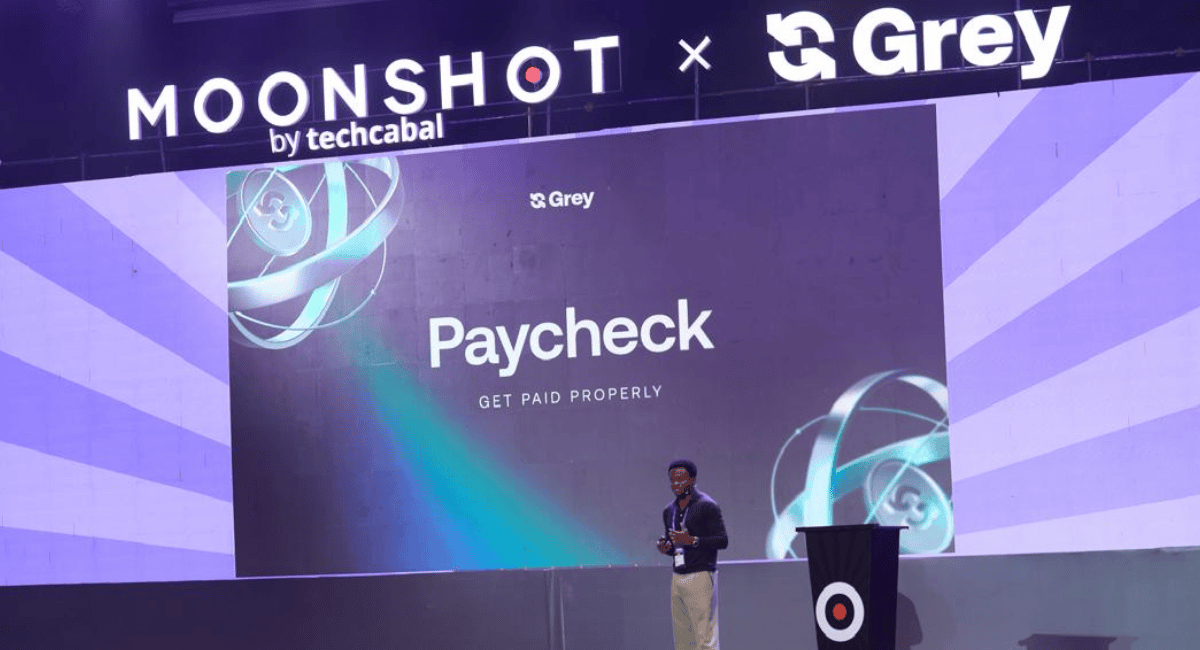
Grey, the San Francisco-headquartered cross-border payments company, has received regulatory approval from the Central Bank of Nigeria (CBN) to operate as an International Money Transfer Operator (IMTO). The licence, announced in a statement shared with TechNext24, comes days after the Y Combinator-backed fintech unveiled Paycheck, its salary account product for remote workers.
For six years, Grey built its cross-border payments engine serving African freelancers and remote workers largely on North American money services registrations and local banking partners. The CBN approval now gives the company a formalised domestic foothold in Nigeria, locking in the Nigerian corridor.
The authorisation permits Grey to facilitate inbound international money transfers directly into Nigeria, expand its connections to international payment corridors, and cover person-to-person (P2P), business-to-person (B2P), and business-to-business (B2B) transactions. According to the statement, which cites World Bank data, Nigeria's personal remittance inflows stood at roughly $22.8 billion in 2025 — a pool of inflows Grey is now positioned to compete for directly.
Commenting on the approval, Grey's CEO and Co-Founder Idorenyin Obong said: “Regulatory compliance is central to how we build and operate our financial services. As we expand across markets, it is important that our operations meet the requirements of the regulators responsible for overseeing them. Securing CBN approval to operate as an IMTO is an important step for Grey in Nigeria. It strengthens our ability to facilitate inbound international transfers and reflects our long-term commitment to building reliable financial infrastructure for individuals and businesses operating across borders.”
The licence follows Grey's announcement at Moonshot on 29 October 2026 that it had crossed three million users and processed nearly $5 billion in payments, alongside a 170 per cent year-on-year surge in transaction volume.
The timing underscores how sharply the foreign exchange calculus has flipped for Nigerian remote workers over the past twenty months. Between December 2021 and February 2024, leaving a $2,000 monthly remote salary untouched inside a Grey or rival Raenest wallet was the simplest inflation hedge: the parallel market rate slid from roughly ₦569 to ₦1,850 per dollar, rewarding earners who held on to foreign currency. Since February 2025, that trade has reversed. By October 2026, the street rate had strengthened to between ₦1,370 and ₦1,390 per dollar, wiping out roughly 14 per cent of naira purchasing power for idle dollar holders — at a time when local naira savings accounts yield up to 16 per cent and the Nigerian Exchange (NGX) All-Share Index is up 59 per cent this year.
The numbers point to an urgent unit-economics challenge for cross-border fintechs. Nigerian remote professionals now convert foreign salaries into naira within an hour of payday rather than parking balances in-app, meaning platforms can no longer take passive dollar float for granted.
Grey's first response was the launch of Paycheck, a salary account for professionals earning in dollars, pounds, and euros that pays an introductory 3 per cent savings yield alongside higher transaction limits. The CBN IMTO approval completes the second half of that play. By owning the regulated inbound settlement pipe into Nigeria, Grey can compress third-party payout friction and capture margin on the inbound leg even when users immediately liquidate their foreign earnings into local bank accounts.
The Nigerian authorisation also plugs into a broader North American compliance stack that Grey uses to originate cross-border flows across more than 170 countries. In the United States, Grey is registered as a Money Services Business (MSB) with the Financial Crimes Enforcement Network (FinCEN). In Canada, the company is registered as an MSB with the Financial Transactions and Reports Analysis Centre of Canada (FINTRAC) and as a payment service provider under Canada's Retail Payment Activities Act (RPAA). Together, these regulatory credentials reflect Grey's continued investment in building cross-border payment infrastructure within the regulatory frameworks of the markets in which it operates.
Beyond compliance, the approval addresses a structural bottleneck in Nigeria's cross-border settlement rules. Since the apex bank overhauled its IMTO guidelines in January 2024 — raising application fees to $1 million for foreign entities, mandating naira-only payouts for inbound remittances, and barring IMTOs from conducting outbound transfers or holding domestic deposits — unlicensed cross-border startups have faced heightened scrutiny over how their naira liquidity is sourced and settled. Grey's approval now places it on the licensed side of that divide, with its Nigerian operations bounded to inbound, naira-only settlement — the payout leg it previously routed through local banking partners. The immediate question for the licence is how much inbound volume Grey can settle over its own rail in a corridor where users convert foreign salaries into naira within an hour of payday.

