Trump Was the Big Loser of His Own Greenland Deal, Conservative Editor Argues
Key Takeaways
- •A senior editor at The American Conservative argued that the Greenland security deal announced by President Trump yielded only minor concessions relative to the diplomatic damage it caused.
- •The agreement stops short of annexation and does not appear to grant the United States new economic privileges, while Danish Prime Minister Mette Frederiksen said it recognizes Danish sovereignty and Greenlandic self-determination.
- •Most benefits highlighted by the House, including U.S. access across Greenland and the absence of payments, were already provided by the 1951 Greenland Defense Agreement, which has governed the American military presence for 75 years.
- •The deal's noteworthy changes are provisions preventing non-NATO nations from basing forces on Greenland and placing guardrails around investment there by adversaries.
- •Nicastro argued that Trump's 18-month campaign to acquire Greenland, involving purchase offers, tariffs, and suggestions of force, has led European allies to question the dependability of American security commitments, with the damage expected to endure.
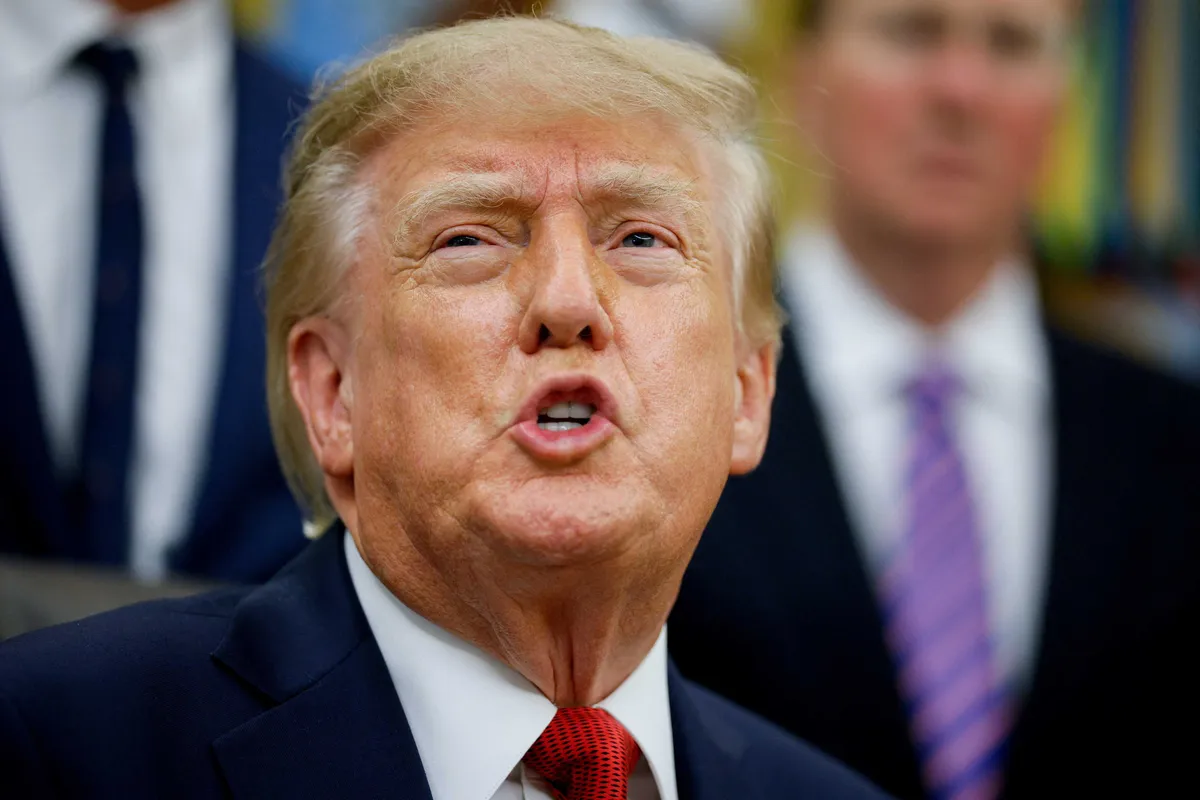
Luke Nicastro, a senior editor at The American Conservative, argued on Monday that the "minor concessions" Greenland made under the security deal announced by President Donald Trump over the weekend were not worth the diplomatic "damage" they cost the United States. In a commentary for the magazine, Nicastro asserted that the "fractures" Trump opened with U.S. allies in Europe will be the agreement's true legacy.
"The Great Greenland Crisis has ended, and Donald Trump has declared victory," Nicastro wrote. "The barren, icy prize is finally ours. Or is it? Despite the usual bluster, bravado, and social media posts showing Greenland colored in with the Stars and Stripes, Trump's avowed aim of annexation was not accomplished."
Greenland, the world's largest island, is a self-governing territory within the Kingdom of Denmark, a founding member of NATO. As Nicastro noted, Danish Prime Minister Mette Frederiksen emphasized that the deal "recognizes the sovereignty and territorial integrity of the Kingdom [of Denmark] and the Greenlandic people's right to self-determination." He also observed that the agreement does not appear to grant the United States new economic privileges, which had been another of Trump's stated goals. In his assessment, "the deal amounts to a kind of tinkering with the status quo."
For the past 75 years, the U.S. military presence in Greenland — an Arctic island sitting between North America and Europe in the North Atlantic — has been governed by the Greenland Defense Agreement, a 1951 pact between the United States and Denmark that grants the U.S. military basing and access rights across the territory for an indefinite period. "Most of the benefits the White House has highlighted since Friday — the access to all of Greenland, the lack of U.S. payments, even what the president arrestingly called the pact's 'Infinite Life' — were in fact already provided for by the 1951 agreement," Nicastro wrote.
The only noteworthy changes, he argued, are provisions that will prevent non-NATO nations from basing forces on the island and put guardrails around investment there by adversaries. But the deal's biggest impact, in his view, lies in how Trump's strategy for reaching it has changed Europe's perception of the United States.
"For a year and a half, the Trump administration has employed cajolery, bluster and bullying to obtain an outcome Europe has always held to be flatly unacceptable," Nicastro wrote. "Trump has sought to buy Greenland; he has tried to use tariffs to dislodge it from Denmark; he has suggested the United States may take the island by force. And behind the half-baked security rationales, the true motive has always been clear: to close America's biggest real estate deal since the Mexican cession, at Europe's expense. The effect has been to unnerve Europe, and to force its leaders to question their most deeply held assumptions about American policy and power. More than anything else in the last few years, it has persuaded the Europeans that the United States has changed. That the old guarantor of security, which could be depended upon to commit its blood and treasure to defending the other side of the Atlantic — and even defer to its wards on the planning and conduct of that defense — was no more." The Mexican Cession Nicastro invoked was the 1848 transfer of what is now the American Southwest from Mexico to the United States under the Treaty of Guadalupe Hidalgo.
In other words, Trump's Greenland efforts have pushed allies to question whether American security commitments are "dependable or even desirable."
"The damage will endure," Nicastro concluded. "The fractures created an American president threatening economic and even military devastation in order to seize European territory cannot be entirely papered over. Even if the push was initially attributable to Trump's personal proclivities, the fact that the entire U.S. policy apparatus (including the Pentagon) was willing to sustain such an adversarial campaign against a treaty ally will resonate in Old World capitals for years to come."

