Grayscale Sees Three Reasons Bitcoin May Be Worth Buying at Current Prices
Key Takeaways
- •Grayscale said bitcoin’s long-term adoption trend remains intact, supported by limited supply, government deficits, blockchain use in financial services, and changing portfolio preferences.
- •The firm said bitcoin’s current bear market is about 10 months old, which is near the average length of previous cyclical bear markets.
- •Grayscale pointed to the Federal Reserve’s July decision to keep the policy rate at 3.5% to 3.75%, while warning that future rate hikes could hurt bitcoin.
- •Bitcoin reached $79,461 on Aug. 21 before easing toward $77,000, reflecting a recovery aided by spot buying, short covering, and ETF demand.
- •Grayscale said its view reflects market conditions and does not mean the current price is necessarily the final bottom.
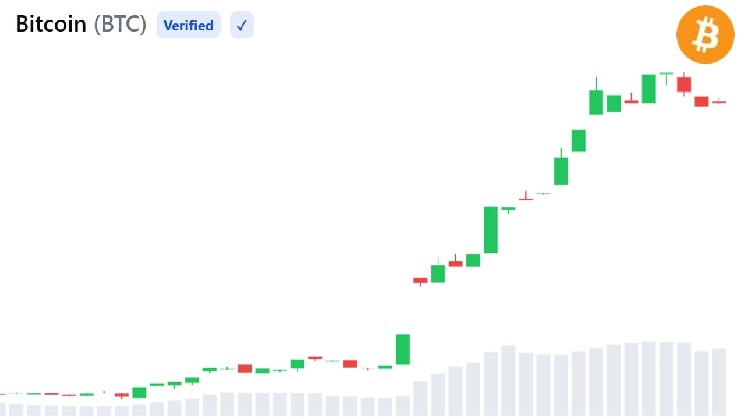
Grayscale Sees Three Factors Converging for Bitcoin Buyers
Bitcoin may currently offer a worthwhile buying opportunity for investors with long-term horizons, according to Zach Pandl, Head of Research at crypto asset manager Grayscale. In an Aug. 21 assessment of whether it is a good time to buy bitcoin, Pandl framed the decision around three questions, while stressing that nobody knows how bitcoin will perform in the future.
Grayscale is among the most established crypto asset managers, best known for the Grayscale Bitcoin Trust, which converted into a spot bitcoin exchange-traded fund in January 2024 when U.S. regulators approved the first wave of such products — the same ETF channel whose demand helped support bitcoin's recent recovery.
Grayscale generally discourages investors from trying to time the market and instead advocates considering bitcoin within a diversified portfolio. Pandl noted that uncertainty over the right purchase price can prevent some people from making any allocation at all, particularly after large market declines or sudden rallies.
"We think all three suggest current prices may offer a favorable entry point for investors with long-term horizons," the Grayscale head of research said. "The structural adoption trend is intact, we are deep into the bear market, and the macro outlook looks broadly favorable. Of course, time will tell."
Those three questions address, in turn, structural demand, bitcoin's position in its recurring market cycle, and the macroeconomic backdrop — the considerations Grayscale views as most relevant for an asset that produces no income.
Valuing an Asset With No Cash Flow
Unlike a stock or bond, bitcoin does not generate cash flow, which makes conventional valuation methods difficult to apply. Because investors cannot estimate its value from earnings, dividends, or interest payments, decisions often depend on adoption trends, market cycles, monetary conditions, and expectations about future demand. Analysts frequently compare bitcoin to commodities such as gold on this basis, tracking adoption metrics, exchange flows, and ETF holdings as substitutes for the earnings and yield data used elsewhere in finance.
Bitcoin's recovery has made the timing question more immediate for anyone weighing a purchase. BTC climbed to $79,461 before easing toward $77,000, a move that underscores how quickly market conditions can change.
Adoption and the Bitcoin Cycle Support Grayscale's Case
The first factor is whether bitcoin's long-term adoption trend remains intact despite its price decline from the October 2025 record. Grayscale has previously identified three forces driving bitcoin adoption: government deficits, growing blockchain use throughout financial services, and generational changes in how investors construct portfolios.
Government borrowing supports Grayscale's view that demand could increase for assets with limited supplies, although higher debt does not automatically produce bitcoin purchases. Official U.S. Treasury debt figures showed total public debt outstanding stood at approximately $40.03 trillion on Aug. 20, including $32.28 trillion held by the public. Bitcoin's protocol underpins the "limited supplies" framing: its total issuance is capped at 21 million coins, and the rate of new supply is cut in half roughly every four years, most recently in April 2024.
The second consideration is bitcoin's position within its recurring cycle of price expansions and contractions. Grayscale said the current bear market was 10 months old, while the mean and median duration of the four previous cyclical bear markets was 11 to 12 months. Before its August recovery, bitcoin had already endured a prolonged but comparatively shallow bear market.
Interest Rates Could Determine Whether Bitcoin Has Bottomed
The third factor is the outlook for macroeconomic risks, particularly real interest rates and Federal Reserve policy. The Federal Open Market Committee's July decision maintained the federal funds rate at 3.5% to 3.75%, although three officials preferred a quarter-percentage-point increase. Grayscale said a future rate hike could expose bitcoin to further losses. For an asset that produces no income, higher real rates raise the opportunity cost of holding it rather than yield-bearing securities — a standard reason rate expectations feature prominently in analysis of non-yielding assets such as bitcoin and gold.
Financial conditions had recently moved in bitcoin's favor when Pandl published his assessment. Bitcoin reached $79,461 on Aug. 21 as spot purchases, short covering, and exchange-traded fund demand supported a strong market recovery. Analysts nevertheless warned that coins transferred to exchanges at a profit could create renewed selling pressure.
For readers tracking the three factors Grayscale cites, the relevant signposts are publicly observable: scheduled FOMC decisions and officials' published rate projections, the Treasury Department's regularly updated debt figures, and the daily flow data reported for U.S. spot bitcoin ETFs.
"Investors trying to determine if now is a good time to buy bitcoin should consider structural adoption trends, the state of the cycle, and macro risks," Pandl added. "We think all three factors combine to make this a favorable entry point for investors."
How Buyers Access Bitcoin — and a Caveat
People can buy bitcoin through several payment methods while choosing whether the asset goes to a personal wallet or a platform account. Fees, identity requirements, and settlement times vary by method, while custody arrangements determine whether the buyer or the platform controls the keys.
Grayscale's assessment concerns market conditions, not certainty that the current price represents the final bottom.

