Grayscale Says Crypto Looks Oversold, but AI Uncertainty Is the Catch
Key Takeaways
- •Grayscale's Nov. 23 research note described crypto as oversold with sound long-term fundamentals but tied the market's near-term direction to uncertainty surrounding artificial intelligence.
- •Bitcoin hit a low of $55,254 on Nov. 21, leaving the price about 56% below its October 2025 peak of $124,824 in a downturn Grayscale dates to at least 411 days, the longest but shallowest on record.
- •Bitcoin moved in the same direction as the Nasdaq-100 in four of five sessions between Nov. 19 and Nov. 25, and its combined daily swings totaled 14.8 percentage points versus the index's 17.3, making it the less volatile asset.
- •AI-linked stocks moved in opposite directions on Nov. 23, with Nvidia shares closing 31.5% higher after the board reinstated Jensen Huang as CEO, while Anthropic's shares sank below their $83 IPO price to $82.79 by Nov. 25.
- •U.S. spot Bitcoin ETFs lost roughly $1.25 billion over the three sessions following the note, pushing November outflows to about $5.4 billion, the funds' worst month since their January 2024 launch.
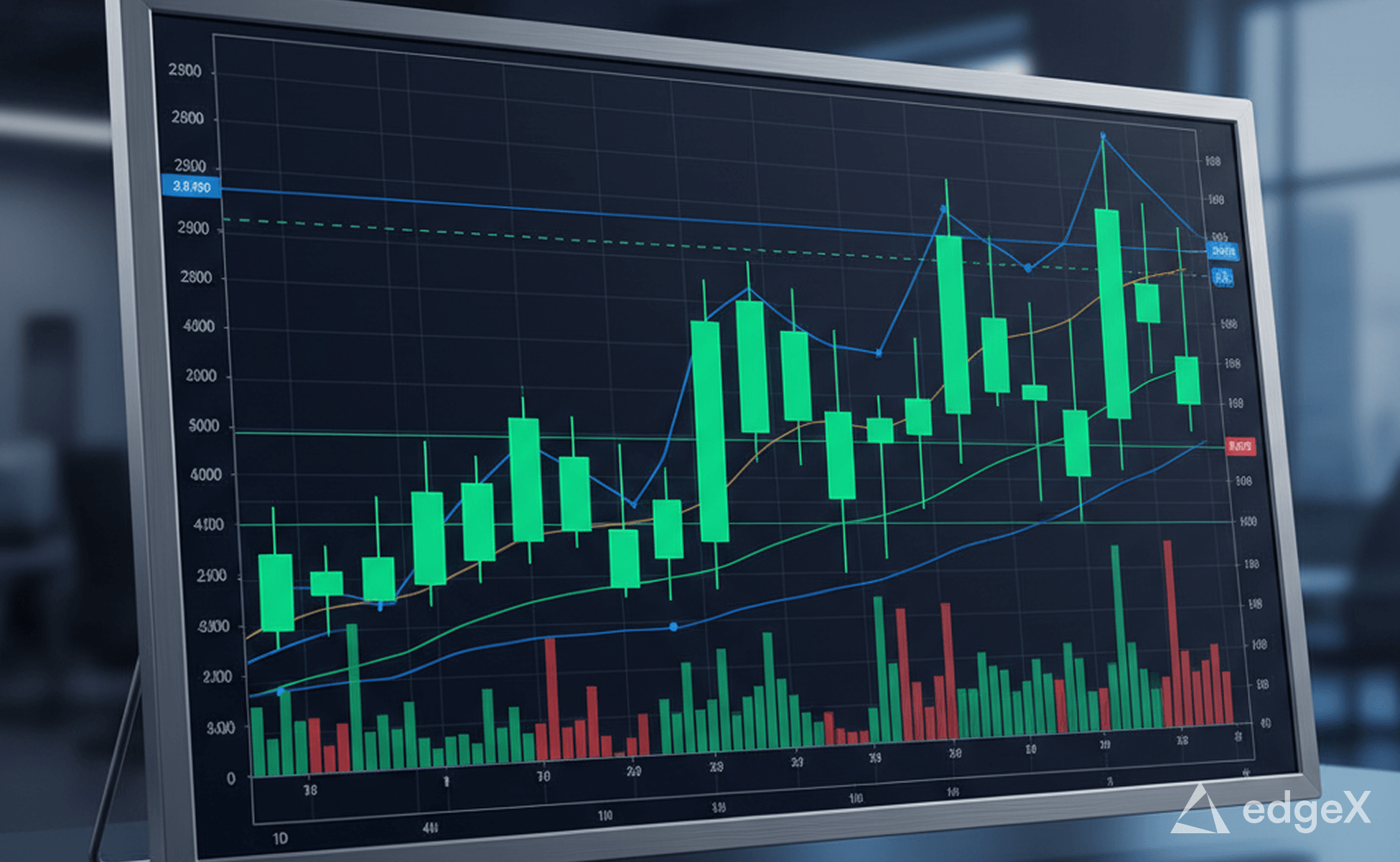
Crypto looks oversold and its long-term fundamentals remain favorable, but the market's near-term direction hinges on uncertainty surrounding artificial intelligence, Grayscale head of research Zach Pandl wrote in a Nov. 23 research note. The assessment landed while U.S. spot Bitcoin ETF investors kept selling and AI-linked equities sent mixed signals about the technology sector's health.
What Grayscale Sees in the Selloff
According to Bloomberg intraday data cited by Grayscale, Bitcoin bottomed on Saturday, Nov. 21, at $55,254. The drop broke the June 30 low near $58,000 and left the price roughly 56% below the October 2025 peak of $124,824. Grayscale dates the downturn back at least 411 days, which would make it the longest bear market on record — though also the shallowest.
The oversold reading rests on positioning rather than price alone. Global crypto ETPs — exchange-traded products, the umbrella category that includes ETFs and similar listed funds — lost more than $2 billion in the week before the note. Bitcoin and Ether futures open interest, the tally of outstanding futures contracts, had fallen back to summer lows. Options traders were paying a high premium for puts, and the implied-volatility curve was deeply inverted, meaning near-dated contracts were priced for bigger swings than longer-dated ones. Grayscale calls current prices an attractive entry point for medium- and long-term holders; as an issuer of crypto ETPs, it also has a commercial stake in demand for the asset class.
The AI half of the argument is a list rather than a mechanism. The note names Jensen Huang's removal and return at Nvidia, Anthropic's IPO, outages at the FAA, Microsoft Outlook and the NSA, and a midterm election result that could affect data center construction. It does not explain how those events transmit to crypto prices. The trading sessions around the note offer a partial test.
Same Direction, Smaller Swings
Measured from one U.S. close to the next, Bitcoin matched the Nasdaq-100's direction on four of five sessions between Nov. 19 and Nov. 25, with five-day returns of -3.8% for Bitcoin against -3.9% for the index — leaving the two almost level. The Nasdaq-100 tracks the 100 largest non-financial companies listed on Nasdaq and is heavily weighted toward technology, the sector at the center of Grayscale's uncertainty argument. The less expected part is the size of the moves. Bitcoin is normally the more volatile of the two, yet the Nasdaq-100's daily moves added up to 17.3 percentage points against Bitcoin's 14.8.
Bitcoin returns use Coinbase BTC-USD hourly candles ending at 21:00 UTC, the 4 p.m. New York close. The Nov. 23 Bitcoin figure runs from Friday's close and includes weekend trading. Index data are Nasdaq-100 closes via FRED.
The one split came on Nov. 25, when Bitcoin gained and the index slipped. That morning, the Bureau of Economic Analysis reported that the PCE price index — the inflation measure the Federal Reserve follows most closely — rose 3.8% in the year to October, with core PCE up 3.3%. The release shares a date with the divergence, but five sessions are too few to say whether it caused it. The same limit applies to the whole comparison: it shows when the two assets moved together, not why.
Nvidia and Anthropic Pulled AI in Opposite Directions
Both companies appear on Grayscale's list — Nvidia as the leading maker of chips for AI data centers, Anthropic as the developer of the Claude models — and both traded heavily on Monday, Nov. 23. Nvidia's board reinstated Huang as president and CEO that day, 12 days after it accepted his resignation — disclosed in an SEC filing — and named CFO Colette Kress interim chief. The board said it saw no national security risk in his return and that an independent committee would keep investigating reports that he had been the target of a foreign intelligence effort. Nvidia shares closed 31.5% above Friday's level, per Nasdaq historical data, their biggest one-day gain since May 2003, as the Nasdaq Composite rose 6.5% for its strongest session since April 9, 2025.
Anthropic moved the other way. The company priced its IPO at $83 on Nov. 18 and closed its first session on Nov. 19 at $97.17. Its shares fell 1.4% on Nvidia's rally day and closed at $82.79 on Nov. 25, below the offer price and nearly 15% under the debut close, according to Nasdaq trading data.
Bitcoin reacted to the Nvidia headline without keeping the gain: it reached about $64,600 and was back near $61,240 when U.S. stocks closed, as shown in Coindoo's intraday breakdown. If AI risk is what steers crypto, Monday showed it is not a single dial. Two of the names Grayscale cites closed in opposite directions on the same day, and over the five sessions Bitcoin lined up with the broad index rather than with either stock.
ETF Investors Kept Selling After the Note
Grayscale's note came out on a Monday. U.S. spot Bitcoin ETFs — funds that hold Bitcoin directly and trade through ordinary brokerage accounts — lost about $570 million that day, $231 million on Nov. 24 and $453 million on Nov. 25, according to Farside Investors data — roughly $1.25 billion across three sessions. Because those flows are tallied and published daily, they offer one of the most visible running measures of investor demand for Bitcoin. CoinDesk reported that the Monday outflow had already made November the funds' worst month on record — a history that stretches back only to their January 2024 launch — ahead of June's $4.5 billion. With the next two sessions added, the month's total reached about $5.4 billion.
Options traders were still hedging as well. Glassnode's seven-day put-to-call volume ratio, which divides put contracts traded by call contracts over the prior week, reached 1.7 on Nov. 24, its highest since June 2022 — a level that means more trading in downside protection than in upside bets — as covered in Coindoo's look at Bitcoin put demand. Grayscale reads that kind of stress as evidence that selling has gone too far; the flow data show investors were still selling through Nov. 25.
What a Convincing Rebound Would Need to Show
- A gain that survives the U.S. session. Measure it at 21:00 UTC, the same close used in the comparison, rather than at the intraday peak.
- Several days of ETF inflows in a row. One positive session in Farside's daily table would not reverse a month of record withdrawals.
- Cheaper puts on a like-for-like basis. Compare contracts with the same expiry and a similar distance below the spot price. A fixed strike gets more expensive as Bitcoin falls toward it, so its premium can rise even when demand for protection does not.
This article was originally published by Coindoo.

