Trump's Effort to Undermine Senate Majority Leader Thune Galvanizes Republican Support
Key Takeaways
- •Senate Republicans have publicly rallied behind Majority Leader John Thune after President Trump deliberately declined to endorse him for another leadership term.
- •Thune succeeded Mitch McConnell as Senate GOP leader in January 2025 and has since managed an increasingly strained relationship between the White House and Senate Republicans.
- •GOP senators indicated they would resist any attempt by Trump to replace Thune, even while continuing to support the president on a range of policy issues.
- •Senator John Kennedy contradicted Trump's claim that voters are not angry at him, stating that voters are frustrated with Republicans broadly and most concerned about cost of living.
- •A growing contingent of Senate Republicans now considers Trump's slumping economic approval ratings a bigger electoral liability than Thune's leadership, marking a shift from the dynamics of Trump's first term.
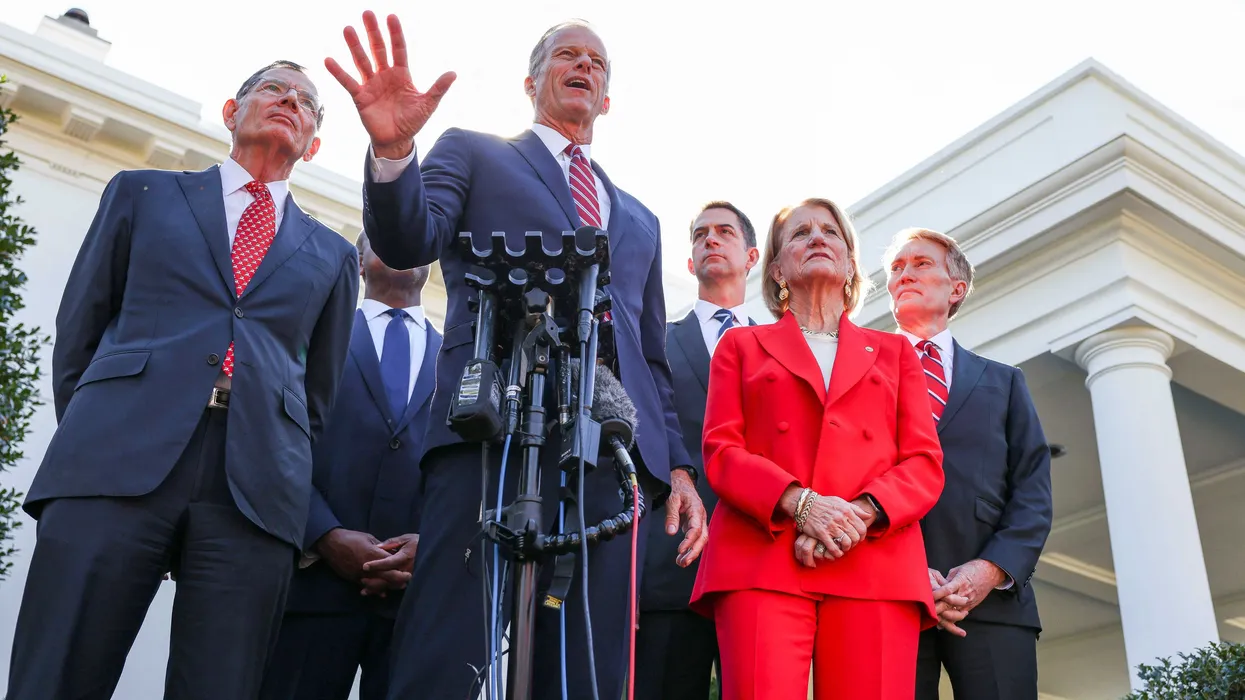
President Donald Trump's bid to weaken Senate Majority Leader John Thune (R-SD) appears to be producing the opposite of its intended effect, with Senate Republicans rallying publicly behind their leader despite the president's refusal to endorse him for another term.
Thune, who succeeded Mitch McConnell as Senate GOP leader in January 2025, has spent his first months in the role managing an increasingly volatile relationship between the White House and Senate Republicans — a dynamic that has only intensified as the midterm cycle accelerates.
In a recent interview with Punchbowl News, Trump deliberately avoided offering Thune an endorsement for another stint in GOP leadership. However, as The Hill reports, Thune's Senate colleagues moved quickly to fill that void.
GOP senators are closing ranks around Thune, asserting he will "have their full support" no matter whether Trump attempts to recruit a primary challenger for the leadership post.
Sen. Jerry Moran (R-KS) articulated the prevailing sentiment among his colleagues in remarks to The Hill: "There's a lot of respect for John Thune. There's a lot of recognition of how he works and how difficult his job is and a belief that he's doing it really well under difficult circumstances."
Moran added that Republican senators have been willing to yield to the president on a range of issues but would draw a firm line against any effort by Trump to force Thune out or handpick a replacement.
Even conservative Republicans who have been pressuring Thune to keep the Senate in session during the August recess conceded the difficulty of his position. Sen. Rick Scott (R-FL), a prominent advocate for the SAVE America Act, acknowledged: "It's a hard job, it's really a hard job."
During the same Punchbowl News interview, Trump maintained that Republican voters are "not angry at me, but they are angry at Republicans" in Congress. Republican senators pushed back against that characterization.
Sen. John Kennedy (R-LA), speaking with The Hill, offered a blunt counterassessment: "I think Republicans are angry at all of us, I mean the voters. I think the voters are angry, period. And I think they're angry most about cost of living, and I think that's what this election is going to be primarily about."
A growing contingent of Senate Republicans now views Trump and his slumping approval ratings — especially on economic matters — as a more significant political liability than any decisions emanating from Thune's leadership team, according to The Hill. GOP lawmakers are increasingly distancing themselves from the president heading into November, as polling reflects independent voters drifting away and Republican voter enthusiasm on the decline.
The dynamic marks a notable shift from Trump's first term, when his endorsements and public pressure campaigns routinely dictated Republican primary outcomes and internal leadership decisions. The Senate GOP's willingness to publicly defy that pressure now reflects both institutional loyalty to Thune and a calculated read of the electoral landscape, where Trump's economic approval numbers have become a growing concern for incumbents defending competitive seats.
