Republicans Hold Rare Midterm Convention as Experts Warn of 'Political Suicide' for the GOP
Key Takeaways
- •The GOP is holding a rare midterm convention in Dallas this week, promoted as a primetime showcase to energize Republican voters, with all 435 House seats and roughly a third of the Senate on the November ballot.
- •A Politico survey of more than 70 Republican candidates and members found 45 who do not plan to attend or remain undecided, with some deterred by prior commitments or the $25,000 attendance cost.
- •A Reuters/Ipsos poll put Trump's approval at 33 percent, the lowest of his political career, while 46 percent of Democrats described themselves as very enthusiastic about voting versus 31 percent of Republicans.
- •Several Republican candidates, including in Texas, Kentucky, Nevada, and Alaska, have quietly removed Trump references and imagery from their campaign websites.
- •Analysts such as Tara Setmayer, Allan Lichtman, and Charlie Sykes warned the convention could backfire, arguing Trump's unpopularity may alienate independents and fail to inspire the base.
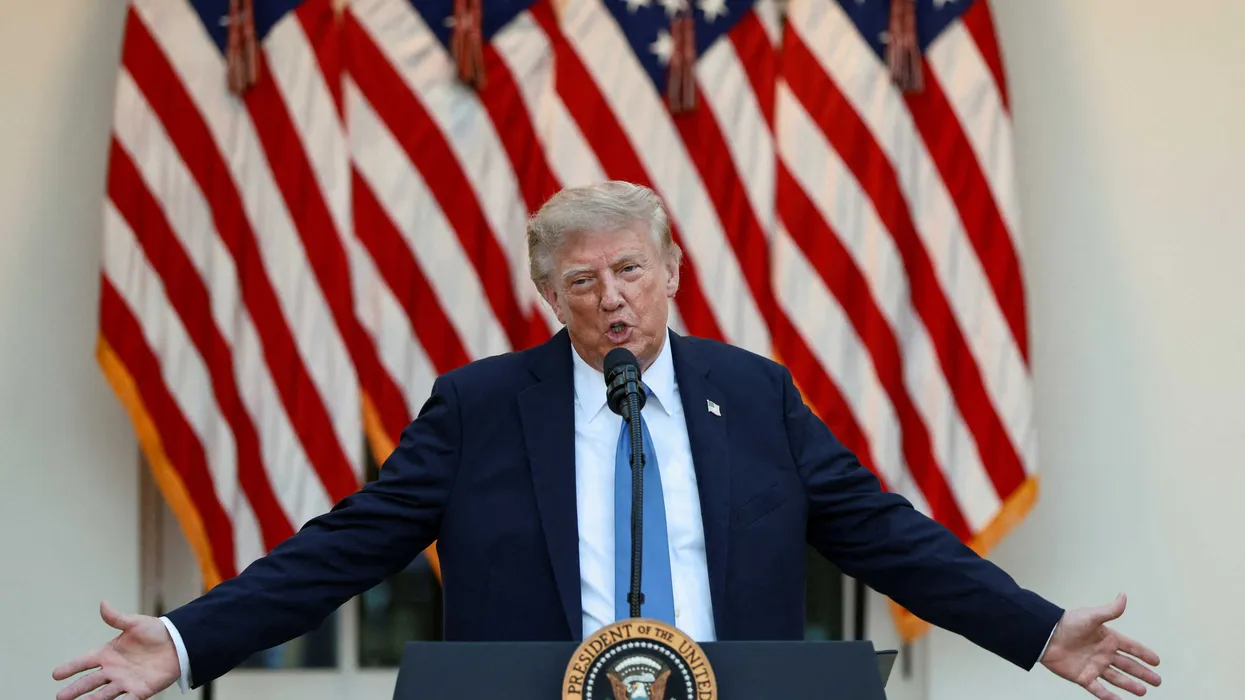
The Republican Party will hold a rare midterm convention this week — a practice that political insiders, drawing on past experience, have dismissed as "crazy" for the chaos and expense it injects into an election season. Midterm conventions are highly unusual in modern American politics; national nominating conventions are normally held only in presidential years, when the party formally selects its White House nominee. Yet at President Donald Trump's urging, the GOP is proceeding anyway, and experts caution the move could steer the party toward "political suicide."
According to new reporting by the Guardian, published Monday, the Republicans' Dallas convention has been promoted as a "primetime showcase" designed to lift morale, nationalize the congressional elections, and energize Republican voters. But, as the paper noted, "success is far from guaranteed. The made-for-TV spectacle clashes directly with the two opening games of the American football season. A Politico website survey of more than 70 Republican candidates and members found 45 who either do not plan to go to Dallas or are still thinking about it. Some cited prior commitments while others balked at the $25,000 price of attending."
Trump, for his part, has made clear that the event revolves around him — and Newsweek reports that this may be a losing strategy. The stakes are considerable: all 435 House seats and roughly a third of the Senate are on the ballot in November, and the party of an unpopular president historically tends to lose ground in midterms, making base enthusiasm a central concern for GOP strategists.
"This is essentially a Trump rally that they're calling a midterm convention," said Elaine Kamarck, a senior fellow in governance studies at the Brookings Institution. "They're trying to get enthusiasm among their base because that's what they need for November. Basically, this is a Trump show."
According to the Guardian, however, "It appears the plan could backfire. Trump's approval rating is at 33 percent, the lowest point of his political career, according to a Reuters/Ipsos poll last week. Democrats seem more fired up about the midterms with 46 percent describing themselves as 'very enthusiastic' about voting in November, compared with 31 percent of Republicans."
Tara Setmayer, a former Republican communications director on Capitol Hill, argues that anchoring a midterm convention to a failing president amounts to "political suicide."
"It is an incredibly risky strategy for any Republican at this point to hitch his wagon to Donald Trump," Setmayer said. "On every issue that Trump was once strong on he is underwater, from the economy to immigration."
She added: "The idea that he's going to excite people is flawed at this point, given the polling numbers in Donald Trump's own constituency. They're not inspired and this vanity convention is not going to change that with 60 days to go to the election. If anything, it's going to remind people of how dissatisfied they are under Donald Trump's second term."
The Guardian also reports further signs that the president "could be more of a curse than a blessing": "Some candidates are quietly scrubbing his likeness from their websites in a tactical retreat. In Texas, candidate Carlos De La Cruz replaced 'Trump Conservative' with 'Proven Conservative' on his homepage, erasing a line about being 'ready to be President Trump's wingman in Congress' for a platitude about 'servant leaders.' In Kentucky, Ralph Alvarado pivoted to 'Independent Leadership.' In Nevada, Martin O'Donnell, a music composer best known for his work on the Halo video game series, no longer features his Trump endorsement photo on his website. In South Texas, Eric Flores replaced 'Support for President Trump's Agenda' with 'Lower the Cost of Living.' In Alaska, Nick Begich edited his homepage to a simple: 'We have delivered for Alaska.'"
Trump has also faced Republican pushback over his order renaming Lake Ontario and his war on Iran. He has shrugged off all of this criticism.
Allan Lichtman, a history professor at American University in Washington, told the Guardian: "He doesn't care about any of these other candidates. He only cares about two things when it comes to the midterms: one, that he won't be investigated and two, that he can get his appointments through the Senate. He demands loyalty for everyone else and gives loyalty to no one."
Lichtman added: "People aren't buying what they have to say, which is things are getting better, it's the golden age, prices are coming down, we're winning the Iranian war, our immigration policy is great. They're not gonna buy it just because it's a convention. Plus, as we know, Trump always goes off script and that's never helpful to his party."
Conservative commentator Charlie Sykes contends the midterms will hinge largely on whether Trump's historic unpopularity outweighs Republican accusations that Democrats are "communists" — a theme certain to feature prominently at the convention.
"The big question is, who is going to be paying any attention to this?" Sykes asked. "Who is going to be watching this other than the hardcore base, the already convinced? I have a very hard time imagining independent voters tuning in to see the Trumpist pageantry."
"It is a Trump-a-palooza and once again Donald Trump insists on being – what was the old phrase about Teddy Roosevelt? – the bride at every wedding and the corpse at every funeral," Sykes said. How the convention lands — and whether it moves enthusiasm among voters beyond the base — will be evident when the midterms arrive roughly 60 days later.
