"The Wheels Are Coming Off": Panic Grips GOP as Iran War Backlash and Record Diesel Prices Cloud Midterm Outlook
Key Takeaways
- •Diesel prices have set records daily for the past two weeks, pushing up costs for food and goods and placing particular strain on the rural economy.
- •Pollsters briefing Iowa House Republicans warned that seats in districts Trump carried by more than 15 points are no longer safe, and that 2026 could be a worse midterm environment than 2006.
- •All but four Senate Republicans, including Chuck Grassley, voted against a Thursday resolution seeking to block Trump from ordering additional strikes on Iran.
- •Ohio Senator Jon Husted, locked in a competitive race against Sherrod Brown, called for the war to end quickly to lower gas prices but ultimately voted to continue it.
- •Since World War II, the president's party has lost House seats in every midterm election except 1998 and 2002.
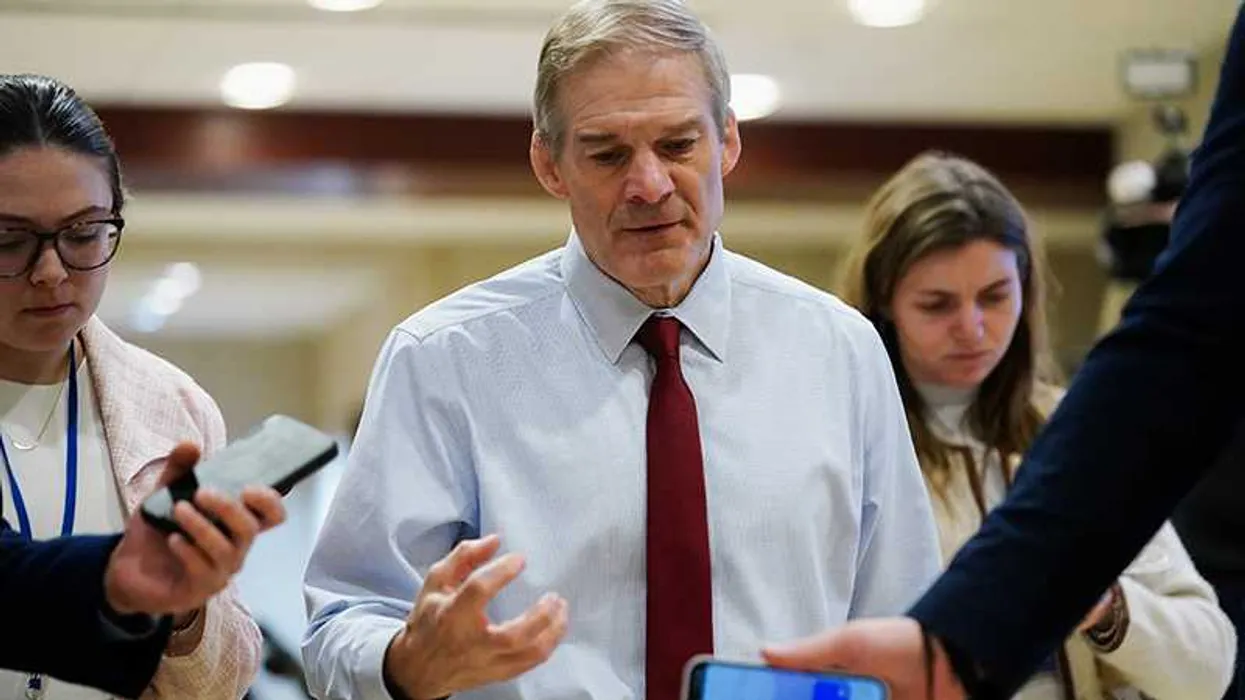
The Washington Sun called it "panic week". Over the last five days, Republicans across the board appeared to wake up to the fact that things are not going to get better between now and the congressional elections in November, when every House seat and roughly a third of the Senate will be on the ballot. It was the week in which Republicans everywhere realized, all at once, that the light at the end of the tunnel may be an oncoming train.
"I don't want to say the bottom is falling out yet, but I feel like we are in this place, and the realization is setting in, that some tough decisions will need to be made," an unnamed GOP consultant told the Sun. "You can't get around the fact that Democrats have the advantage on the economy, on gas prices. There's no choice in this election. It's a referendum on Trump."
It is a referendum on the president, to be sure — and, more precisely, on his decision to attack Iran. Republicans oppose it on ideological grounds: Trump, after all, was supposed to be the "America First" president. But they oppose it even more for economic reasons. The cost of the war is burning up the economy, especially the rural economy, which rises and falls with the price of diesel. Diesel has broken records every day for the last two weeks. Because diesel powers the trucks, tractors, and freight that move food and goods, its price feeds quickly into the cost of staples at the kitchen table.
"The war's just gone on too long," a source close to Mike Rogers' Senate campaign in Michigan told Politico this week, after Rogers released an ad calling for an end to the war. "Mike still thinks Iran shouldn't have a nuclear weapon, but we originally thought this would take six weeks. Voters have been paying for it at their kitchen tables for too long."
How bad is it? Consider Steve Deace, a popular right-wing radio host in Iowa. On Thursday afternoon, he reported on a briefing with Iowa House Republicans at which their own pollsters delivered a stark warning: "if you are in a plus-15 district, [that] you're within the margin for error, if you're in a plus-10 district you're underwater, and that [the midterms] might end up being an even worse midterm environment than 2006."
In practical terms, a seat is not safe even in a district Trump carried by more than 15 points, and it is in danger if he won it by more than 10. In Iowa, the backlash against the Iran war is now so large that 2026 is shaping up to be another 2006 — the year the backlash against the Iraq war wiped out three of Iowa's five congressional seats for the GOP, part of a national wave that also cost Republicans control of the House and Senate. As Deace knows well, Iowa was a bellwether that year. And the historical pattern is not kind to the party in power: since World War II, the president's party has lost House seats in every midterm but two, in 1998 and 2002.
"If the environment is this bad in my home state, where Trump has been the most popular political figure over the last decade, I can't imagine where it is everywhere else," Deace said.
If panic is setting in, one would expect Republicans to take a stand — at the very least, to signal to the president that something has to change before it is too late. After all, Marjorie Taylor Greene, long one of Trump's most reliable allies on Capitol Hill, said last week that "this is Trump's fault." She added: "It's $8.49 for diesel in California. It's $6.59 in Georgia. I don't care if it's Georgia or California. It's way too high."
Yet while some Republicans, like Rogers, give lip service to bringing the war to an end, that is about the extent of it. Even with the end times approaching, no one else seems ready to stick their neck out. Trump is polling at 29 percent in one survey, but panic is being accompanied by paralysis. All but four Senate Republicans, including Iowa's Chuck Grassley, the longest-serving Republican in the Senate, voted against a resolution Thursday to block Trump from ordering more strikes on Iran. They voted to continue supporting a war that is eating their party from the inside out.
Even Jon Husted balked on that vote. The Ohio senator, who is in a tough race against Sherrod Brown, made news this week by appearing to distance himself from Trump. "The war needs to come to an end as quickly as possible so that we can lower gas prices," he said. when it came time for action to match the conviction of his words, he backed away. Husted is a stand-in for his party: GOP voters may be screaming for relief, and GOP candidates may be panicking, but so far most Republicans will not choose to defy Donald Trump.
Even Deace, who can clearly see the portents of doom on the horizon, believes what is needed is more Donald Trump, not less. "We need the president out on the stump ASAP," he wrote. Deace called on the president to "articulate specifically what the mission and victory is in Iran and Hormuz, because out here in the cheap seats it feels like another Middle East War quagmire regular folks are paying for on both ends all over again." Hormuz is the Strait of Hormuz, the narrow waterway between Iran and the Arabian Peninsula through which a large share of the world's oil passes. From here, the markers to watch are concrete: whether diesel keeps setting daily records, whether more than four Senate Republicans break with the president on the war, and whether Trump ever supplies the mission definition Deace demanded.
And the situation may only get worse from here. "Blaming the American president for price inflation is a way of life here," Virginia Heffernan wrote for The New Republic during "panic week." "Live by it; die by it. Trump did nothing but savage Joe Biden for high prices born of the Covid pandemic. Now he expects a pass for inflation he's actively helped create."
The far right has abandoned the president. ("I don't just want Republicans to lose," Nick Fuentes, the white supremacist, said. "I want Republicans to be annihilated from the face of the planet.") So have right-wing pundits. ("The war, cost of living (especially gas), and how he acts like he doesn't give a s--- is what has pushed ['Red America'] over the edge," Rod Dreher said.) Meanwhile, Donald Trump appears so depleted that he can no longer walk in a straight line.
"The wheels are coming off," journalist Mark Halperin wrote this morning.
"As I sift through my inboxes and social media feeds over the most recent extended news cycle," he wrote, "what I see instead is ... a political figure who is swimming against the tide of a Blue tsunami as big as Connecticut not because Ken Martin is suddenly a genius, but because an unpopular war and high consumer prices is no way to win a midterm election." (Ken Martin chairs the Democratic National Committee.)
If Republicans will not choose to defy Trump, democracy will choose for them.

