GOP memo warns of redistricting losses and a possible permanent Democratic House majority
Key Takeaways
- •An internal RSLC memo warns that Republican underinvestment in down-ballot state legislative races could cost the party the 2028 redistricting fights and produce a permanent Democratic House majority.
- •Four major Democratic organizations have committed more than $134 million to state legislative elections, nearly triple the RSLC's pledge of over $50 million.
- •Republicans hold a national fundraising advantage, including MAGA Inc.'s $400 million war chest, but that money is expected to go toward congressional and gubernatorial races rather than state legislature contests.
- •The memo recommends prioritizing state legislatures in Michigan, Minnesota, Pennsylvania, and Wisconsin, where state senate wins could influence up to 12 House districts.
- •The memo's early release, ahead of the 2030 census when all states will redraw maps, signals both parties view upcoming state legislative races as groundwork for the next decade of House district lines.
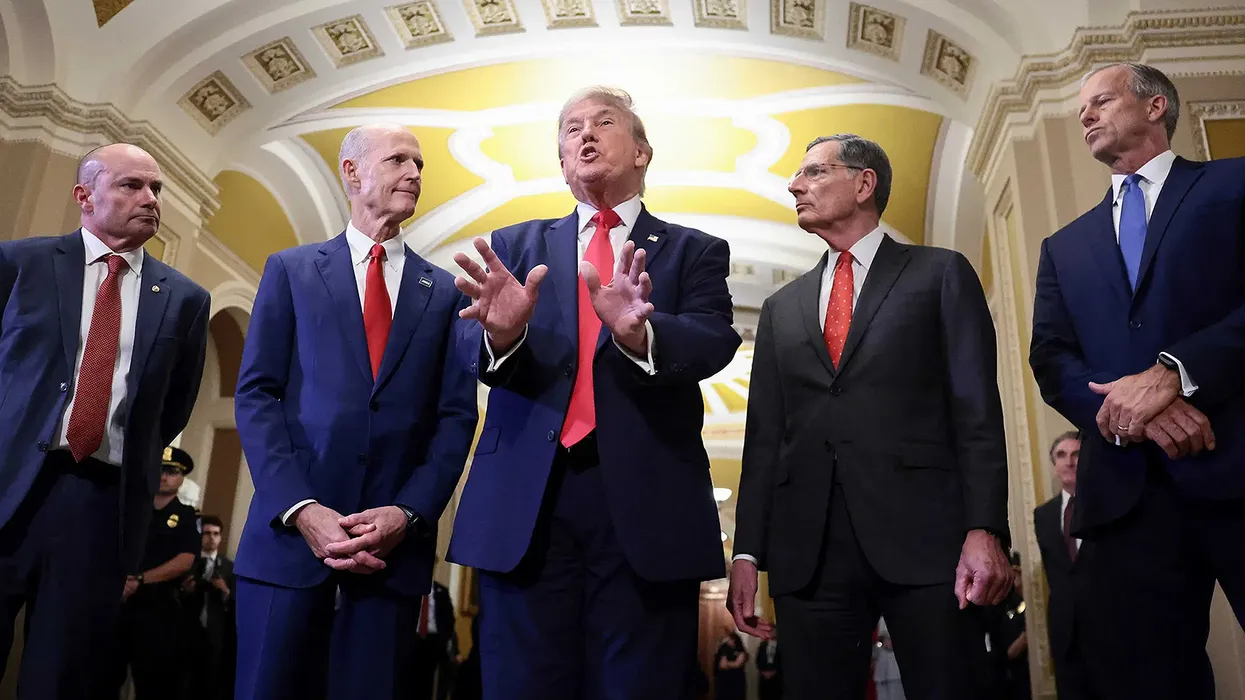
While the Republican Party has made redistricting a central part of its political strategy — especially after President Donald Trump demanded the gerrymandering of Texas last August — a new internal memo says the GOP is worried it could lose the next round of redistricting battles in 2028, potentially producing a map that would create a “permanent Democratic House majority.”
The Washington Examiner reported Wednesday on a memo titled “Battle Beneath the Ballot,” in which the Republican State Leadership Committee argued that the party’s failure to invest in down-ballot state legislative elections could make the decision to launch a redistricting war a major mistake. The concern reflects how mapmaking power works in much of the country: in most states, district lines for Congress and state legislatures are drawn by state lawmakers and signed off by governors, which is why control of state legislative chambers — not just Congress — determines who draws the maps. Some states, such as California and Michigan, have shifted the process to independent commissions, and court challenges and ballot initiatives have repeatedly reshaped who holds the pen elsewhere.
According to the Examiner, the memo said that “Democrats’ four largest groups involved in state legislative elections will outspend the RSLC’s commitment of more than $50 million by almost three-to-one.” The report added that Republicans have a large national fundraising advantage, with MAGA Inc., the Trump-aligned super PAC, holding a $400 million war chest. But, the memo said, that money appears likely to be directed toward congressional and gubernatorial contests rather than lower-profile down-ballot races.
Democrats, meanwhile, have put forward a substantial state-level spending plan. The Examiner said that four major Democratic organizations have announced the following commitments this year: the Democratic Legislative Campaign Committee at $50 million, Forward Majority at $30 million, LCV Victory Fund at more than $50 million, and the National Democratic Redistricting Committee at $4 million. In total, the groups are committed to spending more than $134 million. The DLCC and NDRC, which was founded by former Attorney General Eric Holder, have made state legislatures and redistricting a core focus since Democrats were widely seen as losing the last redistricting cycle after the 2010 midterms, when Republican state-level gains preceded the GOP-drawn maps used through the past decade.
“This flood of national liberal dollars into state legislative races should concern everyone who does not want to see a permanent Democratic House majority,” the memo warns.
The RSLC says more money should be spent at the state level “to ensure the best possible House battlefield in 2028.” The memo also points to the 2030 census, when all 50 states will redraw their voting maps. “If we are serious about preventing a permanent Democratic House majority,” it says, “we must recognize that the fight for Congress begins in state legislative districts, not in congressional campaigns.”
The document argues that a relatively small number of seats could have an outsized effect on key districts. It says Republicans should concentrate on state legislatures in Michigan, Minnesota, Pennsylvania, and Wisconsin, where state senate victories would allow the party to shape up to 12 House districts and potentially give the GOP a significant federal advantage.
The report comes as polling shows Republicans facing major headwinds heading into the midterms, with the party projected to lose its majority in the House and possibly the Senate. Surveys have also found that Democrats hold their strongest lead in polling history on a generic ballot. The memo’s release now, well before the 2028 mapmaking fights it targets, signals that both parties view state legislative races over the coming cycles as groundwork for the next decade of House district lines.

