Former Trump Official Miles Taylor Warns the President Is Increasingly 'Toxic' to GOP Candidates Ahead of the Midterms
Key Takeaways
- •Miles Taylor, a former DHS chief of staff who revealed himself as the anonymous author of a 2018 resistance op-ed, argues in the i Paper that Trump's brand has become toxic to Republican candidates.
- •Trump's approval stands at roughly 34 percent, with some polls showing 30 percent and disapproval near 60 percent, weaker than his 45 percent Election Day rating in 2018 and Joe Biden's standing in 2022.
- •During the 2026 Republican primaries, Trump helped unseat GOP incumbents who angered him, including Rep. Thomas Massie and Sens. John Cornyn and Bill Cassidy.
- •The Cook Political Report rates only 18 of 435 House seats as genuine toss-ups, after mid-decade redistricting that began in Texas sharply reduced the number of competitive districts.
- •The November 3 midterm results will determine which party controls the House and Senate for the final two years of Trump's second term.
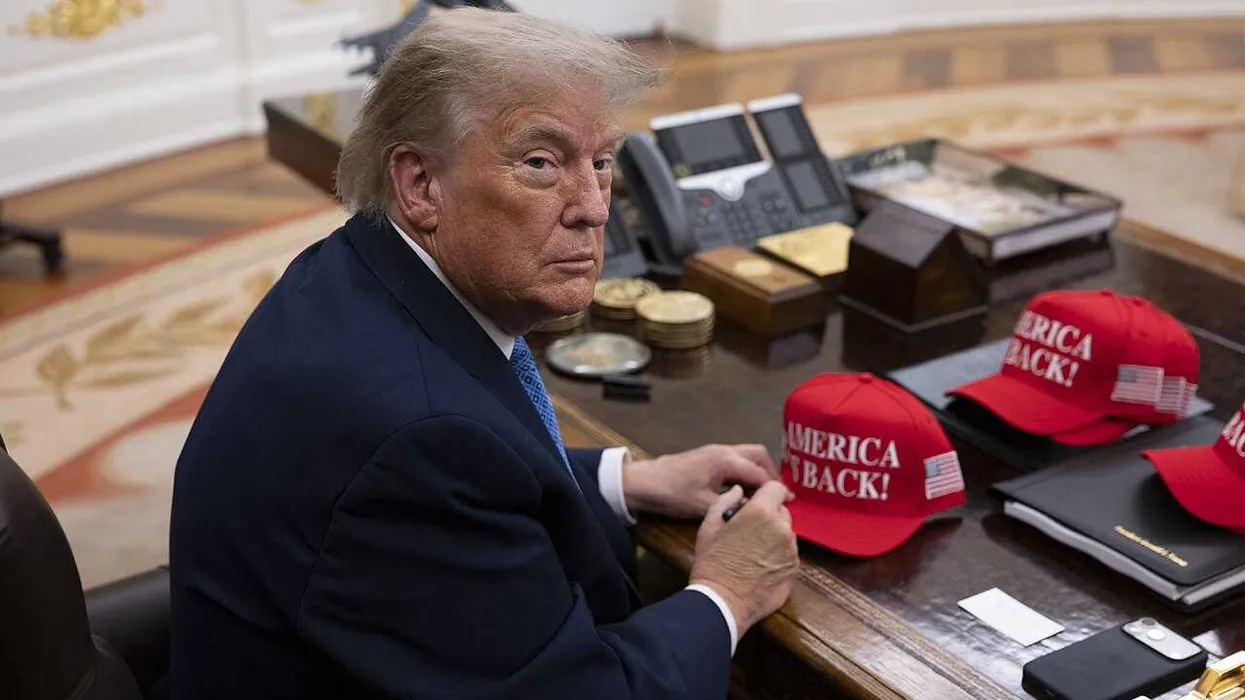
In the 2026 Republican midterm primaries, President Donald Trump has unseated a long list of GOP incumbents who angered him — from Rep. Thomas Massie of Kentucky to Sen. John Cornyn of Texas and Sen. Bill Cassidy of Louisiana. Primary victories, however, are one thing; the general election is another. According to former Trump administration official Miles Taylor, many Republican candidates in swing states and swing districts are urgently trying to distance themselves from the president between now and November 3. The results will determine which party controls the House and Senate for the final two years of Trump's second term.
Taylor served as chief of staff at the U.S. Department of Homeland Security (DHS) during the first Trump administration and has since become a committed Never Trump conservative. In 2020, he revealed he had been the anonymous author of a 2018 New York Times op-ed, "I Am Part of the Resistance Inside the Trump Administration," which described officials working within the administration to push back against parts of the president's agenda, and he endorsed Joe Biden in that year's election. Writing in an article for the UK-based i Paper, he argues that Trump has grown increasingly toxic to GOP candidates as November approaches.
"It's closer to a prayer than a slogan: I wish he would disappear," Taylor says of Republicans' view of the president. "The reference is to Donald Trump, of course. Never before have Republicans had to campaign under the banner of such a weak figurehead, nor one so insistent on stapling his toxic brand to the party, whether the party likes it or not."
Taylor was serving in the first Trump administration during the 2018 midterms, when Democrats rode a major blue wave in the U.S. House of Representatives. Such losses are the historical norm: since World War II, the party holding the White House has lost House seats in nearly every midterm, with 1998 and 2002 the only exceptions. But according to a "prominent" Republican media personality he spoke with recently, the party is even more worried in 2026 than it was then.
"I recounted a story from the last time GOP candidates had to survive a Trump-era off-year election, in 2018, when I was inside the first Trump administration," Taylor explains. "As the midterms approached, I remember friends on then-House Speaker Paul Ryan's team sharing a blunter plea whenever Trump's name was brought up: 'Please go the f– – away.' 'Yeah, they're sayin' that,' the GOP media personality sighed, 'but it's worse this time.'"
"He's right, and the numbers prove it," Taylor continues. "If you compare Trump's standing right now to 2018, you see a tale of two presidencies, electorally speaking. In the summer of 2018, Trump's approval ratings hovered in mid-forties; by Election Day, exit polls put him at 45 per cent. Today, he sits at around 34 per cent, with some recent surveys showing him bottoming out at 30, and with a stunning disapproval rating of around 60 per cent — worse than even Joe Biden's dismal standing at this point in 2022. By nearly every measure, my former boss enters this midterm election as the weakest president in the modern polling era."
Taylor recalls that when Democrats "flipped 41 House seats" in 2018, Trump's "numbers were far better than they are today."
"The last thing endangered Republicans want is stage time with the beleaguered president," Taylor emphasizes. "They worry the whole affair will look and feel like a presidential convention — a coronation of the man dragging them underwater — at the exact moment they need him to keep his distance. The only solace Republicans have is that they probably won't lose 41 seats this time, but not because voters are happier. Realistically, there aren't that many seats to lose. The mid-decade gerrymandering spree Trump demanded (starting in Texas) has shrunk the battlefield to a sliver. The Cook Political Report rates just 18 of 435 House seats as genuine toss-ups, with analysts saying that redistricting has 'eviscerated' competition. The seawall Trump built against the coming wave may be the only thing that saves his party from him."

