GOP Insiders Say Breaking With Trump After Midterm Rout Is 'Easier Said Than Done'
Key Takeaways
- •Republicans told The Washington Post that the party is trying to move past President Donald Trump's leadership following its midterm defeat, but breaking with him is proving difficult.
- •Trump has led the GOP's presidential ticket in three consecutive elections and retains structural advantages, including the MAGA Inc. fundraising operation, support from right-wing media, and influence over primary elections.
- •The midterm results handed Democrats historic wins in some of the country's most Republican-leaning regions, with Trump and his second-term agenda described as electoral liabilities.
- •Vice President JD Vance attributed the GOP's midterm loss to the Iran war while expressing deference to Trump, a balancing act that allies expect conservatives to adopt over the next two years.
- •Party figures disagree on the path forward, with Rep. Don Bacon favoring more traditional candidates while others in the populist mainstream argue voters were rebelling against a departure from Trump's America First agenda rather than the agenda itself.
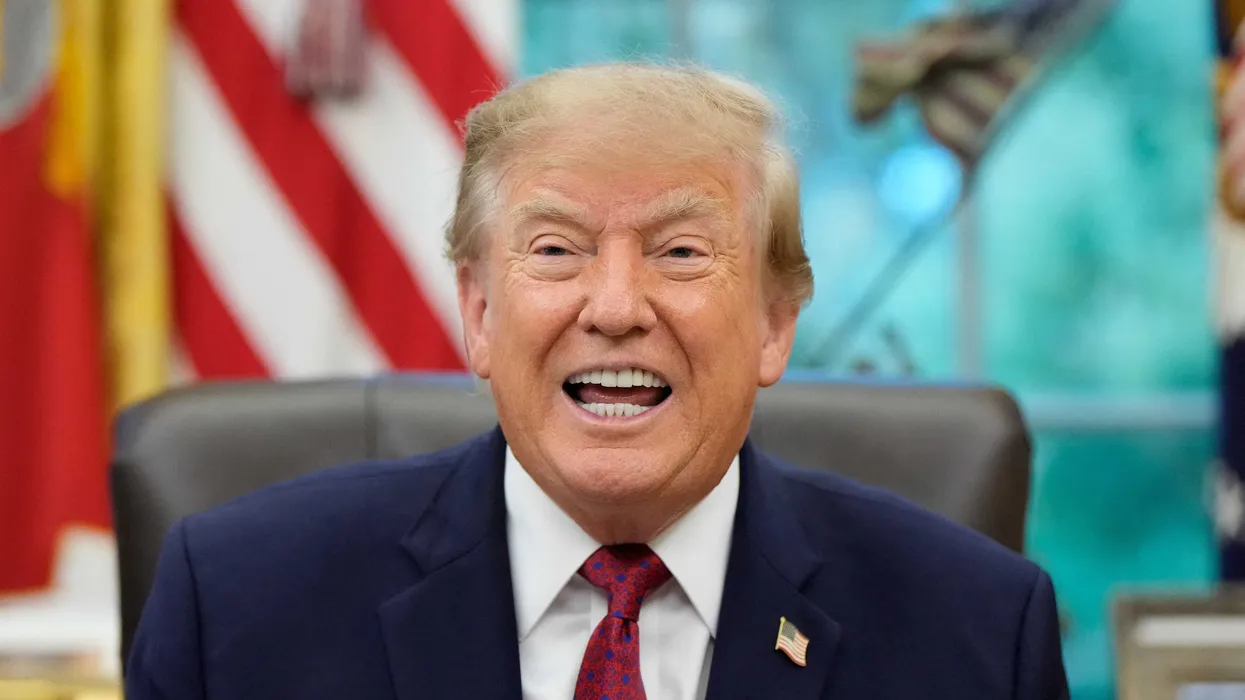
Republican insiders say the party has begun searching for a way to move beyond President Donald Trump's leadership after its midterm mauling — but breaking with the president will be far harder than it sounds, according to GOP figures who spoke with The Washington Post.
The reporting, published Friday after several days of post-election soul-searching, captures a party reckoning with the scale of its defeat in Tuesday's midterm elections while confronting a decade of structural and political entanglement with Trump.
"We've never seen a political figure dominate a party to the degree that Trump has over the past 10 years — certainly not in modern times," said former Republican congressman Bob Good, who backed Florida Gov. Ron DeSantis in the 2024 presidential race and was exiled from the party as a result, with Trump endorsing a primary challenger who unseated him. "Trump is the party. The party is Trump. Trump is the agenda. The agenda is Trump."
Good and other Republicans have spent more than a decade urging the party to divorce the president. Yet over that same period, Trump's control of — and personal identification with — the GOP only grew stronger. Over that stretch, he carried the party's presidential banner in three consecutive elections.
"Now," the Post writes, "as Republicans reckon with a historic rout in Tuesday's midterm elections, calls to extirpate Trump from the right's politics are resounding more forcefully than at any point since the first of his three presidential bids. But in a party that has, over the intervening decade, remade itself to a once-unimaginable extent in the president's image, GOP leaders and activists are finding that creating a 'post-Trump' party is easier said than done."
One Republican operative, who requested anonymity to speak candidly about the party's midterm disaster and its troubled future, compared Trump's hold on the party to a gravitational pull. "It's like the event horizon of a black hole," the operative said. "Trump exerts this huge amount of gravity. And beyond that, you know it's going to be different, but you don't know what it's going to look like."
The operative, who supports Trump's agenda and the MAGA movement, told the Post that the party must find a way to break with the president, but that doing so will pose philosophical, political and even logistical difficulties — extending to the scheduling of a national convention that is still two years away. "Is Trump going to tolerate not being the final speaker at the RNC?" the operative asked. "I think that's an open question." With the convention still two years out, even program logistics will double as public readings of where the party's internal balance of power stands.
As the Post notes, the midterms demonstrated that Trump and his second-term agenda are powerful electoral liabilities, having handed Democrats a historic victory in some of the country's reddest regions. Conservative commentator Tucker Carlson declared on Wednesday: "We can say, without hyperbole or gloating: This is the end of the Trump era," adding there would be "no coming back for a generation" from the damage the president had done to the Republican Party.
Much of the difficulty of "coming back" is structural. According to the Post, Trump sits atop a campaign spending juggernaut, MAGA Inc.; retains the backing of most right-wing media outlets; and can count on major conservative institutions that have explicitly aligned themselves with MAGA, as well as a new generation of young Republican staffers and activists who have known nothing but Trump's style of politics. Perhaps most important, despite his low approval rating, Trump has so far preserved his ability to connect with the party's base and to shape the outcome of primary elections, even when his handpicked candidates go on to lose in general elections.
Some Republicans, including Rep. Don Bacon (R-NE), argue that the party needs to embrace more traditional candidates. According to the Post, however, "Others, closer to what is now the populist mainstream of the American right, are deeply skeptical that the future of the GOP rests with a fleece-wearing, Chamber of Commerce-approved Republican ready to resurrect a more genteel strain of conservatism."
"What that wing of the party is selling, there is no constituency for," said a former official in the first Trump administration. In the official's view, it would be a mistake to read the midterm results as a referendum on the core of Trump's populist agenda, such as immigration restriction or economic protectionism. Voters, the official argued, were expressing anger at the departure from that agenda. "I think the rebuke here is that we asked for America First, and you gave us this oligarch-first, gold-filigree-in-the-Oval-Office b------t," the official said.
The day after the election, Vice President JD Vance offered an indication of how Republicans will feel their way forward, posting a statement that blamed the GOP's midterm disaster on the Iran war even as he made gestures of deference to the commander in chief who chose to launch it.
Curt Mills, an ally of Vance's and executive director of The American Conservative magazine, told the Post that some version of that balancing act — which he described as "keep the principles, oppose the war, and tacitly support Trump" — is likely to become the stance adopted over the next two years by conservatives seeking to shape the party's future. Still, Mills acknowledged: "I don't think Trump's going to be dumped." The next checkpoints sit on a fixed calendar: the primary contests of the coming cycle and a 2028 convention already looming as a logistical flashpoint — with primaries, per the Post's reporting, the arena where Trump's influence has so far held firm.
This article is based on Alternet's report on the Post's findings.

