Google Stock Eyes $400 as Alphabet Bets $15 Billion on Malaysia's AI Boom
Key Takeaways
- •Alphabet will invest $15 billion in Malaysia's AI infrastructure during 2027 and 2028, with new facilities planned in the states of Selangor and Negeri Sembilan, building on a $2 billion pledge from May 2024.
- •Google projects the construction phase will contribute an average of $1.1 billion annually to Malaysia's economy, supporting more than 37,000 jobs per year during building and over 9,000 annually once operational.
- •The expansion includes plans to add more than one gigawatt of clean energy capacity to Malaysia's grid, and Google has committed $160 million toward shared water infrastructure in Negeri Sembilan.
- •Alphabet's third-quarter earnings showed total revenue rising 25% year over year to $127.6 billion, with Google Cloud revenue climbing 103% to $30.7 billion and cloud operating income reaching $11.1 billion.
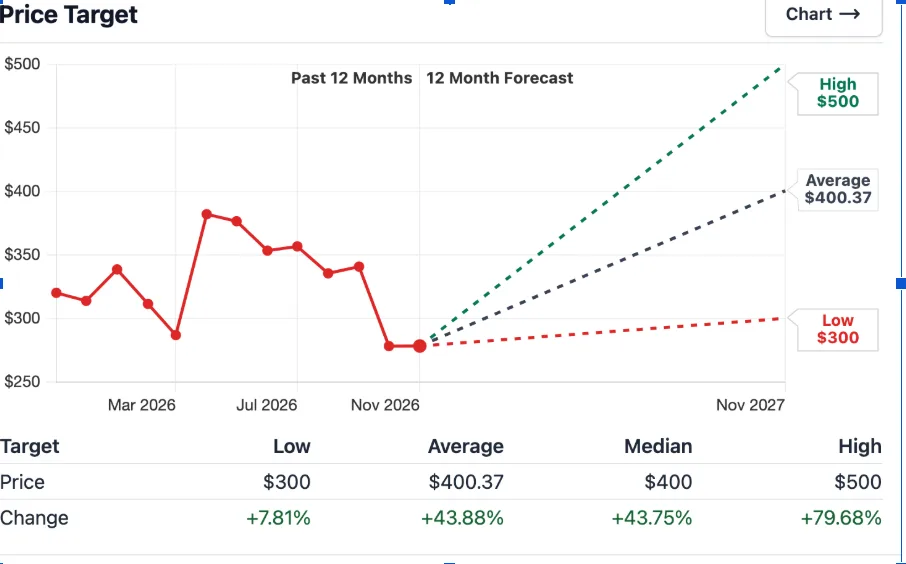
- •An average 12-month price target of $400.37 among 58 Wall Street analysts implies roughly 43.9% upside from GOOG's November 3 closing price of $278.27, with individual estimates ranging from $300 to $500.
Google stock (GOOGL) is drawing renewed attention after its parent company, Alphabet, announced plans to invest $15 billion in Malaysia's artificial intelligence infrastructure. The commitment comes at a moment when Wall Street analysts place their average price target for Alphabet shares near the $400 mark. The pledge also offers a concrete look at how Alphabet is converting AI demand into long-term infrastructure — the kind of spending that underpins the cloud growth behind those analyst targets.
Reuters reported on November 4 that Google will deploy the funds during 2027 and 2028, with data centers and energy projects listed among its priorities. The expansion will add to the company's existing operations in Malaysia as demand for AI computing capacity continues to climb.
Alphabet Invests $15 Billion in Malaysia AI Data Centers
Malaysia was already part of Google's data center roadmap before the latest announcement. In May 2024, the company pledged $2 billion to build its first local data center and a Google Cloud region, selecting Elmina Business Park in Selangor as the site for the project.
Under the new plan, Google intends to spend an additional $15 billion across 2027 and 2028, with new facilities planned in the states of Selangor and Negeri Sembilan. The multi-year horizon reflects how data center projects are structured, since land, power, and water arrangements must be secured long before facilities can serve customers.
Alphabet President and Chief Investment Officer Ruth Porat announced the pledge at a ceremony attended by Malaysian Prime Minister Anwar Ibrahim. She said the money reflects Google's trust in Malaysia's leadership, its talent pool, and the growing demand for digital services.
Google expects the construction phase to contribute an average of $1.1 billion annually to Malaysia's economy. According to the company's projections, the projects could support more than 37,000 jobs per year during construction and over 9,000 annually once the facilities become operational.
Google AI Investment Expands Power and Cloud Infrastructure
The expansion includes plans to add more than one gigawatt of clean energy capacity to Malaysia's electricity grid. Google will also bear the electricity costs and associated grid connection expenses at its data centers. Direct funding for energy and grid access reflects how power supply has become a central variable in data center planning, a constraint operators increasingly address alongside construction itself.
Water availability is another factor in the development, because large computing facilities require cooling systems to manage heat. Google recently committed $160 million toward shared water infrastructure in Negeri Sembilan to support its planned data center operations.
Alongside construction, Google plans four training programs expected to reach roughly 800,000 Malaysians over five years. The programs will cover AI skills for students, educators, entrepreneurs, and workers entering technology-related occupations.
The announcement follows Google's recent launch of Gemini 4 Carbon, which added another model to the company's enterprise AI lineup. Alphabet's most recent earnings showed Google Cloud revenue doubling as customers increased their spending on AI computing services. The two developments are tightly linked: the models Google sells to enterprise customers run on the same data center capacity the company is now expanding in Malaysia.
Google Stock Targets $400 Amid Alphabet's AI Spending
Google stock closed at $278.27 on November 3, gaining 0.08% during the previous trading session. The shares traded in a range between $272 and $280.34, remaining below their October levels despite the company's rapidly growing cloud business.
According to Stock Analysis, 58 Wall Street analysts have an average 12-month price target of $400.37 for GOOG. That forecast represents roughly 43.9% upside from the latest closing price, although individual estimates range from $300 to $500. These targets are analyst estimates that get revised as earnings, spending plans, and other disclosures arrive, not fixed commitments.
The outlook follows Alphabet's third-quarter earnings, which showed total revenue increasing 25% year over year to $127.6 billion. Google Cloud revenue climbed 103% to $30.7 billion, while operating income for the cloud division reached $11.1 billion.
Alphabet's broader AI strategy has drawn close attention from analysts, but higher infrastructure spending continues to weigh on the company's cash flow despite strong revenue growth. Google's latest Malaysian commitment adds another two years of planned spending to that expansion.
The company has yet to announce individual construction schedules for the new sites or disclose how much each planned campus will cost. Those details, along with how the Malaysia spending appears in Alphabet's upcoming quarterly reports, are the concrete milestones to watch as the buildout moves from announcement to construction.
Source: The Market Periodical

