Google Maps Displays 'Lake America' for U.S. Users Following Trump Executive Order
Key Takeaways
- •Google Maps shows "Lake America" to U.S. users after President Trump's executive order renaming Lake Ontario, while Canadian users still see "Lake Ontario" and users elsewhere see both names.
- •The renaming follows the U.S. Geographic Names Information System standard and does not affect Canadian naming conventions or global usage.
- •The name change is part of a broader U.S.-Canada trade feud marked by reciprocal tariffs on billions of dollars in goods.
- •Canadian Prime Minister Mark Carney rejected the change, and Ontario Premier Doug Ford unveiled a bilingual sign declaring "Lake Ontario: Now and Always."
- •Ontario minister Stephen Crawford said the province is reviewing websites that pull Google Maps data after "Lake America" appeared on sites including that of the LCBO.
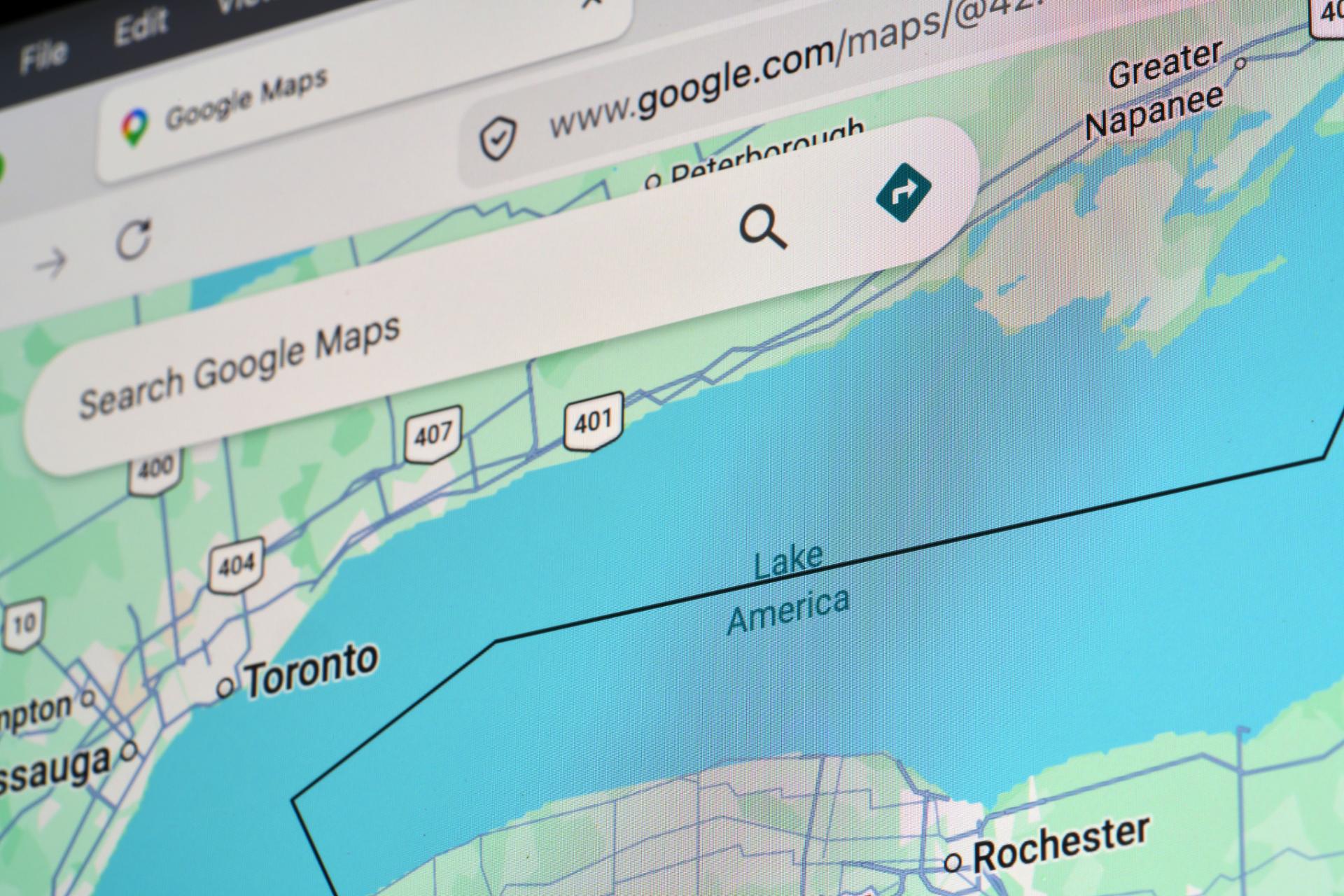
Google Maps has changed the name of "Lake Ontario" to "Lake America" for users in the United States, implementing President Donald Trump's executive order renaming the lake, according to a Google statement.
Trump announced on Thursday that he was changing the name of the smallest of the five Great Lakes. The move is part of an escalating trade feud with Canada that has prompted the two countries to impose reciprocal tariffs on billions of dollars in goods.
The president's order affects the U.S. Geographic Names Information System (GNIS), which sets the standards for official U.S. maps. It has no impact on Canadian naming conventions or on how the rest of the world refers to the lake.
"Since we update Google Maps to reflect name changes in official government sources, which is GNIS for the U.S., people using Maps in the U.S. will see 'Lake America,' those in Canada will continue to see 'Lake Ontario,' and those outside of the U.S. and Canada will see both names," Google said in a blog post issued on Saturday.
The approach is consistent with how Google already handles geopolitically contested names elsewhere: users see the label used by their own government, while other regions retain or see alternatives. The policy means a single body of water can now carry different names depending on where a user is located.
The White House, Canadian Prime Minister Mark Carney's office and Ontario Premier Doug Ford's office did not immediately comment on Google's decision on Sunday.
Google Maps made a similar change to the Gulf of Mexico last year, labeling it the "Gulf of America" after Trump issued an executive order on his first day in office renaming that body of water. The earlier Gulf renaming showed how quickly such changes propagate: Google's Maps platform is embedded in countless third-party websites and apps, so a single naming update can surface far beyond Google's own services.
Carney immediately rejected the lake's name change on Thursday. Kathy Hochul, the Democratic governor of New York, a state that shares a long border with Canada, declared that "New York won't be calling it that." Phil Scott, the Republican governor of neighboring Vermont, called Trump's decision "petty and disappointing" on social media.
In Ontario, Ford on Saturday unveiled a large lakeside sign that reads, "Lake Ontario: Now and Always," in both English and French.
"President Trump can call it whatever he wants, but I can tell you, the rest of the world will always call it Lake Ontario," Ford said.
On Sunday evening, Ontario minister Stephen Crawford said the province was reviewing its websites after Lake America appeared on sites such as that of the Liquor Control Board of Ontario. The LCBO, a major global buyer, is not stocking U.S. alcohol due to the trade war.
"Some Ontario government agency websites pull map data directly from Google Maps," Crawford said on the social platform X. "Following recent changes by Google, we're actively reviewing our websites to make sure they all identify Lake Ontario by its correct name: Lake Ontario."
