Google Hit With €403 Million EU Privacy Fine as Analysts Raise Alphabet Price Targets
Key Takeaways
- •Ireland's Data Protection Commission fined Google €403 million for GDPR violations related to location data processing between May 25, 2018, and February 4, 2020.
- •The penalty is the fourth-largest issued by the Irish DPC since GDPR took effect, and Google must bring the affected processing operations into compliance within six months.
- •Google said the findings concern historical policies and noted it has since introduced changes including auto-delete options, on-device Timeline storage, and limits on retaining precise search locations.
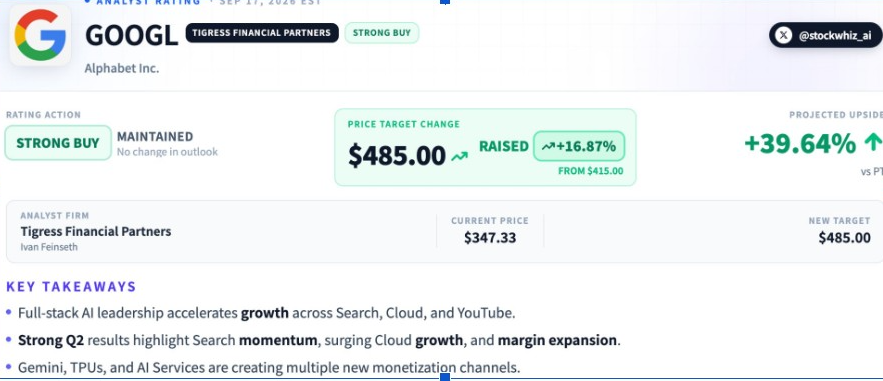
- •Tigress Financial Partners maintained its Strong Buy rating and raised its GOOGL price target to $485 from $415, citing Alphabet's full-stack AI strategy across Search, Cloud, YouTube, Gemini, and TPU infrastructure.
- •Evercore ISI lifted its Alphabet target to $450 from $420 after a survey found 78% of respondents named Google their primary search engine in August 2026, up from roughly 70% during 2024 and early 2025.
Alphabet is facing fresh regulatory pressure after Ireland's privacy watchdog fined Google €403 million over its past location data practices. The penalty comes as GOOGL shares draw higher analyst price targets tied to growth across Search, Cloud, YouTube, and artificial intelligence.
Google Receives €403 Million GDPR Fine Over Location Data
Ireland's Data Protection Commission (DPC) opened its Google inquiry six years ago after complaints from several European consumer groups. The investigation examined how Google Ireland processed location information under the European Union's General Data Protection Regulation (GDPR).
The regulator reviewed the company's Web and App Activity, Location History, and Location Accuracy settings, covering practices between May 25, 2018, and February 4, 2020 — a window that begins on the day GDPR itself took effect across the EU.
The DPC found problems involving the lawfulness, fairness, and transparency of Google's location data processing. It also identified shortcomings in Google's accountability and data retention practices. According to the regulator, some users may not have understood how their location information was being processed — data that could help shape personalized advertising or allow Google to infer interests from location patterns.
Deputy Commissioner Graham Doyle said location information can improve online services but can also reveal private details about individuals. He added that keeping such information longer than necessary reduced users' control over their personal data.
The €403 million penalty ranks as the fourth-largest fine issued by Ireland's DPC since GDPR became effective. Google must also bring the affected processing operations into compliance within six months — a concrete deadline that sets the next checkpoint in the company's handling of European location data.
Google Points to Privacy Changes Made Since 2019
Google said the investigation focused on historical policies and that its location privacy controls have changed since then, with the company beginning to introduce several updates from 2019 onward. Several of those updates took effect during the conduct period the DPC examined, which closed in February 2020, yet the findings show that later improvements did not exempt the earlier processing from enforcement.
Users can now automatically delete account data after three, 18, or 36 months. Google also provides settings for disabling personalized advertising and for managing the location information used in advertisements.
Google has moved Timeline information directly onto users' devices rather than storing that history primarily within its cloud systems. The company also changed how Web and App Activity stores location information linked with searches. Google said precise device locations are not stored within that feature when users conduct searches; instead, the system may retain an estimated general area.
The regulatory matter adds another issue for Alphabet alongside ongoing scrutiny of its advertising and data businesses. However, recent analyst coverage has focused heavily on operating growth and artificial intelligence investment.
Analysts Raise GOOGL Forecasts Amid AI Growth
Tigress Financial Partners has maintained its Strong Buy rating on Alphabet and raised its 12-month target substantially, with analyst Ivan Feinseth increasing the GOOGL price target to $485 from $415 — a $70 lift.
The Tigress assessment cited Alphabet's full-stack artificial intelligence strategy spanning Google Search, Cloud, YouTube, Gemini, and its TPU infrastructure. The firm also pointed to new revenue opportunities emerging from AI services. Tigress said Alphabet's AI spending could temporarily reduce returns on capital as infrastructure investment remains elevated, but its forecast expects those investments to support future revenue and profit growth.
Evercore ISI also lifted its Alphabet target to $450 from $420 while retaining its positive rating. Its research showed improving consumer usage of Google Search: Evercore reported that 78% of survey respondents named Google as their primary search engine in August 2026, a figure that had previously fallen to about 70% during 2024 and early 2025 — a swing of roughly eight percentage points from that earlier low.
Following the survey, Evercore raised its Google Search revenue growth estimates through 2028, with its revenue and operating income forecasts now 4% to 5% above Wall Street consensus.
This article is for informational purposes only and does not constitute financial or investment advice. Analyst price targets are estimates and do not guarantee future market performance.

