Goldman Sachs Sees September Fed Rate Hike as 'Very Unlikely' as Bitcoin Eyes $66,880
Key Takeaways
- •Goldman Sachs says a September 2026 Fed rate hike is very unlikely and expects inflation to improve through the rest of the year.
- •July US retail sales fell 0.6%, while employment and inflation data also softened, reducing pressure for another rate increase.
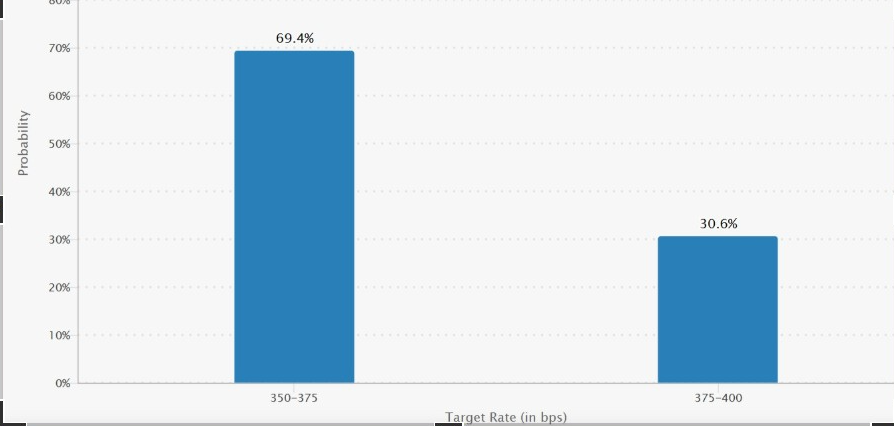
- •CME FedWatch data puts the chance of a September 25-basis-point hike at 30.6%, with most traders expecting rates to remain unchanged.
- •The Federal Reserve held rates steady in July, but three policymakers dissented in favor of another hike ahead of the September 15–16 meeting.
- •Bitcoin traded near $64,000, with $66,880 identified as the next recovery level and $64,000 as key support.
Goldman Sachs sees little probability of a Federal Reserve interest rate hike in September 2026, with Chief Economist Jan Hatzius pointing to weaker employment, cooling consumer spending and softer inflation trends as the basis for the bank's outlook.
Markets have moved toward the same conclusion after a string of July economic releases. Interest-rate traders now place the odds of a September increase near 30%, while Bitcoin trades around $64,000 as investors reassess the risk of further monetary tightening.
The Federal Reserve kept rates unchanged at its July meeting, although three policymakers favored another increase, keeping inflation risks in focus ahead of the central bank's September 15–16 gathering. Such dissents are closely watched because the committee usually decides by consensus, and the July split pointed to an active internal debate over how quickly inflation pressures are fading.
Goldman Sachs Calls a September Hike “Very Unlikely”
Goldman Sachs describes a September Federal Reserve interest-rate increase as “very unlikely” under its current economic outlook, as shared on X. The assessment follows several economic reports showing softer conditions across major parts of the US economy, and it marks a shift from the bank's earlier June forecast pointing to September rate hikes.
The investment bank has focused on consumer spending, employment and inflation when weighing the Federal Reserve's next move, and recent data across those areas has reduced expectations that policymakers will need another rate increase next month.
Chief Economist Jan Hatzius told clients that Goldman expects inflation conditions to improve further over the rest of 2026. He also believes financial markets currently assign too much weight to another increase in the federal funds rate.
Goldman's view comes as investors reassess how long the Federal Reserve may keep borrowing costs unchanged. The central bank has relied heavily on incoming economic data when setting rates throughout the current policy cycle.
Softer Economic Data Reshapes Rate Expectations
Recent US retail sales data has added to expectations that consumer demand is losing momentum. Retail sales fell 0.6% in July, giving policymakers another measure of weaker activity across the economy.
Employment figures have also softened, giving the Federal Reserve more room to evaluate inflation without raising interest rates immediately. Policymakers monitor labor conditions closely when assessing demand and wage pressures.
Inflation data has moved in the same direction. July figures showed price growth slowing, reducing pressure on the central bank to tighten monetary policy further. Hatzius expects inflation data to improve rather than worsen as the year progresses — a forecast that underpins Goldman's view that another rate increase in September carries a low probability.
The Federal Reserve must balance inflation risks against weaker economic conditions. Higher rates can curb consumer spending and business investment by raising financing costs across the economy, and another increase would lift borrowing costs for households and companies. Softer activity therefore gives policymakers another reason to consider holding the benchmark rate at its current level.
Traders Cut September Fed Rate Hike Bets
Interest-rate traders also see a lower probability of a September increase. CME FedWatch data gives a 30.6% probability of a 25-basis-point rate hike, an increase that would move the Federal Reserve's benchmark rate from its current 3.5% to 3.75% range into the 3.75% to 4% range. Most traders instead expect policymakers to leave rates unchanged at the September meeting.
The September 15–16 gathering is also one of the quarterly meetings at which the Federal Reserve publishes an updated Summary of Economic Projections, giving markets a fresh read on where policymakers expect rates, growth and inflation to head — an additional signal for investors beyond the rate decision itself.
Those probabilities moved lower after inflation data showed slower price growth in July, strengthening expectations that the Federal Reserve may not need another increase immediately.
Market pricing can change quickly when new employment, spending and inflation figures arrive, so investors are watching upcoming economic reports ahead of the September policy decision, with the monthly employment report and consumer inflation data typically the most closely watched releases. Federal Reserve officials will also receive more economic information before making their decision, and changes in inflation or labor conditions could alter expectations during the weeks before the meeting.
Bitcoin Price Eyes $66,880 Recovery Level
Bitcoin traded around $64,000 as markets reduced expectations for another September rate increase. The weekly technical setup, outlined on X, places $66,880 as the next recovery level above the current Bitcoin price.
Bitcoin already tested the broader $66,000 area during July, but buyers failed to hold the advance and price was pushed back toward lower support. A sustained move above $66,880 would strengthen the recovery structure shown on the chart and place Bitcoin above the area that halted the July advance. Failure to reclaim that level would keep Bitcoin inside its broader consolidation range.
The downside remains tied to support around the $64,000 region. A sustained break below that area could return attention to recent August lows.
Lower Fed hike expectations have not yet produced a confirmed Bitcoin breakout, and the price still requires confirmation before the technical structure improves. Because Federal Reserve policy influences the liquidity and financing backdrop across markets, shifts in rate expectations remain a macro input for Bitcoin traders even when price action is dominated by technical levels. The September 15–16 Federal Reserve meeting and incoming economic data remain the next major macro tests.
Disclaimer: This article is for informational purposes only and does not constitute financial advice. Cryptocurrency and interest-rate markets can experience sharp price swings, and readers should conduct independent research before making financial decisions.
