UBS Keeps $5,000 Gold Target After Weak U.S. Jobs Report Sparks Rally
Key Takeaways
- •The U.S. economy lost 23,000 jobs in July, dramatically undershooting expectations of 85,000 new positions and prompting markets to reduce the odds of a September rate hike from 57% to 42%.
- •UBS continues to project gold reaching $5,000 per ounce by the first half of 2027, citing anticipated rate cuts and gradually easing inflation as key catalysts.
- •China's central bank purchased 20 tons of gold in July, marking its 21st consecutive month of reserve additions and the largest monthly purchase since October 2023.
- •Gold delivered its strongest weekly performance since late January with a 7.2% gain, while silver rose 10%, yet gold remains approximately flat year to date following a 65% surge in 2025.
- •Next week's consumer price index report will be closely watched for signals on whether inflation is trending downward as forecasters expect, alongside ongoing energy market concerns tied to U.S.-Iran negotiations.
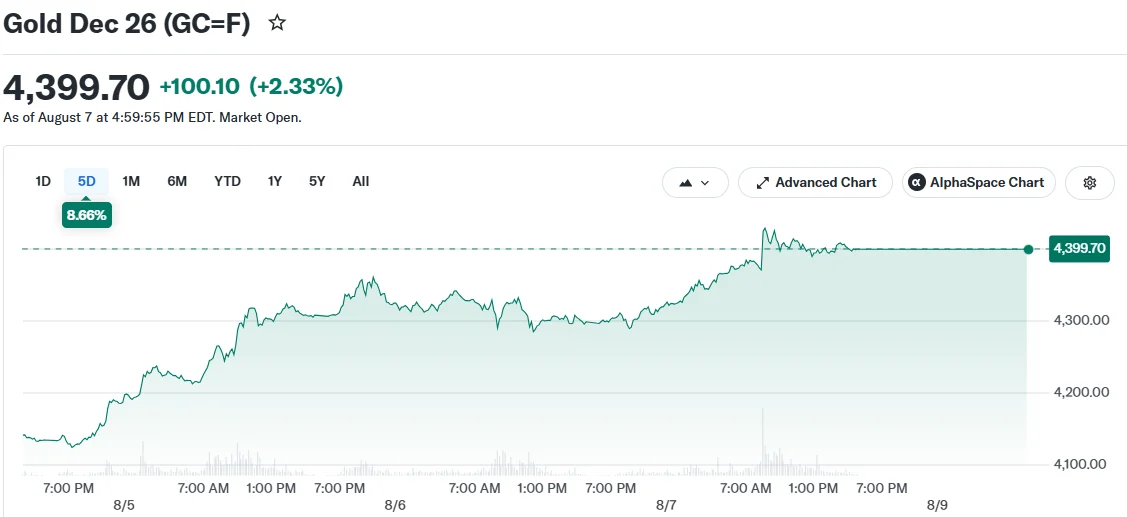
Gold rallied sharply on Friday after a disappointing U.S. employment report weakened expectations for further Federal Reserve tightening. The metal rose 2.3% to $4,340.70 per ounce, its strongest close since mid-June.
The Labor Department said the U.S. economy lost 23,000 jobs in July, far below economists’ expectations for an increase of 85,000. The report also included sizable downward revisions to prior months: June payroll growth was revised to 20,000 from 57,000, while May’s figure was cut to 63,000 from 129,000.
Markets quickly adjusted to the data. CME Group’s monitoring tool showed the odds of a September rate increase falling to 42% from 57% before the report. Gold, which yields no interest, typically benefits when rate-hike expectations recede, as lower rates reduce the opportunity cost of holding the metal.
UBS Maintains $5,000 Gold Forecast
In a research note, Ulrike Hoffmann-Burchardi, chief investment officer at UBS, said gold’s advance has fundamental support. The Swiss bank continues to expect gold to reach $5,000 per ounce in the first six months of 2027.
UBS said inflation is likely to ease gradually, allowing the Federal Reserve to keep policy unchanged through this year before cutting rates in 2027. Lower rate expectations would reduce real yields, weigh on the dollar, and support demand for gold.
The bank said pullbacks toward the $4,000 level could offer entry points for long-term investors.
UBS also identified possible risks to the outlook, including higher energy prices or a shift toward a more hawkish Federal Reserve stance. Either development could make fixed income more attractive and put pressure on precious metals.
China Purchases and ETF Demand Add Support
Official-sector buying has remained an important source of support. China’s central bank has added gold to its reserves for 21 consecutive months.
In July, the People’s Bank of China bought 20 tons, its largest monthly increase since October 2023, according to World Gold Council data. China’s accumulation is part of a broader trend of central banks diversifying reserves away from the dollar, a structural shift that has underpinned gold demand in recent years.
Asian retail investors and fund buying have also contributed to the recent advance. The SPDR Gold Shares ETF and similar investment products saw continued inflows alongside the price rise.
Silver also moved higher on Friday, gaining 3.1% to $63.33 per ounce and closing at its highest level since late June.
Over the past five trading days, gold gained 7.2%, its best weekly performance since late January. Silver rose 10%, its strongest weekly gain since the end of February.
Despite the recent surge, gold is roughly flat year to date after climbing 65% in 2025.
Attention now turns to next week’s consumer price index report, which will provide further clarity on whether inflation is on the gradual downward path UBS and other forecasters anticipate. Energy markets also remain in focus as negotiations between Washington and Tehran continue after tensions that emerged in late February.

