Gold Falls as US Jobs Report Beats Forecasts, Reviving Fed Rate Hike Speculation
Key Takeaways
- •The US economy added 162,000 jobs in August, well above the roughly 53,000 forecast, while the unemployment rate stayed at 4.1%.
- •Spot gold fell around 2% to $4,391.61 an ounce, with silver down 1.5%, platinum down 0.6%, and the US Dollar Index up 0.2% to 99.03.
- •The probability of a September Fed rate hike stood near 50%, down from roughly 70% earlier in the week, according to the CME FedWatch tool.
- •Fed Governor Christopher Waller said he would support holding rates steady at the September 15-16 meeting if inflation data confirm easing price pressures, though he did not rule out a hike.
- •Next week's August CPI report is seen as the key factor in the Fed's decision, and gold faces technical resistance near the 200-day moving average around $4,526.
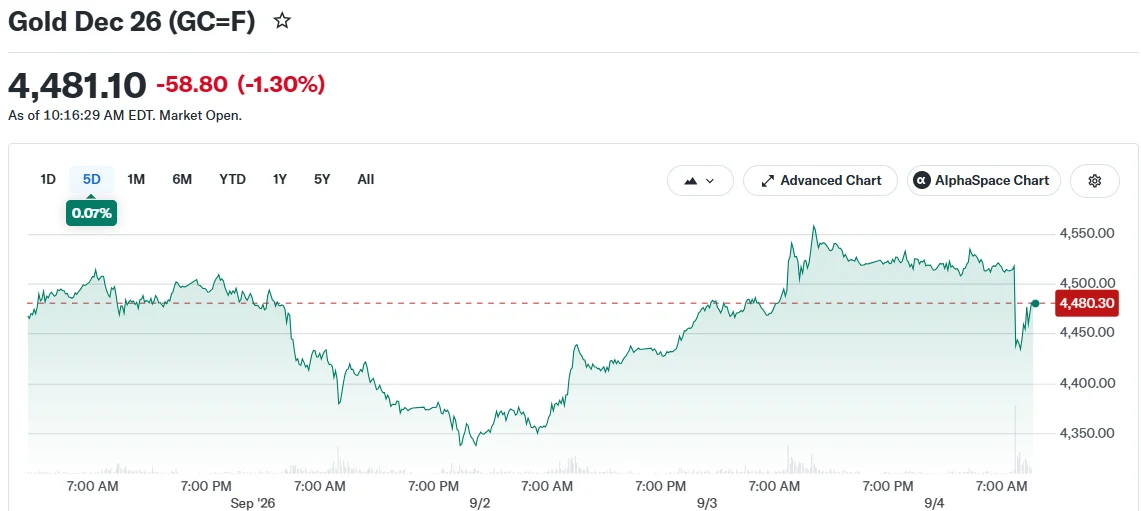
Gold dropped sharply on Friday after US jobs data came in far stronger than expected, reviving uncertainty over what the Federal Reserve will do at its September meeting.
The US economy added 162,000 jobs in August, well above the roughly 53,000 forecast by economists, while the unemployment rate held steady at 4.1%. The figures marked a clear rebound from July, when payrolls were reported as falling by 23,000. The monthly nonfarm payrolls report, released by the US Labor Department, is one of the most closely watched indicators on the Fed's calendar because employment is one half of the central bank's dual mandate of stable prices and maximum employment.
BREAKING: The US economy adds +162,000 jobs in August, well above expectations of +55,000. The unemployment rate was 4.1%, in-line with expectations of 4.1%. July's job number was also revised up by +43,000 jobs and is now positive for the month. The US job market nearly… — The Kobeissi Letter (@KobeissiLetter) September 4, 2026 (X post)
Market Reaction
Gold spot prices fell around 2% to $4,391.61 an ounce, while gold futures dropped 0.6% to $4,514.19. Silver declined 1.5% and platinum slipped 0.6%.
The US Dollar Index edged up 0.2% to 99.03 following the report. A stronger dollar makes gold more expensive for buyers using other currencies, which tends to weigh on prices. Gold, silver, and platinum often trade in sympathy with one another as the main precious-metals complex, which is why the payrolls report moved all three together.
Fed Signals and Rate Hike Odds
Fed Governor Christopher Waller said Thursday he would support keeping rates steady at the September 15-16 meeting if incoming inflation data confirm that price pressures continue to ease. However, Waller did not rule out a hike entirely, saying August inflation figures would heavily influence his decision and that a return of price pressures could still push him toward a rate increase.
Markets reacted quickly. The probability of a September hike fell to around 50%, down from roughly 70% earlier in the week, according to the CME FedWatch tool.
Fed rate-hike odds for September are now slightly favored, climbing to 52% after the stronger-than-expected jobs report. pic.twitter.com/TGijsM22kk — Wall St Engine (@wallstengine) September 4, 2026 (X post)
Lower interest rates tend to support gold because bullion does not pay interest, making it more attractive when yields on other assets fall. That dynamic has made gold's recent trading unusually sensitive to each inflation and labor print, as traders reprice the likely path of Fed policy after every release. Gold had already rebounded nearly 2% on Thursday, snapping a three-session losing streak, and Friday's jobs data capped some of that recovery.
What Comes Next for Gold
The August consumer price index report, due next week, is now seen as a key factor in the Fed's final decision. Analysts say it could matter more than the jobs report in determining whether policymakers hike or hold, since Waller himself tied his stance directly to the inflation data.
Wage growth in Friday's report remained relatively contained, which gave gold some support and limited further selling.
Senior market analyst Tony Sycamore at IG noted that gold's recent gains also came as pressure from energy prices and Treasury yields eased. He said the latest flare-up in the Middle East may have peaked, reducing the inflation concerns tied to higher oil prices.
Gold remains above the $3,942 low reached in late June, a level Sycamore said supports the view that gold has formed a medium-term base.
On the technical side, gold faces resistance near the 200-day moving average around $4,526. A break above that level would improve the short-term outlook, while failure to hold above it could lead to another pullback.
The next major test for gold will be next week's inflation data.
