GMI doubles hydrogen bulker programme
Key Takeaways
- •GMI Group has ordered two additional hydrogen-powered bulk carriers from Chowgule Shipyard in India, bringing the total programme to four ships.
- •The new vessels will be about 3,000 dwt each, while the two ships already being built in Turkey are larger at 4,000 dwt each.
- •Enova has granted NOK137m to each of the Indian-built ships, taking support for the four committed vessels to NOK449m.
- •The fleet is intended for coastal transport of asphalt, gravel and other construction materials, and GMI has cargo agreements with NordAsfalt and Veidekke.
- •GreenH plans to supply hydrogen and expects its first bunkering facility for the project to open in Bodø in 2027.
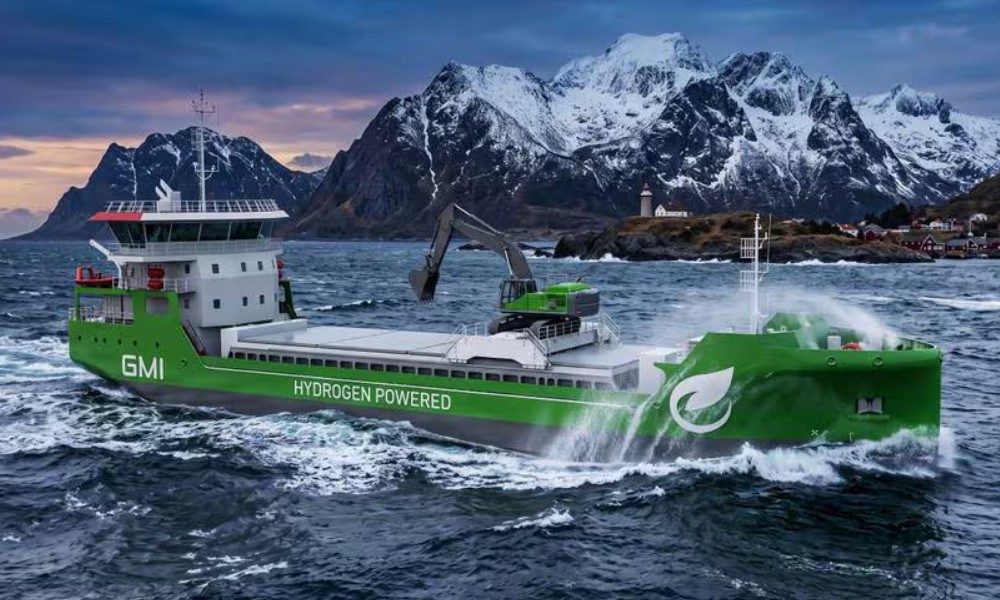
Norwegian newcomer Green Maritime Infrastructure (GMI) Group has doubled its hydrogen-powered bulker programme to four ships, signing for another two newbuilds at India’s Chowgule Shipyard.
The latest pair will be around 3,000 dwt each and join two larger 4,000 dwt ships already under construction at Gelibolu Shipyard in Turkey. The first of the four is expected to enter service along the Norwegian coast next year, giving the project an early test in the coastal trades it is designed for.
All four vessels are being developed around compressed hydrogen and fuel-cell propulsion for coastal trades carrying products including asphalt, gravel and other construction materials. GMI has already secured cargo contracts with NordAsfalt and Veidekke, anchoring the programme in a segment where transport emissions are closely tied to public procurement and customer requirements.
No contract price has been disclosed for the Chowgule pair, although sources estimate the latest vessels will cost more than NOK300m ($32m) each. On that basis, GMI’s four-ship hydrogen investment is running above NOK1bn ($107m).
Public funding remains a sizeable part of the equation. Enova has awarded NOK137m ($14.7m) to each of the two Indian-built vessels, following grants of NOK90m ($9.6m) and NOK85m ($9.1m) for the pair already under construction in Turkey. That puts Enova backing for the four committed ships at NOK449m ($48m).
The Norwegian agency has also earmarked NOK201m ($21.5m) and NOK202m ($21.6m) for another two potential GMI ships, although investment decisions have yet to be taken on those projects.
GMI chairman Per Olav Myrstad said changes to Norwegian public procurement had been important in getting the latest vessels over the line. The Norwegian Public Roads Administration has introduced a bonus of NOK7.50 per kg of CO2 avoided for suppliers able to deliver asphalt with lower transport emissions, giving cargo owners a direct financial incentive to use zero-emission shipping.
GreenH will supply hydrogen to the vessels and is building out bunkering infrastructure along the Norwegian coast. Its first facility serving the ships is expected in Bodø in 2027, followed by sites including Kristiansund and Slagentangen in the Oslofjord, underscoring that fuel supply will need to scale alongside the fleet itself.
Splash first reported the project last June when Møre Sjø ordered the initial pair at Gelibolu. The 4,000 dwt ships were designed by Naval Dynamics, with German integrator eCap Marine handling the onboard hydrogen system. Swedish fuel-cell specialist PowerCell subsequently won a SEK40m ($4.2m) contract to supply 14 Marine System 225 units for the two vessels.
The first pair will combine a high-pressure hydrogen system, batteries and electric propulsion. Bureau Veritas is classing the vessels, which measure 88.7 m long and 14.2 m wide and are designed for heavy and dry bulk cargoes under the Norwegian flag.
The project was folded into GMI Group following the creation of the new Ørsta-based shipping platform last year. The business brought together Møre Sjø founders Torstein Holsvik and Asgeir Standal with investors from several Norwegian maritime ventures. Former Aker chief Leif-Arne Langøy is the largest shareholder with a stake of about 27%.

