GM and Ford Pivot EV Battery Capacity Into Energy Storage Business
Key Takeaways
- •Ford plans to deploy at least 20 GWh of battery storage annually by late 2027 through its new Ford Energy subsidiary, backed by roughly $2 billion in investment over the next two years.
- •Ford Energy signed a five-year framework agreement allowing EDF power solutions North America to procure up to 4 GWh of DC Block BESS annually, totaling up to 20 GWh over the term.
- •GM has launched an energy storage business and partnered with Peak Energy to develop sodium-ion chemistry for grid-scale storage systems, while also supplying second-life battery packs to North America's largest microgrid at Redwood Materials in Nevada.
- •The U.S. energy storage market installed a record 20.2 GWh of new capacity in Q2 2026, bringing first-half installations to 30.8 GWh, according to SEIA and Benchmark Mineral Intelligence.
- •The EIA reported U.S. utility-scale battery storage capacity has grown at an annual average rate of 70% over the past three years.
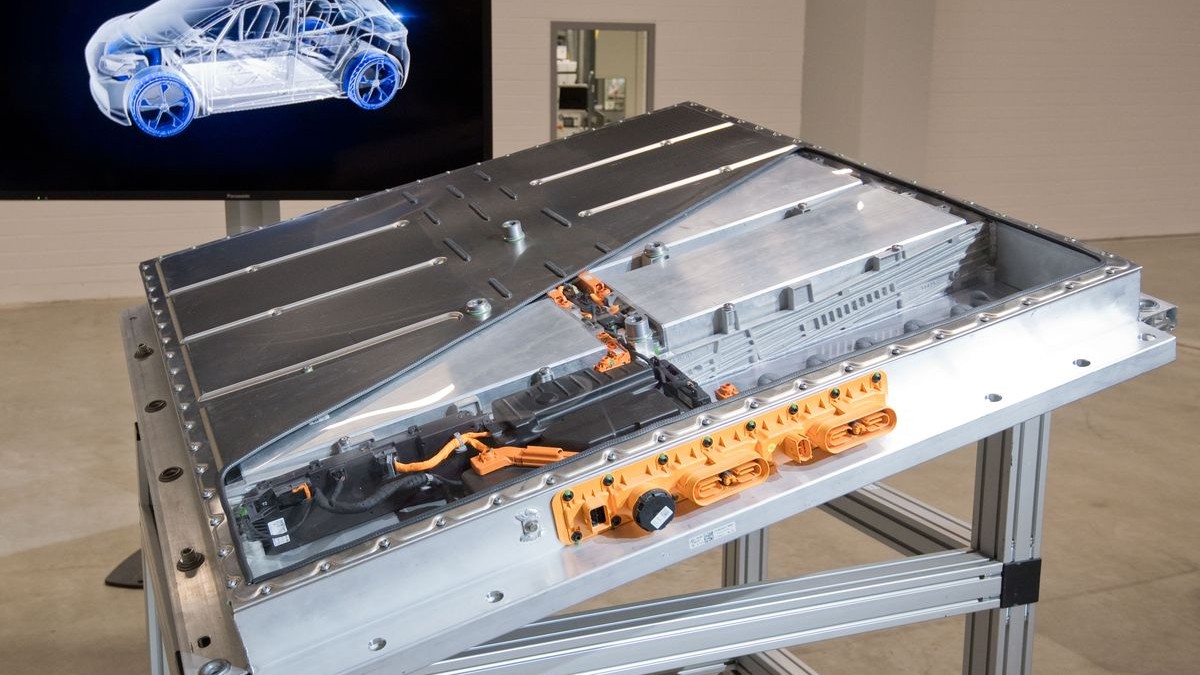
America's largest legacy automakers are working to convert the losses tied to underutilized electric vehicle battery capacity into a new profitable business line, aiming to capture soaring demand for battery energy storage systems.
GM and Ford — which together have written down billions of dollars in EV expansion investments amid weak demand — are now pivoting toward energy storage to meet surging demand from data centers and grid-supporting infrastructure. The underutilized EV battery capacity that cost Ford a massive $19.5 billion write-down and GM cumulative charges of $10.9 billion, as both scaled back their electric vehicle businesses, is now being redirected into battery energy storage systems (BESS). Two of Detroit's Big Three are now directly competing in the battery storage market, a field where Tesla has long sold its Megapack systems and where established storage developers and battery suppliers already operate.
At the end of 2025, Ford launched a BESS business as part of a broader reshuffle of its EV strategy, which now focuses on offering only the most competitive EV models while expanding customer choice with additional hybrid and gasoline vehicles. To scale the storage business, Ford is repurposing existing U.S. battery manufacturing capacity in Glendale, Kentucky.
"This strategic initiative will leverage currently underutilized electric vehicle battery capacity to create a new, diversified and profitable revenue stream for Ford. The company also plans to invest roughly $2 billion in the next two years to scale the business," the automaker said.
Ford currently plans to deploy at least 20 GWh of battery storage annually by late 2027. Ford Energy, a new wholly-owned subsidiary of Ford Motor Company, will provide United States-assembled BESS to utilities, data centers, and large industrial and commercial customers in the U.S. The company says it aims to fill a gap in the U.S. energy storage market created by the convergence of data center growth, renewable energy integration, and grid resilience requirements. For context, utilities and grid operators increasingly pair storage with solar and wind farms because batteries can shift power to peak-demand hours and provide frequency regulation, functions that conventional plants have traditionally performed.
In May, Ford Energy announced a five-year framework agreement with EDF power solutions North America, under which EDF power solutions will be able to procure up to 4 gigawatt-hours of DC Block BESS annually — a total potential volume of up to 20 GWh over the term of the agreement.
"We are delivering the kind of predictable quality and long-term operational confidence that grid operators and large-scale developers require," said Lisa Drake, president of Ford Energy.
GM has also launched an energy storage business along with vehicle-to-grid technology offerings. "To fix a power grid stressed by power-hungry AI data centers, we are also partnering with Peak Energy to develop and deploy built-for-purpose sodium ion chemistry for grid-scale storage systems," GM said in June.
Even before the launch of its battery storage business, GM had supplied repurposed second-life battery packs to help power the largest microgrid in North America at Redwood Materials' installation in Sparks, Nevada. GM says it is now the first automaker working with Redwood Materials to create true circularity across the entire battery lifecycle.
After the disappointment of their EV manufacturing businesses amid crumbling U.S. demand, GM and Ford are vying to capture the booming energy storage market. Earlier this month, the U.S. Energy Storage Market Outlook Q3 2026, published by the Solar Energy Industries Association (SEIA) and Benchmark Mineral Intelligence, showed the U.S. installed record-high energy storage capacity in the second quarter as grid operators and utilities turned to storage to boost grid reliability and meet rising power demand.
The industry installed 20.2 gigawatt-hours (GWh) of new capacity in Q2 — the largest quarter for installations on record — bringing total installations in the first half of 2026 to 30.8 GWh, according to the report. Battery energy storage supplied more electricity to the grid in the first eight months of 2026 than in all of 2025, the report showed. Separately, the U.S. Energy Information Administration (EIA) said last month that utility-scale battery storage capacity in the United States has jumped over the past three years, with an annual average growth rate of 70%. What remains to be seen is whether Ford's 20 GWh annual deployment target and GM's storage partnerships can be executed on schedule, and how quickly repurposed EV battery plants can serve grid customers at scale.
By Tsvetana Paraskova for Oilprice.com
