Global Stocks Climb Despite Shock Warning From Panmure Liberum Analyst Who Sold All Equities in His Personal Portfolio
Key Takeaways
- •Joachim Klement of Panmure Liberum said he sold all equities in his personal portfolio, predicting a major bear market with more than 30% drawdown risk and an S&P 500 target of 5,000 for 2027.
- •The Fed's preferred inflation gauge, the personal consumption expenditures index, rose to 3.8% year over year in October, up from 3.7% the prior month, leading analysts to expect a December interest-rate increase.
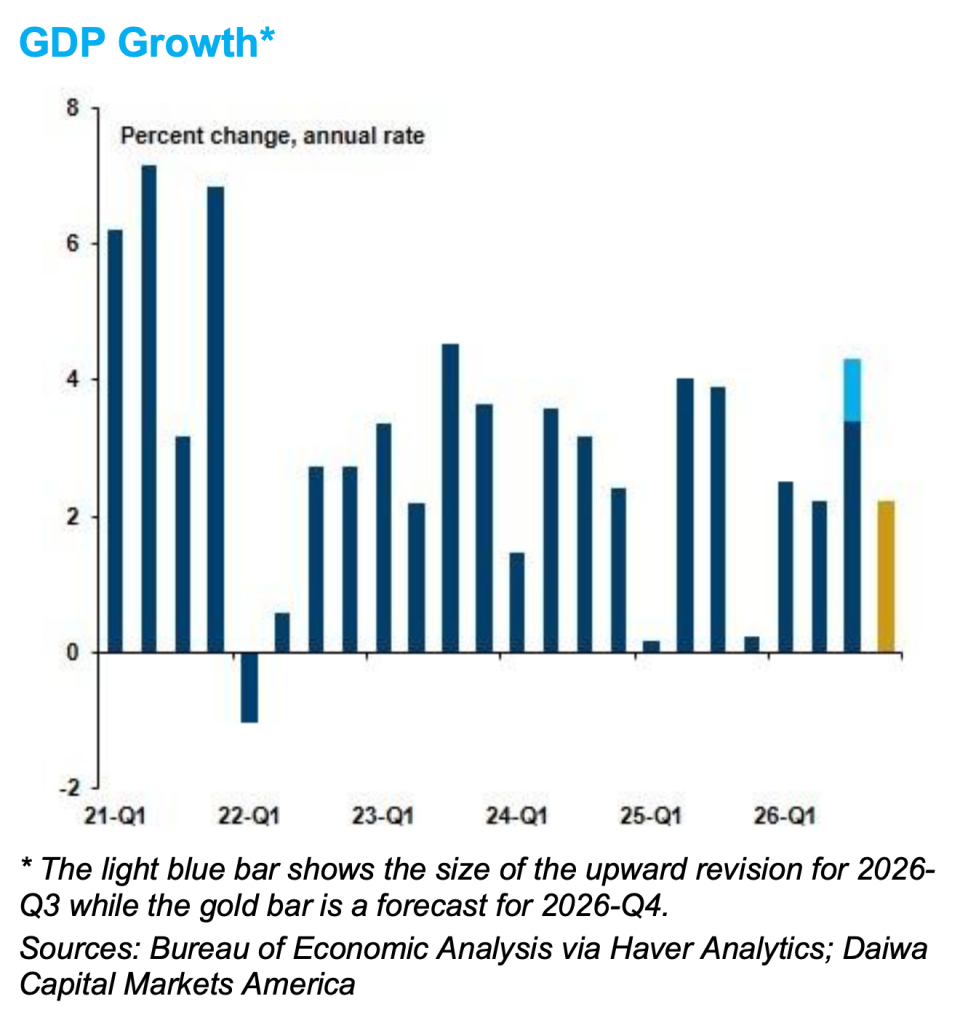
- •Strong U.S. economic data, including 4.3% GDP growth and jobless claims near a three-year low, gives the Federal Reserve room to tighten policy to curb inflationary demand.
- •The slide in U.S. stocks is concentrated in the technology sector, with 372 S&P 500 constituents advancing and the equal-weight index rising 0.82% before the holiday.
- •European and Asian benchmarks rallied during the U.S. Thanksgiving closure, as the Stoxx 600 climbed 2%, the FTSE 100 rose 1.77%, and Japan's Nikkei 225 gained 0.86%.
Global stocks moved higher on Thursday, even as a prominent London analyst delivered one of the starkest warnings yet on U.S. equities — announcing that he had sold every stock in his personal investment portfolio.
With the United States offline for the Thanksgiving holiday, the rest of the world enjoyed a break from the market chaos driven by U.S. tariff policy, U.S. artificial-intelligence investment, and U.S. interest-rate rises. In Asia, stocks broadly rose. Europe was up strongly. And although New York was closed for the holiday, S&P 500 futures were higher: Nasdaq 100 futures gained 0.63%, and Nvidia rose 1.29% in after-market trading.
Multiple Wall Street and City of London analysts said in emails to Fortune that none of this should be happening — and that "there is nothing but bad news on the horizon."
The most dramatic warning came from Joachim Klement of Panmure Liberum, who writes a well-regarded Substack on investing whose subtitle reads, "Thoughts on financial markets by a grumpy, middle-aged German. What more do you want?" In a video talk, Klement announced that he was selling all of the equities — all of them — in his personal portfolio because of the recent selloff in the S&P 500.
"I think that we are heading towards a major bear market with more than 30% drawdown risk," Klement said. His official forecast for 2027 is that the S&P 500 will sink to 5,000 — a level that, at present, seems unthinkable. A bear market is conventionally defined as a peak-to-trough decline of 20% or more in a broad stock index, a threshold Klement's projection would clear by a wide margin.
His concern is that the index is currently trading below its 200-day moving average — the average closing price of the past 200 trading sessions and one of the most closely watched gauges of a market's long-term direction. "As Paul Tudor Jones, the famous investor, once said, nothing good happens below the 200-day moving average," he said.
"It doesn't look like the Santa Claus rally is in store for us this year"
Three factors are driving the gloom.
First, inflation remains too high. The Federal Reserve's preferred metric, the personal consumption expenditures index, which tracks the prices U.S. consumers pay for goods and services, was up year over year to 3.8% in October, up from 3.7% the month before. Lawrence Werther and Brendan Stuart of Daiwa Capital Markets described the reading as "undesirably strong" in a note. The data will almost certainly push the Fed into raising interest rates in December in order to make money scarcer — a scenario that generally augurs poorly for stocks. The Fed's next scheduled policy decision falls at its December meeting, making it the next major checkpoint for markets.
Many analysts pointed to a speech delivered Monday by John Williams, president of the New York Fed, in which he all but telegraphed that the Fed would lift rates soon. "We must take actions over time that will ensure that we get inflation back to our 2 percent goal in a timely manner and on a sustained basis," Williams said. "There is still work to do to get that done." (Economist Claudia Sahm offers a detailed analysis of the speech.)
Second, the U.S. economy is strong, so the Fed will feel it has the breathing space to dampen inflationary demand. New jobless claims came in near a three-year low, and the long-term trend in claims continues to point down, according to Thomas Simons and Blake Birkins of Jefferies.
"The big highlight … is GDP, which at 4.3% shows that the economy is booming, but unfortunately the inflation data is still too high and is unlikely to convince the Fed to remain on hold," Chris Zaccarelli, chief investment officer at Northlight Asset Management, told Fortune via email.
"Between the AI angst and the newly announced tariffs, it doesn't look like the Santa Claus rally is in store for us this year," he added. The "Santa Claus rally" is the label market watchers give to the year-end stretch — typically the final trading sessions of December and the first of January — when U.S. stocks have historically tended to trade higher.
Still, the weakness in U.S. stocks is concentrated. The slide is mostly a technology-sector problem; outside tech, conditions look rather healthier — the outperformance of European stocks versus their U.S. peers being a good example. Before the holiday, 372 stocks in the S&P 500 moved higher, and the equal-weight index — a version of the benchmark that gives all 500 constituents the same influence regardless of size, and is often used as a read on market breadth — rose 0.82% on the day, as Deutsche Bank's Jim Reid noted.
S&P 500 futures were up 0.66% on Thursday morning. U.S. markets were closed for Thanksgiving but had dropped 0.25% in the previous session.
In Europe, the Stoxx 600 climbed 2%, and the U.K.'s FTSE 100 rose 1.77%.
Asia's major benchmarks also gained: South Korea's KOSPI was up 0.29%, Japan's Nikkei 225 rose 0.86%, India's Nifty 50 added 0.25%, and China's CSI 300 edged up 0.06%.
Elsewhere, Brent crude, the global benchmark for oil, rose to $96 per barrel, while Bitcoin traded at $60,212.
This story was originally featured on Fortune.com.

