Nvidia Rally Loses Momentum as Wall Street Battles AI and Governance Jitters
Key Takeaways
- •European and Asian equity markets rebounded on Thursday, with Germany's Dax up two per cent and Japan's Softbank climbing 7.3 per cent, following a volatile session on Wall Street.
- •Nvidia shares dropped 3.9 per cent for a second consecutive day, and the Nasdaq 100 briefly entered bear market territory after falling 20 per cent from its October peak.
- •S&P Global Ratings placed Nvidia's AA credit rating on watch for a potential downgrade, citing concerns over board oversight and corporate governance.
- •Nvidia instructed manufacturing partners to suspend server shipments to Malaysia, Singapore, Thailand and Indonesia under new US export controls designed to block Chinese access to advanced American chips.
- •Credit default swap costs for Oracle, Alphabet, SpaceX and Coreweave have hit record highs, and with core US inflation at 3.3 per cent in October, markets now expect a near-certain Federal Reserve rate hike in December.
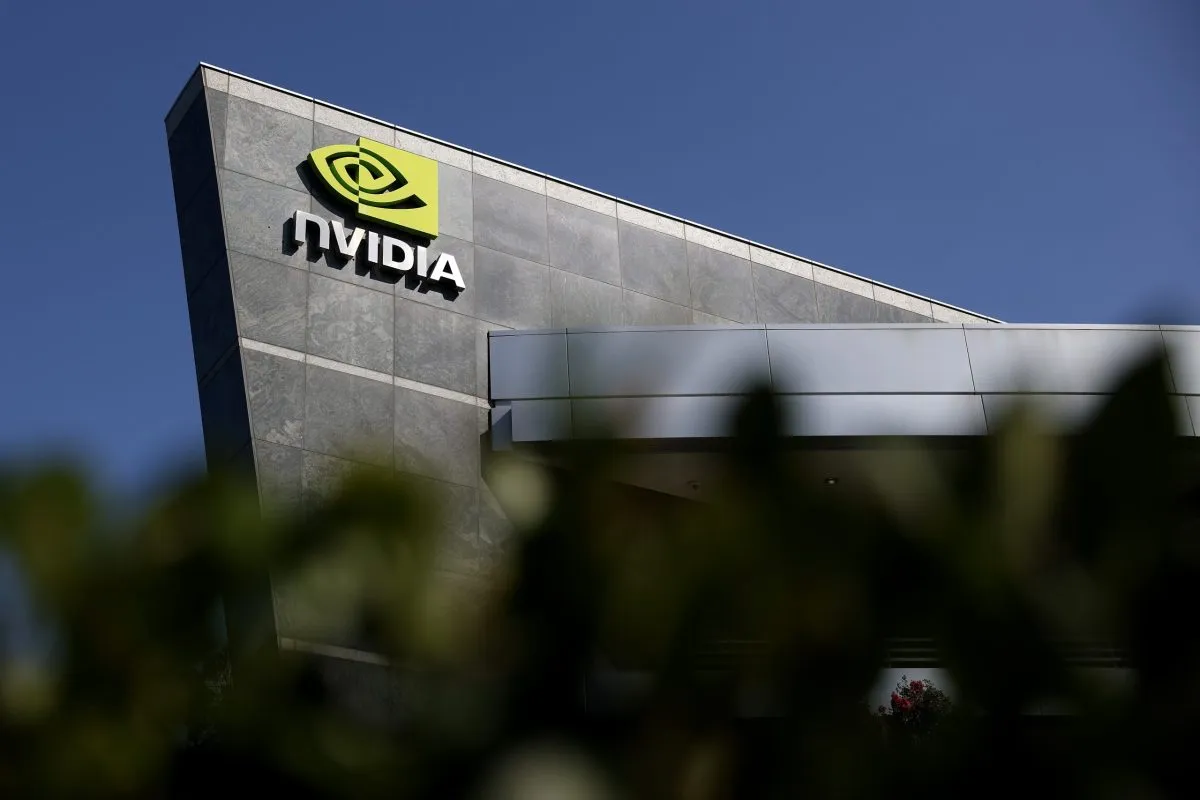
Global equity markets rebounded on Thursday after a bruising session on Wall Street, even as investors continued to weigh mounting concerns over Nvidia's corporate governance and the cost of the AI spending boom.
London's FTSE 100 climbed 1.5 per cent in morning trading, Germany's Dax gained two per cent and France's Cac 40 rose 1.8 per cent.
The recovery followed a volatile Wednesday on Wall Street, when the tech-heavy Nasdaq Composite plunged as much as 4.6 per cent before recovering to close 0.62 per cent lower. The S&P 500 ended the session 0.25 per cent lower, while the Dow Jones reversed a 1,100-point decline to finish 0.33 per cent higher.
Nvidia shares fell 3.9 per cent, a second consecutive day of losses following Monday's spectacular 31.5 per cent rally triggered by Jensen Huang's reinstatement as chief executive. The Nasdaq is now down 7.28 per cent for the month, and the Nasdaq 100 briefly entered bear market territory on Wednesday after falling 20 per cent from its October peak — the decline conventionally used to mark a bear market.
"The damage, in other words, has been trimmed rather than repaired," said Chris Beauchamp, chief market analyst at IG.
US markets were closed on Thursday for the Thanksgiving holiday and will reopen for a shortened trading session on Friday, when trading volumes are typically lighter.
Mounting Pressure on Nvidia
Scrutiny of the chipmaker intensified on Wednesday after S&P Global Ratings placed its AA credit rating on watch for a potential downgrade, citing concerns over board oversight and corporate governance. A watch designation means the rating is under active review, and a cut would likely make it more expensive for the company to borrow.
Separately, Nvidia has instructed manufacturing partners to suspend shipments of servers containing its chips to Malaysia, Singapore, Thailand and Indonesia, according to the Financial Times. The instruction follows fresh US export controls introduced last week, designed to prevent Chinese companies from accessing advanced American chips through overseas data centres. Controls of this kind govern not just direct sales to China but where advanced chips can be shipped and deployed, making instructions to manufacturing partners a central enforcement mechanism.
Uncertainty also lingers over the national security questions surrounding Huang's reinstatement. Reuters reported that senior US intelligence officials remain divided over whether Alice Huang, the former technology executive with whom the Nvidia boss reportedly had an affair, had links to Chinese intelligence. The FBI has reportedly assessed that available intelligence does not establish she was an officer or asset of Chinese intelligence, while the CIA has left open the possibility that further evidence could emerge.
Huang is due to face questioning from three congressional committees next week, as scrutiny mounts over President Donald Trump's intervention in securing his return — the nearest fixed date on the calendar for the escalating controversy.
Bond Markets Flash Warning Over AI Spending
Beyond Nvidia, investors are growing increasingly nervous about the cost of financing the AI infrastructure boom. The cost of insuring against debt defaults at Oracle, Alphabet, SpaceX and Coreweave has reached record highs, according to IG, while yields on Coreweave's bonds have climbed to nearly 18 per cent. Those default-insurance contracts, known as credit default swaps, are a standard gauge of how risky bond investors judge a borrower to be, and a yield near 18 per cent sits far above what investment-grade companies pay.
"Bondholders are taking a considerably less cheerful view of the AI spending boom than equity buyers did at the start of the week," Beauchamp said.
The sell-off has been compounded by hotter-than-expected US inflation figures, with core personal consumption expenditure inflation — the Federal Reserve's preferred gauge of price pressures — rising to 3.3 per cent in October. Markets now price in a near-certainty that the Federal Reserve will raise interest rates by 25 basis points in December, threatening to lift borrowing costs for technology companies funding multibillion-dollar infrastructure projects. Fresh US tariff proposals targeting 14 economies have added to the uncertainty. The December meeting now stands as the next major macro event for markets.
Jonathan Unwin, UK head of portfolio management at Mirabaud, said the firm had used Monday's relief rally to further reduce its equity exposure. "We think the AI trade is peaking, more Federal Reserve rate hikes are on the agenda…and strong corporate earnings might have peaked," he said.
Anthropic, which made its blockbuster stock market debut last week, recovered from an almost 10 per cent intraday decline to close 1.1 per cent higher on Wednesday, though it remained below its $83 listing price.
Asian technology stocks regained some ground on Thursday. Japan's Softbank climbed 7.3 per cent and memory chipmaker Kioxia surged 12.6 per cent, while South Korea's Kospi edged 0.3 per cent higher after Wednesday's 6.2 per cent slump.

