Shipping Faces Simultaneous Geopolitical Threats Across Hormuz, Red Sea, and Black Sea
Key Takeaways
- •Fourteen Iranian attacks on commercial vessels have been recorded since June 25, while tanker movements through the Strait of Hormuz have fallen sharply.
- •The Houthis claimed attacks on Saudi tankers and declared the Bab el-Mandeb Strait closed to Saudi-flagged vessels, with one attack confirmed.
- •Russian strikes on Odesa and Chornomorsk stopped Ukraine’s maritime corridor during the agricultural export season, affecting key crop flows.
- •Low water on the Danube and Rhine disrupted grain movements, ferry services and industrial supply chains across major European inland routes.
- •New US tariffs of 10% to 12.5% on imports from 60 trading partners are adding pressure to a container market already facing weaker spot rates and elevated inventories.
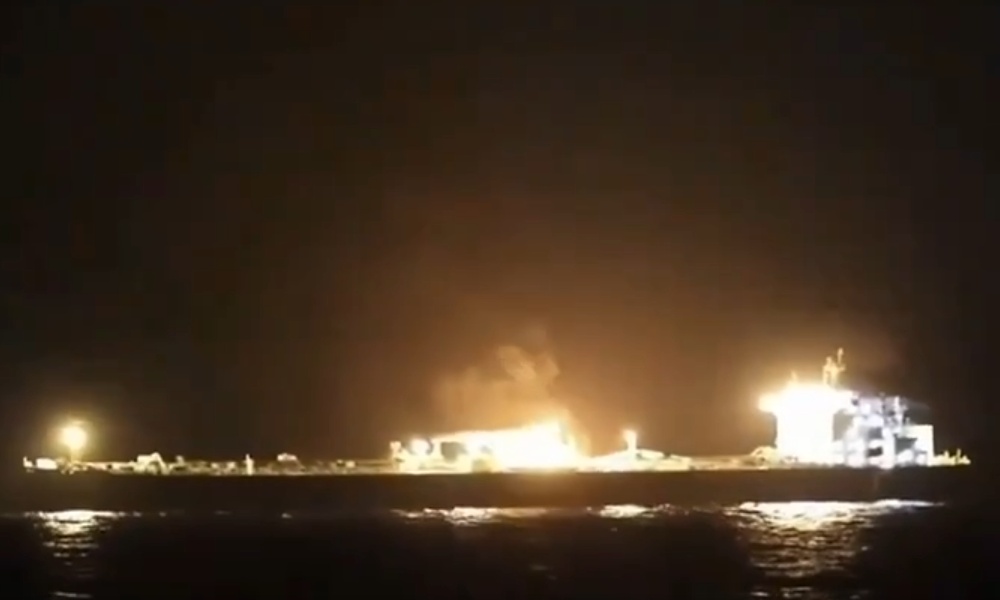
Shipping's exposure to geopolitics intensified this week, with the industry confronting simultaneous threats in the Strait of Hormuz and the Red Sea, renewed attacks on Black Sea trade, and a fresh tariff reset from the United States. What makes this convergence unusual is that three of the world's most critical maritime chokepoints — through which a substantial share of global seaborne oil, container cargo, and grain transits — are under active threat at the same time.
The Strait of Hormuz remained the industry's greatest immediate concern. Fourteen Iranian attacks on commercial vessels have been recorded since June 25, while average tanker movements fell to four outbound and three inbound transits per day. The strait normally carries roughly 20% of the world's daily oil consumption, making any sustained disruption a direct concern for energy markets and fuel costs across the shipping sector itself. The map of Middle Eastern ports and pipelines is being redrawn rapidly.
The danger spread to shipping's second critical Middle Eastern chokepoint. The Houthis claimed strikes on the Saudi tankers Encelia and Layla, declared the Bab el-Mandeb Strait closed to Saudi-flagged tonnage, and threatened onshore energy infrastructure. The attack on Encelia was confirmed, while the location and condition of Layla remained unclear. The Bab el-Mandeb Strait is the southern gateway to the Red Sea and the Suez Canal, a route that carriers had only partially begun rerouting around via the Cape of Good Hope in recent months.
Commercial shipping also became more deeply entangled in the Russia-Ukraine war. Russian forces attacked vessels and port infrastructure at Odesa and Chornomorsk, halting Ukraine's maritime corridor during the agricultural export season. The corridor was established after Russia withdrew from the UN-brokered Black Sea Grain Initiative in July 2023, and its disruption directly affects global wheat, corn, and sunflower oil supplies. Ukrainian drone activity meanwhile forced restrictions at Russian gateways, squeezing Black Sea trade from both directions.
Climate disruption provided another supply chain shock. The Danube in Romania fell to its lowest level since 1996, while shallow water on the Rhine forced barges to reduce cargoes. Grain movements, ferry services, and industrial supply chains were disrupted across Europe's two most important inland waterways. The Rhine in particular is a critical artery for German coal, chemicals, and agricultural inputs, and low-water disruptions have historically forced rail and road substitution at significantly higher cost.
Donald Trump's new tariffs landed as the early US container peak season faded. Levies of 10% to 12.5% on imports from 60 trading partners are unlikely to trigger another major cargo rush. With inventories elevated and spot rates already retreating, carriers face growing pressure to blank sailings and control capacity. The timing compounds a freight market already adjusting from the front-loaded imports seen earlier in the year.
The emerging Simandou iron ore trade gained its own specialist vessel type. Chengxi delivered Wontanara, the first of five shallow-draft self-unloaders designed to transfer Guinean ore into larger ships. Its 12,000-tonne-per-hour discharge system can empty the vessel in under three and a half hours. Simandou, located in Guinea, is considered the world's largest untapped high-grade iron ore deposit, and its development is expected to reshape global ore trade flows and potentially challenge Australia and Brazil's dominance in seaborne supply.
The pick of this week's contributions came from Punit Oza, who argued that America may gradually formalise the escort and insurance system already emerging around Hormuz because continued ambiguity could prove more costly than commitment.
Nuclear-powered commercial shipping moved further into mainstream debate. The US Maritime Administration and the Port of Long Beach are exploring small modular reactors for vessels, terminals, and supporting infrastructure, treating nuclear propulsion as scalable maritime infrastructure rather than a one-off demonstration project. The push comes as the shipping industry faces tightening International Maritime Organization greenhouse gas targets and a 2050 net-zero ambition that conventional fuels may struggle to meet.
Splash Maritime Group launched a new product this week, Splash Ports, aiming to make the new portal the go-to location for anyone in the ports business. The new publication has been created to provide daily reporting, analysis, and intelligence covering the infrastructure, investment, technology, and policy shaping the world's ports and supply chains.
Sister title SplashTech carried an exclusive this week — the British government seeking opinion from ship operators on how best to handle soaring levels of GNSS interference. Reports of GPS jamming and spoofing have increased sharply over the past two years, particularly around conflict zones in the eastern Mediterranean, Black Sea, and Persian Gulf. Governments are now beginning to ask whether crews have practised the failure scenario, whether ships can navigate without the satellite-derived position appearing on ECDIS, and whether operators would adopt an affordable independent alternative. This debate forms this week's Splash Wrap podcast.

