Bloomberg: Bessent’s Bond Gains Wiped Out as Treasury Yields Jump Again
Key Takeaways
- •Germany’s 30-year bond yield rose to its highest level since 2011.
- •The U.K.’s long-dated yield climbed to a level last seen in 1998.
- •Australian long-term yields reached a record high in data going back to 2016.
- •A Bloomberg index of global sovereign bonds increased to its highest point in almost two decades.
- •The rise reflects concerns about inflation and fiscal pressures, which can raise future financing costs for governments and reduce bond prices for investors.
Today:
Pressure is building across long-dated bonds around the world amid concerns over an oil-driven inflation shock and higher government spending. Germany’s 30-year yield touched its highest level since 2011, while the equivalent U.K. rate rose to a level last seen in 1998. Australian long-dated yields set a fresh record high in data going back to 2016, and the yield on a Bloomberg index of global sovereign bonds climbed to its highest point in almost two decades.
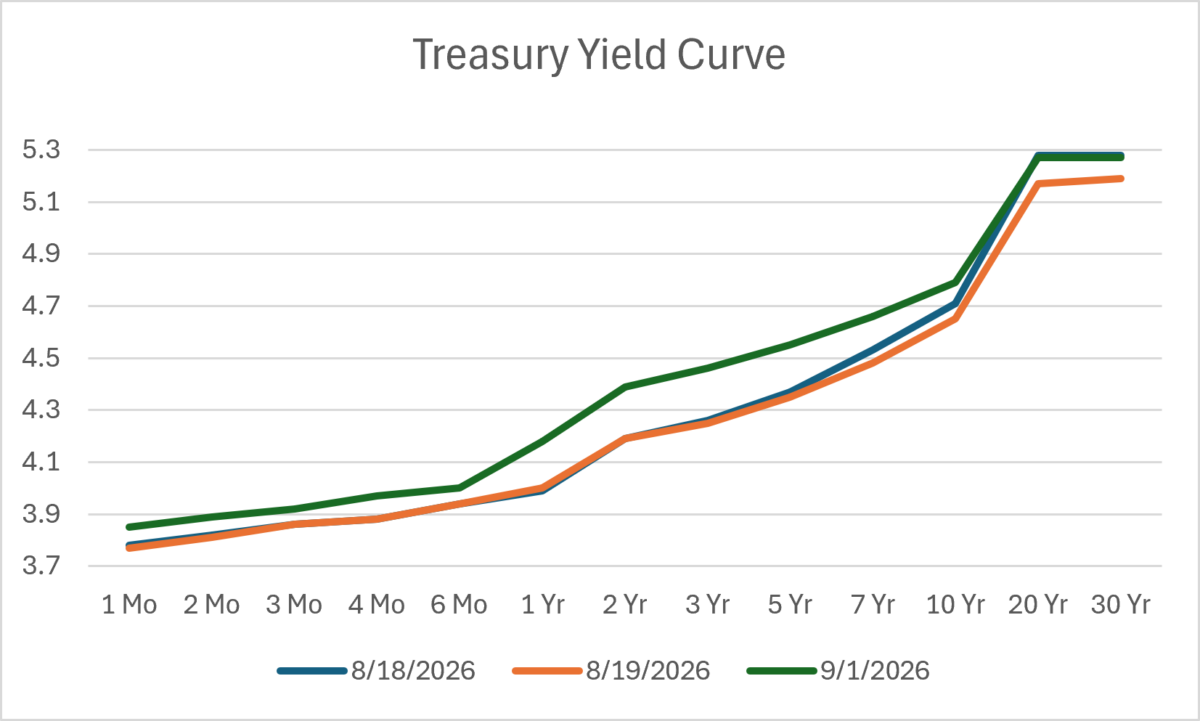
The move is pushing yields higher across most of the curve, underscoring how quickly borrowing costs can reprice when inflation expectations and fiscal concerns rise at the same time. That matters for governments rolling over debt, because longer-dated yields help set the cost of future financing, and for investors tracking duration-heavy sovereign portfolios, where even modest yield increases can translate into larger price declines.
Figure 1: Yield curve as of 8/18 (blue), as of 8/19 (orange), as of 9/1 (green), all in %. Source: Treasury.
For the oil-induced inflation shock, the post says, “we can thank Trump’s war of choice.” On the debt issue, it says one might argue the problem would exist even without Trump, but adds that the OBBBA “is to blame for blowing a big hole in our finances, accelerating the pace of debt accumulation (along with on again off again tariffs).”

