Glint Solar launches project site viability software
Key Takeaways
- •Land Screening lets developers evaluate statewide project opportunities at parcel-level resolution instead of starting with a single county or narrow area.
- •The tool combines grid infrastructure, hosting capacity, permitting, environmental, zoning and topography data to filter sites by project criteria.
- •Glint Solar says earlier screening can reduce time spent on unsuitable parcels and help limit speculative projects entering congested pipelines and grid queues.
- •The platform is intended to support utility-scale solar, battery storage and hybrid development by speeding feasibility analysis and reducing reliance on external consultants.
- •Land Screening is available in five U.S. states now, and Glint Solar says additional markets will launch soon.
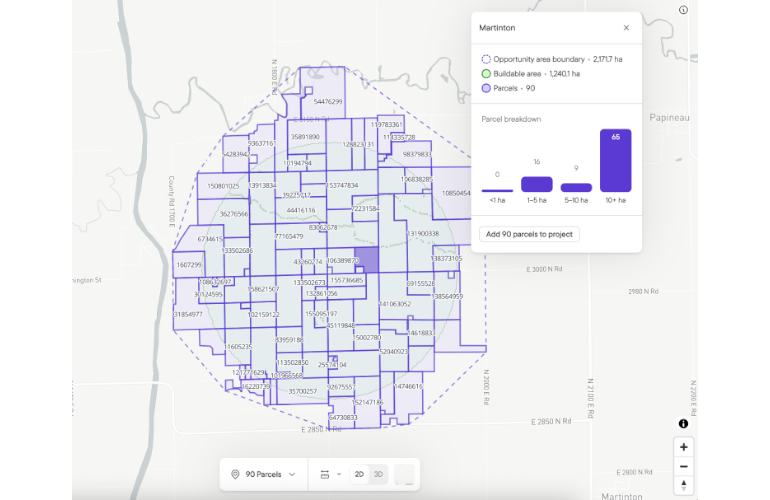
Glint Solar, an AI-powered software platform for utility-scale solar and energy storage development, has introduced a new tool that lets solar and storage developers search an entire U.S. state for viable project sites in minutes. The Land Screening tool combines grid, permitting, environmental and technical constraints at parcel-level resolution, helping developers identify lower-risk opportunities earlier in the development process.
The launch comes as competition for viable sites for large-scale solar and energy storage projects intensifies across the United States. With grid capacity constrained, permitting requirements evolving and suitable land becoming more difficult to secure, developers are under increasing pressure to identify workable projects earlier and avoid spending time and capital on sites that later prove unworkable.
Glint Solar’s AI-powered SaaS platform is designed to help developers accelerate utility-scale solar, battery energy storage and hybrid projects by simplifying complex grid, site and permitting processes. By turning geospatial and regulatory data into feasibility insights in hours rather than weeks, the platform can help U.S. developers increase permit approval rates while reducing reliance on costly external consultants.
The new Land Screening tool extends those capabilities to the earliest stage of development, allowing developers to apply their own project criteria across an entire state and identify potential lower-risk sites at parcel-level resolution. The tool combines data on grid infrastructure and hosting capacity with protected areas, zoning, topography and other development constraints, and lets users filter opportunities by buildable acreage and parcel count. For developers managing constrained pipelines, that early filtering can reduce the time spent advancing parcels that do not match basic project requirements.
Rather than starting with a single county or broad geographic area, developers can now cast a statewide net and quickly narrow thousands of potential parcels to the opportunities that best fit their development strategy.
“The race to secure sites for large-scale solar and storage projects has been a modern-day gold rush, but that is now changing,” said Simen Fure Jørgensen, CEO of Glint Solar. “The best opportunities are becoming harder to find, while the cost of pursuing the wrong ones continues to rise. Land Screening gives developers the ability to cast a much wider net while still having the granular insight they need to make confident decisions.”
Land Screening is the latest capability added to Glint Solar’s platform, which supports developers across the project lifecycle, from early-stage site screening and preliminary design through pipeline development, portfolio-wide prioritization and reporting. By helping developers identify constraints, assess feasibility and prioritize the strongest opportunities earlier, Glint estimates its platform could cut total project development timelines in half, from an average of seven years to around three and a half, while helping reduce the number of speculative or immature projects entering already congested development pipelines and grid queues.
“Every project that sits in a queue for years, unqualified, is a project blocking someone else’s spot. By helping developer’s mature projects earlier, Glint Solar can help ensure fewer speculative, immature applications clog the system. If the market adopts this discipline broadly, the whole queue moves faster. Glint Solar doesn’t just help one developer win the race; it shortens the race for everyone,” Jørgensen said.
Land Screening is now available in Illinois, New York, Pennsylvania, Texas and Massachusetts, with additional U.S. markets rolling out soon. Headquartered in Norway, Glint Solar is an AI-powered SaaS platform used by developers across more than 35 countries.
News item from Clint Solar
