WSJ Editor Gerard Baker Says Trump's Nvidia Scandal Could Lead to Impeachment Over 'Misdemeanors'
Key Takeaways
- •Wall Street Journal editor Gerard Baker stated on Wednesday that President Trump's involvement in the Nvidia affair could become the gravest political crisis of his presidency and an existential threat to his tenure.
- •The controversy centers on Trump's role in reinstating Jensen Huang as Nvidia's chief executive, alongside national security concerns involving Huang's affair with an alleged Chinese spy and the company's indirect sale of banned chips to China.
- •Nvidia is central to the global artificial intelligence boom, and U.S. export controls have barred its most advanced chips from the Chinese market for years on national security grounds.
- •Bipartisan demands for investigations have emerged, with even MAGA senators calling for answers, fueling rare conservative talk of impeachment and removal, which would require a simple House majority and a two-thirds Senate vote.
- •Baker argued that the GOP's recent midterm losses have stripped Trump of a protective Congress and predicted more Republicans will push for accountability, with formal congressional probes being the key development to watch.
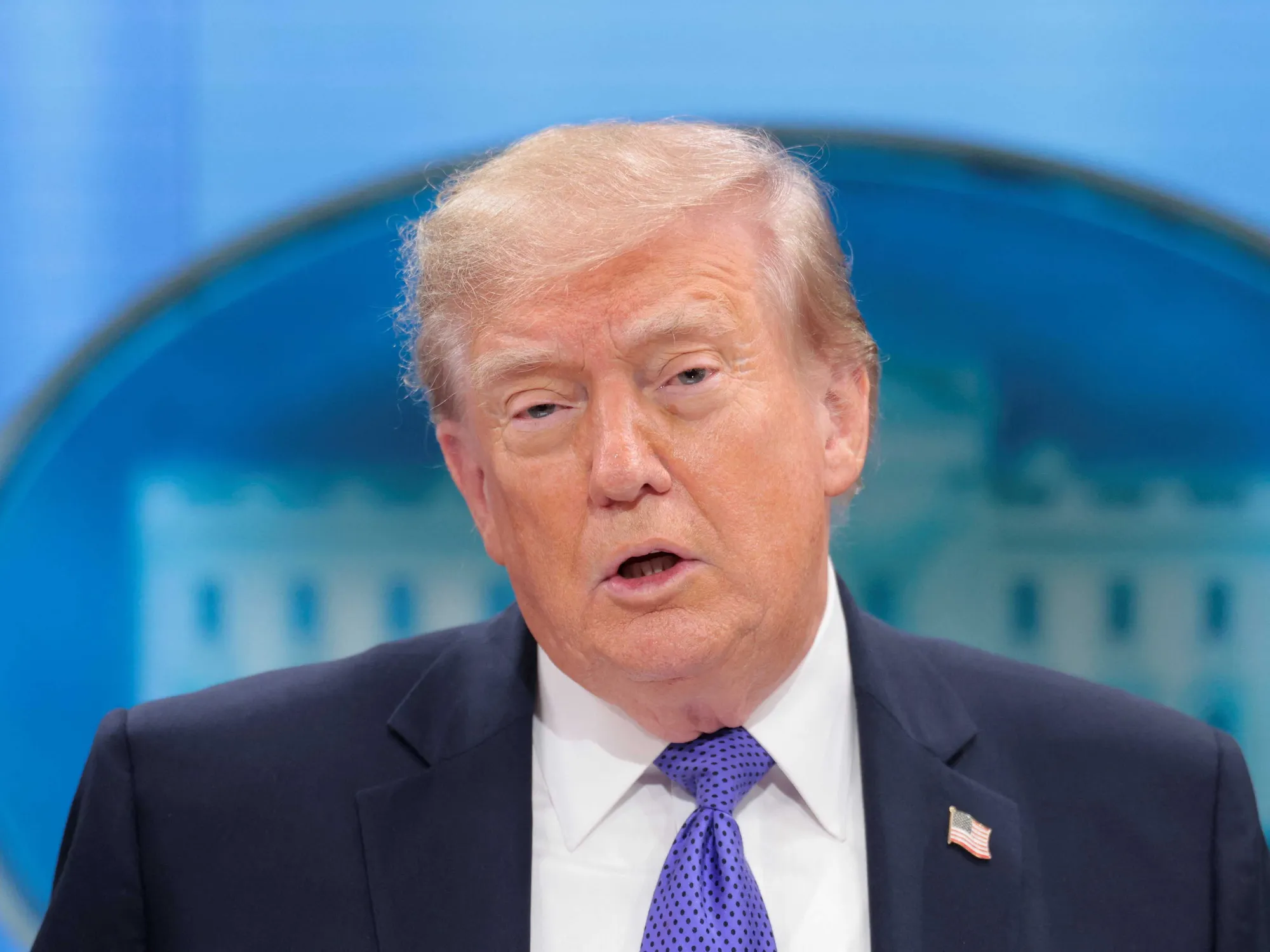
Wall Street Journal editor Gerard Baker said on Wednesday that the scandal rocking President Donald Trump's circle may be the biggest crisis it has faced, with the potential to bring an end to Trump's “political mortality” once and for all.
Speaking in a conversation with Times Washington editor Katy Balls, Baker argued that Trump's involvement in the Nvidia affair poses an existential threat to his presidency. “The political implications of this seem to me to be potentially larger than anything we've seen so far with Donald Trump,” Baker said. “I mean, we've been spending a lot of time in the last year being told by Donald Trump and Republicans that the Democratic Party has turned socialist and is about to turn America into a communist state. Well… it doesn't get much more socialist than the head of a government telling a company not only what it should do, but who should be its boss.”
For days, experts have weighed the implications of Trump's role in the reinstatement of Jensen Huang as chief executive of Nvidia. According to Baker, the crisis is built from multiple overlapping factors: national security concerns tied to Huang's affair with an alleged Chinese spy, the company's roundabout sale of banned chips to China, and the Trump administration's involvement throughout. Nvidia sits at the heart of the global artificial intelligence boom, and U.S. export controls have for years barred its most advanced chips from the Chinese market on national security grounds — the backdrop against which both the company's leadership and its China sales are now under scrutiny.
“This has got a lot of people very, very, very alarmed,” Baker said, “not only because it's just yet another extraordinary intervention in the private markets by Donald Trump, but also because of the national security implications and the idea that at worst, Trump might have essentially said, we're not going to really investigate this man who was potentially doing stuff that could be harmful to national security, because he's so valuable to me, he's so valuable to the economy.”
The national security and conflict-of-interest dimensions have fueled bipartisan demands for investigations, with even MAGA senators declaring the need to get to the bottom of the matter. That, in turn, has produced rare talk among conservatives that Trump could be impeached and removed from office — a remedy the Constitution reserves for “Treason, Bribery, or other high Crimes and Misdemeanors,” requiring a simple majority in the House to impeach and a two-thirds Senate vote to remove a president. Baker argued that the president is politically exposed as a result of the GOP's recent midterm shellacking, making such a dramatic outcome conceivable.
“There's no protection anymore from a compliant Congress for Donald Trump,” Baker argued. “We are exploring the ends of Trump's political mortality. More Republicans, I think, are probably going to be willing to say, ‘You know what? I just don't need this anymore. I just don't need to go along with everything that comes out of the White House.”
Baker predicted that a growing number of Republicans will press for accountability. “If you're a Republican and you've been arguing for the last 10 years that China's a major strategic threat,” he concluded, “and we're now confronted with this possibility that the president actually regards them as our best friend, that is a political problem whether or not you think the president should be held accountable for what might prove to be some misdemeanors.” The first thing to watch is whether those bipartisan demands for investigations harden into formal congressional probes — the development that would test Baker's prediction that more Republicans will break with the White House.

