GW Bridge Gridlock: Why Fort Lee's Approaches See So Many Collisions
Key Takeaways
- •The George Washington Bridge approaches in Fort Lee see persistent congestion and elevated accident rates because the Port Authority-operated crossing funnels regional demand onto a limited set of local lanes and ramps.
- •Stop-and-go conditions during morning and evening commutes heighten collision risk, and local law enforcement and traffic studies routinely identify congestion as a primary contributor to area crashes.
- •Aggressive behaviors such as tailgating and rapid lane switching, along with handheld phone use despite New Jersey's ban on the practice, compound the dangers on these congested corridors.
- •Accident claims near the bridge can be legally intricate because New Jersey's no-fault system provides Personal Injury Protection benefits regardless of fault, while policy-selected lawsuit options shape an injured driver's right to pursue damages.
- •Prompt evidence gathering and monitoring of Port Authority travel advisories, including how New York City's congestion pricing program in effect since January 2025 influences cross-river travel patterns, can help drivers protect their rights and adapt to changing conditions.
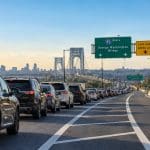
Fort Lee's roads near the George Washington Bridge are defined by persistent gridlock and recurring traffic jams. The congestion that builds up at the bridge approaches significantly raises the risk of collisions for local drivers, and understanding the causes behind these frequent accidents is vital for anyone navigating the area.
The approaches to the George Washington Bridge in Fort Lee have become notorious for regular traffic snarls and elevated accident rates. The span, operated by the Port Authority of New York and New Jersey, connects Fort Lee with upper Manhattan and ranks among the busiest vehicular crossings in the world, concentrating regional demand onto a limited set of local lanes and ramps. Local drivers know that heavy traffic, aggressive driving, and distracted driving all contribute to a hazardous environment, particularly during peak hours. Individuals seeking guidance after an accident sometimes turn to Fort Lee car accident lawyers to better understand their legal options and how gridlock near the bridge can affect liability and case details. Recognizing how each of these factors interacts on Fort Lee's roads helps locals and commuters better protect themselves during daily travel.
The Role of Heavy Traffic and Congestion by the Bridge
Heavy traffic is a defining feature of the Fort Lee approaches to the George Washington Bridge, particularly during morning and evening commutes. Stop-and-go conditions can breed frustration, making it difficult for drivers to remain patient and focused, which in turn increases the chance of a collision. Gridlock can also complicate lane changes, merging, and reaction times, especially in areas with frequent bottlenecks.
The dense concentration of vehicles, along with delays related to bridge tolls and ramps, means a single mistake can quickly escalate into a multi-car incident. Local law enforcement and traffic studies routinely cite the area's congestion as a primary contributor to the high number of accidents. Because of this, motorists traveling these routes must be prepared for sudden stops and unpredictable maneuvers from other drivers, including those influenced by distraction.
Aggressive and Distracted Driving on Fort Lee's Roads
Aggressive driving often surfaces when gridlock conditions test drivers' patience. Behaviors such as tailgating, rapid lane switching, or attempting to bypass long lines can escalate risks for everyone on the road. The pressure to push through slow-moving traffic near the George Washington Bridge can lead to impulsive decisions, increasing the potential for collisions on Fort Lee's busy streets.
Distracted driving is another serious concern in this environment. With delays stretching commute times, some motorists turn their attention to phones or in-car navigation systems. New Jersey prohibits handheld mobile phone use while driving, yet the behavior endures on congested corridors like these. These distractions raise the likelihood of missing sudden traffic changes or misjudging the movements of other vehicles. Navigating Fort Lee's gridlocked approaches safely means remaining attentive despite these common, risky temptations, which can compound aggressive driving behaviors.
Legal Considerations After Accidents in Heavy Traffic Zones
Collisions near the George Washington Bridge can present unique legal complications due to the volume of cars involved and the frequency of road rage. Determining fault may prove challenging when multiple drivers are involved, or when distracted driving played a role in the crash. For these reasons, people injured in Fort Lee accidents often seek out the experience of local practitioners during the claims process, especially when heavy traffic contributes to chain reactions.
New Jersey's no-fault insurance system adds another layer: Personal Injury Protection benefits typically apply regardless of fault, and the lawsuit options selected in a policy can shape an injured driver's right to pursue damages — one more reason claims here can turn intricate. Complex cases near congestion hotspots are frequently handled by firms such as Varcadipane & Pinnisi, P.C., which often deal with matters involving aggressive driving or difficult liability questions. Early action—gathering evidence, documenting vehicle and traffic conditions, and noting witness information—can be especially important for protecting one's rights in these high-traffic zones. With gridlock continuing to challenge the area and local regulations continuing to evolve, staying informed remains essential for Fort Lee drivers. Monitoring Port Authority travel advisories — and how regional policy shifts such as New York City's congestion pricing program, in effect since January 2025, interact with cross-river travel patterns — is one practical way local drivers can stay ahead of changing conditions.
This article was originally published by citybuzz.

