Why Gaming PCs Can't Compete With ASIC Miners in Bitcoin Mining
Key Takeaways
- •Bitcoin mining runs on the SHA-256 proof-of-work algorithm, and specialized ASIC miners vastly outperform gaming GPUs and CPUs in both hashrate and energy efficiency.
- •A gaming PC's electricity consumption can exceed the value of any Bitcoin it mines, making GPU-based Bitcoin mining economically impractical in most circumstances.
- •Mining profitability depends on hardware efficiency, electricity prices, network difficulty, Bitcoin's market price, transaction fees, mining pool charges, and equipment uptime.
- •The fourth Bitcoin halving on April 20, 2024 reduced the block subsidy from 6.25 BTC to 3.125 BTC, with the next halving expected around 2028 to lower it further to 1.5625 BTC.
- •Continuous mining workloads can raise GPU temperatures, fan wear, and power usage, so total operating costs should be calculated before investing in mining equipment.
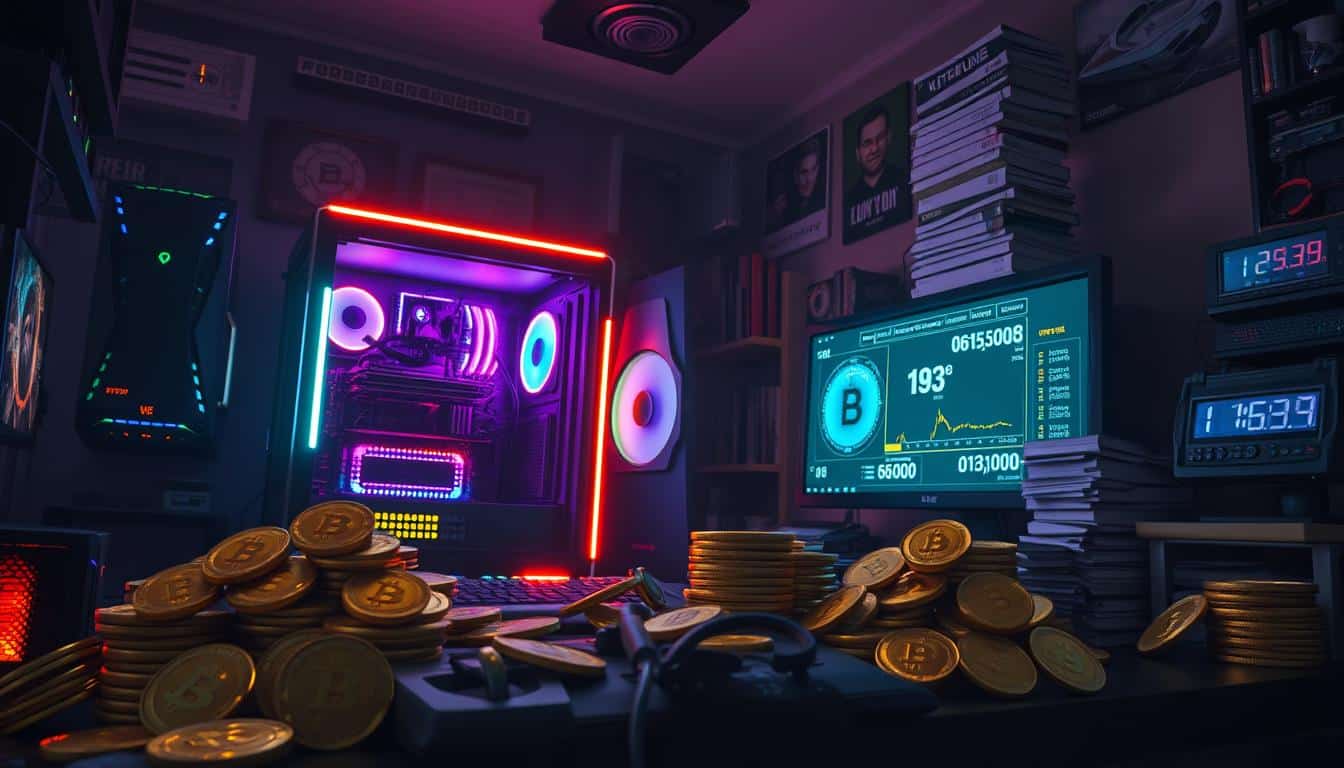
A gaming PC can run demanding games, edit video, and handle complex graphics workloads, but none of that makes it competitive at Bitcoin mining. The industry is dominated by application-specific integrated circuits (ASICs), specialized hardware built to calculate Bitcoin's SHA-256 hashes far more efficiently than any consumer graphics card can.
A computer can technically take part in Bitcoin mining experiments, but a typical gaming PC is unlikely to earn meaningful rewards. Its graphics card was not designed for the workload, and its electricity consumption can easily outweigh any potential earnings.
The distinction matters because Bitcoin mining has become a highly competitive industry. Professional operations run large numbers of efficient ASIC machines alongside suitable electricity access, specialized cooling, and dedicated infrastructure. For most gaming PC owners, buying a dedicated Bitcoin miner—or choosing a different way to participate in cryptocurrency—is more practical than trying to mine Bitcoin with a GPU.
This guide explains how Bitcoin mining works, why gaming PCs struggle, what equipment miners actually need, and how to evaluate profitability before spending money. The core points are straightforward: Bitcoin mining runs on the SHA-256 proof-of-work algorithm, and specialized ASIC miners are far better suited to it than gaming GPUs or standard CPUs. A gaming PC can perform mining-related calculations, but its hashrate and energy efficiency make it uncompetitive for Bitcoin. Profitability depends on hardware efficiency, electricity prices, network difficulty, Bitcoin's market price, transaction fees, and pool charges. Mining also increases electricity consumption, heat output, fan wear, and hardware operating temperatures, so anyone considering it should calculate total operating costs before purchasing equipment.
What Is Bitcoin Mining?
Bitcoin mining is the process through which specialized computers compete to add new blocks of transactions to the Bitcoin blockchain. It relies on proof of work, a system that requires miners to perform computational work to produce a valid block.
Mining serves two important functions:
- Transaction confirmation: Miners select valid transactions and include them in proposed blocks.
- Network security and new issuance: Proof of work makes it costly to rewrite Bitcoin's transaction history, while the block reward introduces new BTC into circulation according to Bitcoin's issuance schedule.
Bitcoin mining is not simply solving mathematical equations to discover coins. Miners repeatedly calculate hashes of candidate block data, searching for a result that meets the network's difficulty target. The first miner to produce a valid block and successfully propagate it can receive the block subsidy plus the transaction fees included in that block. Other Bitcoin nodes independently check whether the block follows the network's rules.
How Does Bitcoin Mining Work?
Bitcoin mining follows a competitive sequence:
- Transactions are broadcast: Bitcoin users send transactions to the network.
- Transactions are selected: Miners collect eligible transactions and assemble them into a candidate block.
- Mining hardware calculates hashes: ASIC machines repeatedly hash block-header data using SHA-256.
- A valid result is found: A miner discovers a hash that satisfies the current network target.
- The block is broadcast and checked: Other nodes verify the block and its transactions.
- The miner receives the reward: If the block is accepted, the miner receives the applicable subsidy and transaction fees.
The process then continues as miners compete to produce the next block.
What Are Hashrate and Mining Difficulty?
Hashrate measures how many hash calculations mining hardware can perform in a given amount of time. It is commonly expressed in terahashes per second (TH/s), petahashes per second (PH/s), or exahashes per second (EH/s).
Mining difficulty describes how hard it is to find a valid block hash. Bitcoin adjusts difficulty every 2,016 blocks—approximately every two weeks—to keep the average block interval close to 10 minutes.
These measurements explain why a gaming PC struggles. Even a powerful consumer GPU represents a very small amount of computing power compared with the combined ASIC equipment competing across the Bitcoin network.
Why Is Bitcoin Mining So Difficult for Gaming PCs?
A gaming PC is built to render graphics and run general-purpose applications. Bitcoin mining demands enormous numbers of SHA-256 calculations performed continuously. The core problem is not that gaming computers are weak—it is that their hardware is designed for a different purpose.
1. Gaming GPUs Are Not Designed for Bitcoin's Mining Workload
Graphics processing units (GPUs) contain many processing cores that handle parallel tasks, making them useful for gaming, rendering, scientific computing, and certain cryptocurrency mining algorithms.
Bitcoin mining is different. Its SHA-256 workload is handled far more efficiently by dedicated ASIC chips. A GPU can calculate hashes, but it cannot match the performance per watt of modern Bitcoin ASIC hardware, which makes GPU-based Bitcoin mining economically impractical in most circumstances.
2. ASIC Miners Have a Major Performance Advantage
An application-specific integrated circuit is a chip designed to perform one particular task. Bitcoin ASIC miners are built specifically to calculate SHA-256 hashes. Unlike a gaming GPU, an ASIC miner does not need to support graphics rendering, video processing, or a broad range of computing tasks. Its hardware is optimized for a single purpose: Bitcoin mining. This focus is the result of a clear technological progression: early Bitcoin miners used CPUs, then moved to GPUs and field-programmable gate arrays (FPGAs), before ASIC chips became the standard for the SHA-256 workload.
That specialization gives ASIC miners substantial advantages in:
- Hashrate per machine
- Energy efficiency
- Continuous mining performance
- Hardware design for sustained workloads
- Cost efficiency at scale
Professional mining operations connect many ASIC machines to coordinated power, cooling, and monitoring systems. A single gaming PC cannot realistically compete with that infrastructure.
3. Electricity Costs Can Eliminate Potential Earnings
Mining hardware consumes electricity whenever it operates. A gaming PC running a mining workload continuously can add significantly to a household electricity bill.
The relevant question is not simply how much Bitcoin a machine might earn. It is whether the value of its expected rewards exceeds its electricity and other operating costs. A computer that generates a small amount of mining revenue may still lose money if its electricity is expensive—a concern that is particularly acute where residential rates are high, or where the PC would otherwise be used for gaming, work, or other tasks. This same arithmetic explains why professional mining facilities are typically located where electricity is abundant and inexpensive, an advantage household setups cannot easily replicate.
4. Heat and Continuous Operation Can Stress Components
Mining can keep a GPU under sustained load for long periods, generating heat and placing continuous demands on the graphics card's cooling system. Potential consequences include:
- Higher GPU and memory temperatures
- More frequent fan operation
- Increased dust accumulation
- Greater wear on cooling components
- Reduced performance if thermal limits are reached
- Additional electricity used by cooling equipment
Mining does not automatically destroy a graphics card. However, operating hardware continuously at high temperatures without proper monitoring and maintenance can increase the risk of premature component failure.
GPU Mining vs. ASIC Mining: What Is the Difference?
GPU and ASIC mining use different types of hardware. A GPU is versatile and can perform many computing tasks, while an ASIC is designed for a specific algorithm or workload. For Bitcoin mining, ASIC equipment is the practical choice.
What Is GPU Mining?
GPU mining uses graphics cards to perform the calculations required by certain proof-of-work cryptocurrency networks. GPUs became popular in cryptocurrency mining because they can perform many parallel calculations and offer more flexibility than single-purpose mining hardware.
GPU mining should not be confused with Bitcoin mining, however. A graphics card may suit a particular cryptocurrency's algorithm without being competitive on Bitcoin's SHA-256 network.
It is also important to check whether a cryptocurrency still uses proof of work. Ethereum switched to proof of stake in September 2022, ending mining on Ethereum Mainnet. It is no longer accurate to describe Ethereum as a coin that users can mine with gaming GPUs.
What Are the Advantages of ASIC Miners?
ASIC miners offer several advantages for Bitcoin mining:
- Specialized performance: They are built to calculate SHA-256 hashes.
- Better energy efficiency: Their design focuses on producing more hashes for the electricity consumed.
- Continuous operation: Mining-specific machines are designed for sustained workloads.
- Mining-focused management: Many models include monitoring, configuration, and temperature controls.
ASICs also have disadvantages. They can be expensive, noisy, power-intensive, and difficult to use in residential environments. Their resale value may fall when newer, more efficient models become available.
An ASIC is not automatically profitable. Its economics still depend on electricity prices, network conditions, hardware cost, and Bitcoin's market value.
What Equipment Do You Need for Bitcoin Mining?
Anyone planning to mine Bitcoin seriously needs more than a powerful computer. A practical mining operation requires specialized equipment, reliable electricity, cooling, network connectivity, and suitable software.
1. ASIC Bitcoin Miner
The ASIC miner is the main piece of equipment. When comparing models, look beyond the advertised hashrate. Important specifications include:
- Hashrate, usually measured in TH/s
- Power consumption in watts
- Energy efficiency, commonly measured in joules per terahash (J/TH)
- Operating temperature range
- Noise level
- Cooling requirements
- Manufacturer support and warranty
- Purchase price and expected availability of replacement parts
A miner with a higher hashrate may also consume more electricity, so efficiency is essential when comparing equipment.
2. Power Supply and Electrical Infrastructure
Mining equipment needs a stable electrical supply capable of supporting continuous power demand. Before installing an ASIC miner, check:
- Whether the circuit can safely support the machine
- The required voltage and amperage
- Power supply compatibility
- Electrical wiring and circuit protection
- Local electrical regulations
- The cost of running the equipment around the clock
Do not overload household circuits or use unsuitable cables and adapters. High-power mining equipment should be installed according to manufacturer instructions and applicable electrical safety requirements.
3. Cooling and Ventilation
ASIC miners generate substantial heat. Proper ventilation is essential to prevent overheating and maintain stable operation. Depending on the machine and environment, miners may need dedicated ventilation, additional fans, or specialized cooling systems.
Cooling requirements also affect profitability, because ventilation equipment consumes electricity and may increase installation costs.
4. Internet Connection and Mining Software
Bitcoin mining requires a reliable internet connection so the mining system can communicate with a mining pool or other network infrastructure. Mining software and firmware help configure the ASIC, connect it to a pool, monitor its hashrate, and track operating conditions.
Choose software compatible with the specific mining hardware, and avoid unknown downloads and unofficial firmware that could contain malware or compromise the machine.
5. Bitcoin Wallet
Miners need a secure way to receive and manage their Bitcoin payouts. A Bitcoin wallet provides the address used to receive funds. Before connecting a wallet to mining software or a pool, verify the address carefully and understand how the wallet protects its recovery information.
Never share a wallet's private keys or recovery phrase with a mining pool, software provider, or support representative.
How Much Does Bitcoin Mining Cost?
Bitcoin mining costs vary according to equipment, electricity rates, installation requirements, location, and operating conditions. A complete budget should include both the initial investment and recurring expenses.
Older mining-rig cost estimates should not be treated as current market prices. GPU prices, ASIC prices, shipping costs, and availability change over time. For Bitcoin specifically, a dedicated ASIC miner is generally more relevant than building a multi-GPU mining rig.
Bitcoin Mining Profitability: What Determines Your Earnings?
Bitcoin mining profitability depends on how much value a miner earns compared with the total cost of operating the equipment. The most important factors are:
- Hardware hashrate: More hashrate generally gives a miner a larger share of the network's total mining work.
- Energy efficiency: More efficient hardware produces more hashes per unit of electricity.
- Electricity price: Higher electricity costs reduce net earnings.
- Network difficulty: Higher difficulty means more total work is required to find a block.
- Bitcoin price: The market value of BTC affects the value of mining rewards.
- Block subsidy and transaction fees: These determine the Bitcoin paid to miners when a block is found.
- Mining pool fees: Pools may deduct fees before distributing payouts.
- Uptime: Downtime reduces the amount of work a miner contributes.
How Does the Bitcoin Halving Affect Mining?
Bitcoin's block subsidy is cut by 50% approximately every four years in an event known as a halving. The fourth halving occurred on April 20, 2024, reducing the block subsidy from 6.25 BTC to 3.125 BTC. Under the same fixed issuance schedule, the next halving—expected around 2028—will reduce the subsidy further, to 1.5625 BTC.
The subsidy is only one part of a miner's potential block reward. Miners can also receive transaction fees from transactions included in a block.
Halvings matter because they reduce the amount of newly issued Bitcoin available to miners. If Bitcoin's price, transaction fees, or operating efficiency do not compensate for the reduced subsidy, some mining operations may become less profitable.
How to Calculate Electricity Costs
A simple electricity-cost calculation helps clarify the operating expense of a mining machine:
Daily electricity cost = (Power consumption in watts ÷ 1,000) × 24 × Electricity price per kWh
Consider a hypothetical ASIC miner that consumes 3,500 watts and operates continuously, with electricity priced at $0.15 per kilowatt-hour:
- Power consumption: 3,500 watts, or 3.5 kW
- Daily energy use: 3.5 × 24 = 84 kWh
- Electricity price: $0.15 per kWh
- Daily electricity cost: 84 × $0.15 = $12.60
- Approximate 30-day electricity cost: $378
This example estimates electricity expense only. It does not include mining revenue, pool fees, cooling, repairs, taxes, hardware depreciation, or installation costs. It also illustrates why electricity prices matter so much: a miner that generates revenue above its power bill may still lose money once other expenses are included.
How to Calculate Bitcoin Mining Profitability
A more complete profitability estimate compares expected mining revenue with operating expenses:
Estimated net operating profit = Mining revenue − Electricity costs − Pool fees − Other operating expenses
For a useful estimate, enter:
- ASIC hashrate
- Power consumption at the wall
- Local electricity rate
- Current network difficulty or network hashrate
- Current block subsidy and estimated transaction fees
- Bitcoin market price
- Mining pool fee
- Expected operating hours and uptime
A mining calculator can estimate expected revenue and electricity expenses using these inputs. The result is a scenario, not a guarantee of future income.
Remember to calculate hardware payback separately. Even if a miner produces positive operating cash flow, it may take a long time to recover the purchase price.
What Is a Bitcoin Mining Calculator?
A Bitcoin mining calculator is a tool that estimates potential mining revenue and costs using hardware and network information. Most calculators allow users to enter:
- Mining hashrate
- Power consumption
- Electricity price
- Pool fee
- Hardware cost
- Bitcoin price or market assumptions
The calculator then estimates potential BTC earnings, electricity expenses, and profitability over a selected period.
Why Mining Calculators Are Useful
Mining calculators help users compare ASIC models and electricity prices before buying equipment. Two miners may have similar hashrates but different power consumption; the more efficient machine may have lower operating costs and a better chance of remaining profitable when mining conditions become less favorable.
Calculators, however, rely on assumptions. Network difficulty, transaction fees, Bitcoin prices, equipment uptime, and pool payouts can all change. A result that looks profitable today may not remain profitable in the future. Use more than one calculator when evaluating a major purchase, and check the date and assumptions behind each estimate.
What Are Bitcoin Mining Pools?
A Bitcoin mining pool is a service that coordinates work from multiple miners and distributes rewards according to their contributions. Pools reduce the uncertainty associated with solo mining. Instead of waiting for one machine to find an entire block, participants submit smaller proofs of work, called shares, to demonstrate their contribution. When the pool earns rewards, it distributes payments according to its payout rules.
Common Mining Pool Payout Methods
Each payout method has different payment characteristics and risk considerations. Compare the pool's fee, payout threshold, settlement method, reputation, and withdrawal requirements before joining.
What Should You Consider When Choosing a Mining Pool?
Key factors include:
- Pool reputation: Research its operating history and security practices.
- Fees: Understand how the pool charges for its services.
- Payout method: Check whether it uses PPS, FPPS, PPLNS, or another system.
- Minimum payout: Confirm how much Bitcoin is required before withdrawal.
- Transparency: Look for clear information about hashrate, payouts, and operating policies.
- Security: Use strong account protection and verify the official website before connecting mining equipment.
Examples of established mining services include F2Pool, AntPool, Foundry USA, and Braiins Pool. Their availability, supported services, payout methods, and fees can change, so check current terms directly with each provider.
Can You Mine Bitcoin Solo With a Gaming PC?
Technically, a computer can participate in the proof-of-work process, but a gaming PC has an extremely small chance of finding a valid Bitcoin block on its own.
Solo mining means attempting to find a block without sharing the reward through a mining pool. The miner receives the full block reward if successful, but the probability of success depends on its share of total network hashrate. With a typical gaming GPU, that share is negligible compared with the computing power of the Bitcoin network.
This means a solo miner could operate for a very long time without finding a block. A mining pool can make payouts more regular for miners with suitable hardware, but it cannot turn an uncompetitive GPU into a profitable Bitcoin ASIC.
Why Mining Difficulty Matters
Bitcoin mining difficulty helps regulate how quickly new blocks are produced. The network adjusts difficulty every 2,016 blocks, targeting an average block interval of approximately 10 minutes.
When more mining power joins the network, blocks may initially be found faster; the next difficulty adjustment can then increase the amount of work needed to find a valid block. When mining power leaves the network, difficulty can decrease.
For individual miners, higher difficulty can reduce the expected share of rewards earned by the same hardware, all else being equal. This is one reason profitability calculators need current network data rather than outdated hashrate or difficulty figures.
How Does Mining Difficulty Affect a Gaming PC?
Mining difficulty does not directly damage a gaming PC—the hardware strain comes from running a mining workload continuously. However, rising network difficulty can make a gaming PC even less economically competitive, because the same hardware represents a smaller share of total mining work. The result can be a combination of high electricity costs, low expected rewards, and additional wear from sustained operation.
Is It Safe to Mine Cryptocurrency on a Gaming PC?
Mining on a gaming PC is not automatically unsafe, but it requires careful monitoring. The most important concerns are temperature, power consumption, cooling, software security, and the impact of continuous workloads on components.
Before running any mining software, check that it comes from a trusted source. Some malicious programs disguise themselves as mining applications or secretly use another person's computer to mine cryptocurrency.
What Is Cryptojacking?
Cryptojacking occurs when someone uses a computer's processing power to mine cryptocurrency without the owner's permission. Common warning signs include:
- Unusually high CPU or GPU usage when no demanding application is running
- Fans running loudly or continuously
- Higher electricity bills without an obvious explanation
- Unexpected overheating
- Slower system performance
- Unknown processes or suspicious applications
If you suspect cryptojacking, disconnect from suspicious services, scan the system with reputable security software, review recently installed applications and browser extensions, and update your operating system.
Do not assume that every increase in CPU or GPU usage means cryptojacking. Games, background updates, rendering applications, and other legitimate processes can also cause high resource usage.
How Can You Improve a Gaming PC's Mining Performance?
If the goal is to experiment with cryptocurrency mining, a gaming PC can be used to learn about mining software, wallets, pools, and hardware monitoring. Upgrading a gaming PC, however, will not make it competitive with purpose-built Bitcoin ASICs.
Useful precautions include:
- Monitor temperatures: Keep GPU and CPU temperatures within manufacturer-recommended operating limits.
- Check power consumption: Measure actual system power use rather than relying only on component specifications.
- Maintain cooling: Clean dust filters and fans and ensure the system has adequate airflow.
- Use trusted software: Download mining applications only from verified sources.
- Avoid unsafe overclocking: Aggressive settings can increase heat and instability.
- Monitor performance: Check hashrate, power draw, temperatures, and system stability.
- Calculate costs first: Compare expected revenue with electricity expenses before running a workload continuously.
For Bitcoin mining specifically, these steps improve safety and monitoring—not the underlying competitiveness of a gaming GPU.
What Are the Alternatives to Bitcoin Mining With a Gaming PC?
If the goal is to participate in cryptocurrency without buying an ASIC miner, consider alternatives that do not require a gaming PC to compete against Bitcoin's specialized mining infrastructure.
1. Learn About Bitcoin Nodes
Running a Bitcoin full node lets you independently verify transactions and blocks according to Bitcoin's consensus rules. A full node does not earn the block subsidy simply by operating; its purpose is to verify and relay network data rather than compete for mining rewards.
2. Research Other Proof-of-Work Cryptocurrencies
Some cryptocurrency networks use mining algorithms that support GPUs or other hardware, but profitability and hardware requirements vary significantly. Research the network's current consensus mechanism, mining algorithm, market liquidity, software, and operating costs before participating. Do not assume that a coin is GPU-mineable just because it is a cryptocurrency.
3. Consider Other Ways to Participate
People interested in Bitcoin can learn about wallet security, self-custody, full nodes, blockchain development, and the economics of proof of work without operating a mining machine. These activities have different requirements and risks from mining and should not be treated as guaranteed ways to earn cryptocurrency.
Frequently Asked Questions About Bitcoin Mining
Why does my gaming PC suck at Bitcoin mining?
A gaming PC is not designed for Bitcoin's SHA-256 mining workload. Its GPU can calculate hashes, but specialized ASIC miners perform the task far more efficiently. The gaming PC's electricity costs can also exceed its potential mining revenue.
Can you mine Bitcoin with a gaming PC?
A gaming PC can technically perform Bitcoin mining calculations, but it is not a practical way to earn Bitcoin. Modern Bitcoin mining is dominated by ASIC machines, making consumer GPUs uncompetitive.
Is GPU mining better than ASIC mining?
It depends on the cryptocurrency and mining algorithm. GPUs are versatile and can support selected mining workloads, while ASICs are designed for specific algorithms. For Bitcoin's SHA-256 mining, ASICs are the practical option.
What is an ASIC Bitcoin miner?
An ASIC Bitcoin miner is a specialized machine built to calculate SHA-256 hashes. It is designed to perform Bitcoin mining more efficiently than general-purpose CPUs and GPUs.
How much electricity does Bitcoin mining use?
Electricity consumption depends on the number of machines, their power ratings, operating hours, and cooling requirements. To estimate one machine's daily consumption, divide its wattage by 1,000 and multiply by its operating hours.
What affects Bitcoin mining profitability?
The main factors are hardware hashrate, energy efficiency, electricity price, network difficulty, Bitcoin's market price, transaction fees, pool fees, uptime, and equipment costs.
What is Bitcoin mining difficulty?
Mining difficulty measures how hard it is to find a valid block hash. Bitcoin adjusts difficulty every 2,016 blocks—approximately every two weeks—to maintain an average block interval of about 10 minutes.
What is the current Bitcoin block reward?
The Bitcoin block subsidy is currently 3.125 BTC following the April 20, 2024 halving. Miners can also receive transaction fees from transactions included in their blocks.
What is a Bitcoin mining pool?
A Bitcoin mining pool coordinates work from multiple miners and distributes rewards based on their contributions. Pools can provide more frequent, smaller payouts than solo mining, although their fees and payout rules vary.
Can you mine Bitcoin without joining a pool?
Yes. Solo mining is possible, but a miner with limited hashrate has a very small chance of finding a block. A pool offers a different payout structure by combining participants' mining power.
Does Bitcoin mining damage a gaming PC?
Mining does not automatically damage a gaming PC, but continuous high workloads can increase temperatures, fan use, electricity consumption, and component wear. Poor cooling and unsafe operating settings can increase the risk of hardware problems.
Is Ethereum still mineable with a GPU?
No. Ethereum Mainnet ended proof-of-work mining when it transitioned to proof of stake on September 15, 2022. Ethereum now uses validators rather than miners to participate in network consensus.
What is cryptojacking?
Cryptojacking is the unauthorized use of another person's computer resources to mine cryptocurrency. It can cause high CPU or GPU usage, overheating, slower performance, and increased electricity consumption.
Is Bitcoin mining profitable for beginners?
It depends on the equipment, electricity price, network conditions, and total operating costs. Beginners should calculate expected revenue and expenses before buying mining hardware. A gaming PC is generally not a practical Bitcoin mining investment.
Final Thoughts: Is Bitcoin Mining Worth It With a Gaming PC?
Bitcoin mining has evolved from an activity early users could experiment with on ordinary computers into a highly specialized industry dominated by ASIC hardware. A gaming PC may be powerful enough for demanding games and general computing, but it lacks the efficiency needed to compete in modern Bitcoin mining. Running it continuously can increase electricity costs and hardware strain without producing meaningful rewards.
Anyone interested in Bitcoin mining should focus on ASIC efficiency, electricity prices, network difficulty, pool fees, cooling, and total equipment costs. A profitability calculator can help estimate potential returns, but no calculation guarantees future earnings.
For most gaming PC owners, learning about Bitcoin, running a full node, or researching other cryptocurrency technologies is more practical than trying to compete with professional Bitcoin mining operations.
This article, written by Ethan Blackburn, originally appeared on Cryptsy.

