French-Speaking Artist Collective 'Nuances' to Exhibit in Busan and Seoul on Korea's Rapid Urban Transformation
Key Takeaways
- •The Nuances collective features 16 artists, primarily French-speaking, including a Belgian creator and two Korean artists who previously resided in France.
- •The exhibition treats Korea's rapidly changing urban environment as a contemporary archaeological site, documenting spaces that disappear through continuous demolition and reconstruction.
- •Filmmaker Sebastien Simon, a Dongseo University professor and 14-year Korea resident, presents a 3D documentary exploring how high-rise development has transformed and gentrified Busan's Haeundae Beach area.
- •The collective originated from a French artist showcase at the 2025 Ulsan International Art Fair, where seven artists initially joined forces before expanding into a larger collaborative project.
- •The exhibition is hosted at France Art Space in Busan's Haeundae District through August 30 and will subsequently appear at KOTE in Seoul from October 1 to 14.
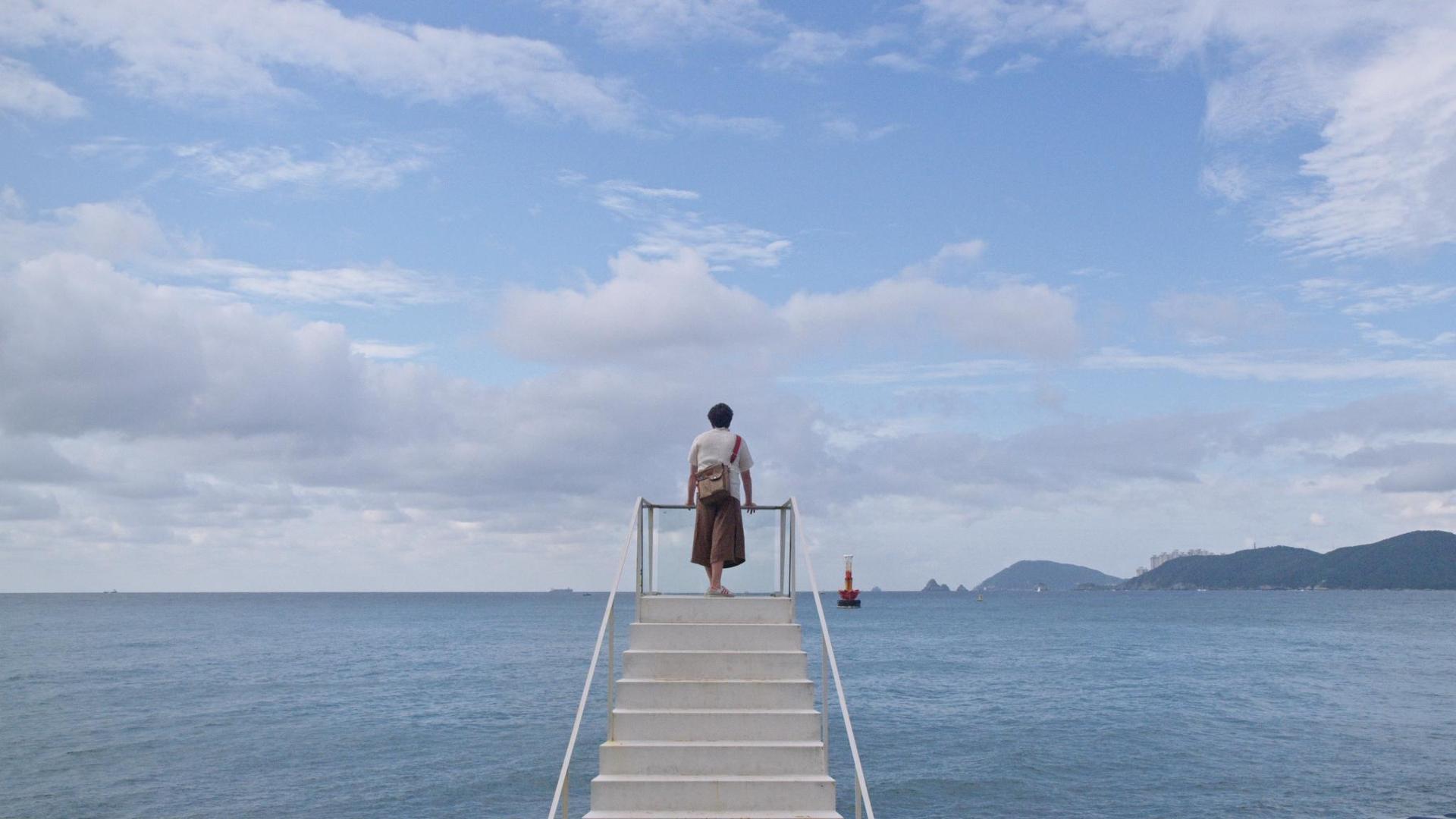
A collective of French-speaking artists known as Nuances is set to present a group exhibition in Busan from Thursday through Aug. 30, bringing together filmmakers, photographers, and visual artists who explore how Korean cities and landscapes undergo continuous cycles of demolition, redevelopment, and transformation.
Titled "ARCHÉOLOGIE DU PRÉSENT" (Archaeology of the Present), the exhibition aims to establish a contemporary form of archaeology in which spaces that vanish today become the memories of tomorrow. The collective draws on both French and Korean cultural influences, offering what they describe as a sensitive and original perspective on modern Korean society through its stark contrasts and rapid transformations. South Korea's urban landscape has undergone repeated waves of reconstruction since the postwar rebuilding era, and the pace of redevelopment remains among the fastest in the developed world, making it a frequent subject of both academic study and artistic inquiry.
While the group is composed primarily of French artists, its reach extends beyond nationality. Among the 16 participating creators are a Belgian artist and two Korean artists who lived in France for many years and are fluent in French. The collaboration reflects a broader pattern of France–Korea cultural exchange, supported in part by institutions such as the Alliance Française, which operates multiple branches across Korea promoting French language and arts programming.
Filmmaker Sebastien Simon, one of the exhibition's organizers and a participating artist, told The Korea Times that the collective took shape following a French artist showcase at the Ulsan International Art Fair in 2025, where seven artists initially joined forces with the support of the Alliance Française in Busan.
"Following the event, we decided to continue our collaboration and develop a larger collective project," Simon said.
Simon has resided in Korea for 14 years and serves as a filmmaking professor at Dongseo University International College, where he teaches international students. He is also a programmer for the Busan International Short Film Festival.
The exhibition's central theme stems from Korea's rapidly shifting urban landscape. Acting as what they call "involuntary archaeologists," the Nuances artists channel their distinct creative sensibilities to document urban and societal change through photography, drawing, film, installation, music, and performance. The collective is part of a growing roster of international artists who have turned their attention to South Korea's built environment, drawn by the visibility and speed of its physical transformation.
Unlike conventional archaeology, which investigates ancient civilizations and historic ruins, these artists focus on the remains of the present — places that disappear almost as quickly as they are created.
"We are not actual archaeologists, but many of us were interested in how Korean landscapes and cities are being demolished and reconstructed, demolished and reconstructed again and again," Simon explained.
For the artists, this perpetual transformation fosters an unusual relationship with time. They examine the emotional, historical, social, and visual layers embedded within these changes.
"The change is constantly happening. It is nonstop," Simon said. "Anything we feel strongly about, or anything someone captures in a photograph, almost feels like researching ruins — modern ruins."
The concept holds personal resonance for many Korean residents who experience redevelopment directly in their neighborhoods, where demolitions and rebuilding projects routinely reshape communities, sometimes displacing long-term inhabitants.
In addition to his organizing and curatorial responsibilities, Simon is presenting his own 3D documentary film at the exhibition, titled "The Old, The New and The Other." The work centers on the transformation of Busan's Haeundae Beach, with particular attention to large-scale development projects, including new high-rise towers and the Haeundae Blueline Park tourist railway. Haeundae is one of South Korea's most visited coastal destinations, and its skyline has changed dramatically over the past two decades as high-rise residential and commercial towers have replaced older low-rise structures. Using 3D filmmaking techniques, the documentary investigates how urban development has reshaped the area and affected local residents' lives.
Rather than chronicling the construction process itself, the film delves into the aftermath. "It is more about how the towers have completed the gentrification of Haeundae Beach," Simon explained.
Through their varied artistic practices, the collective raises a simple yet profound question: What remains when everything around us is in constant flux? The exhibition invites visitors to explore Korea's contemporary landscape as though excavating an ancient archaeological site, uncovering the multiple historical, social, and cultural layers that coexist even as they simultaneously disappear.
Korea, described by the collective as a global laboratory of accelerated modernity, provides an exceptional field of observation where millennia-old traditions and hypermodernity continuously confront and intertwine.
The exhibition is hosted at the France Art Space, located in the Goeun Museum of Photography Annex in Busan's Haeundae District. The group also plans to bring the exhibition to a wider audience at Seoul's KOTE from Oct. 1 to 14. The Seoul staging at KOTE, a venue in the trendy Samcheong-dong arts corridor near Gyeongbokgung Palace, positions the show within one of the capital's most active cultural districts.
Additional information is available via the collective's Instagram account, @nuancesartistes.

