France Is the World's Most Dangerous Place for Bitcoiners: 90 Attacks in Seven Months
Key Takeaways
- •France's Interior Ministry documented 90 crypto-linked crimes, including kidnapping, extortion, threats, and violent theft, from Jan. 1 to mid-August 2026, with 223 arrests and 126 people imprisoned.
- •The official tally, which establishes 2026 as the first baseline year of measurement, is higher than private trackers such as Chainalysis's 30 incidents and Gart.io's 73 attacks, partly due to differences in scope.
- •Chainalysis researcher Eric Jardine said the surge is very likely driven by a significant data breach, pointing to a 2024 French tax authority leak and a January 2026 Waltio breach affecting roughly50,000 users.
- •More than 40% of French victims are relatives or acquaintances of crypto holders, compared with about 25-30% globally, indicating attackers are conducting reconnaissance before acting.
- •French authorities are treating the attacks as organized crime and coordinating investigations through JUNALCO, the country's specialized organized crime jurisdiction.
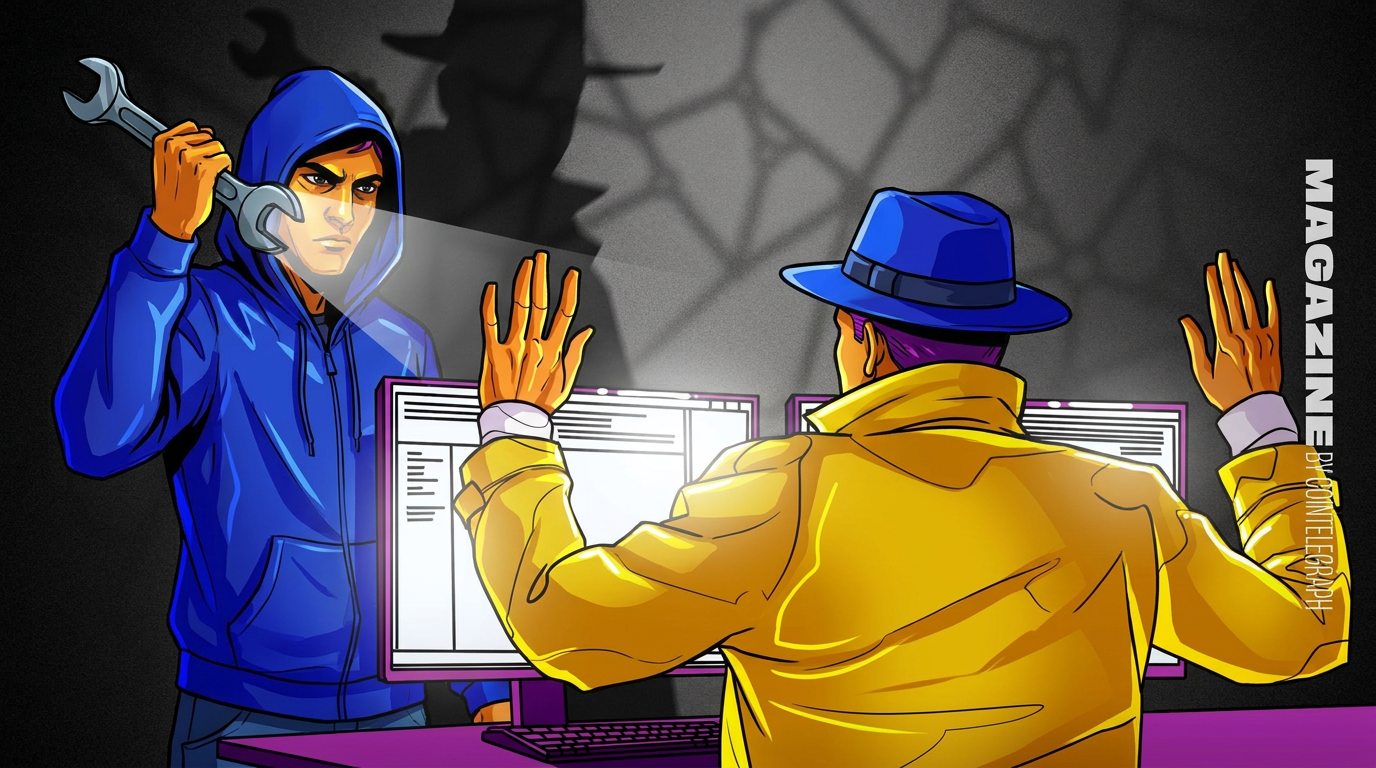
French authorities have recorded 90 cases of kidnapping, abduction, extortion, threats, and violent theft linked to cryptocurrencies in just over seven months, according to new official figures.
The statistics, provided to Cointelegraph by the French Interior Ministry, cover the period from Jan. 1 to mid-August 2026. Over the same timeframe, authorities recorded 223 arrests, and 126 people were imprisoned between January and July.
The tally works out to a new case roughly every two and a half days, although there is no official year-on-year comparison showing whether the problem has suddenly worsened: “We do not have the statistics on these items for 2025, as the recording of events began on Jan. 1, 2026,” the ministry said. With the counting only now underway, 2026 stands as the first baseline year against which future official figures can be measured.
The ministry’s numbers are strikingly higher than other public trackers of real-world crypto attacks. Chainalysis counted 30 publicly known violent crypto incidents in France through mid-2026, while noting that the true scale was “almost certainly larger.” Security firm Gart.io has tracked 73 attacks in France year to date, putting the country in the number one spot ahead of the USA on 66 real-world attacks and the UK on 27. The gaps between the tallies are partly ones of scope: the ministry figures span kidnapping, abduction, extortion, threats, and violent theft, while Chainalysis counts only publicly known violent incidents.
The rise in physical attacks on crypto holders — commonly known as “wrench attacks,” since cryptography is useless against someone wielding physical force — points to something bigger than a rash of isolated incidents. Leaked personal data may be the culprit.
So, why France?
Wrench attacks are far from a new phenomenon. Bitcoin security advocate Jameson Lopp’s long-running directory of known physical attacks has documented 365 cases across 60 countries between 2014 and 2026, with France topping the leaderboard.
What appears to be new, however, is the speed at which violent crypto crimes are spreading throughout the country. According to Chainalysis, attacks have moved beyond Paris to cities including Strasbourg, Marseille, Grenoble, Toulouse, and Nantes, with violent incidents running above the historical baseline.
Criminals are not targeting crypto-rich tourists, either: of the victims with known residency, 93% were French.
Chainalysis head researcher Eric Jardine told Cointelegraph the surge is “very likely” due to a “significant data breach.”
“These sort of breaches expose more than financial information; they reveal who holds crypto, where they live, and how to find them,” he said.
That makes physical attacks against crypto holders particularly insidious, because they can begin long before a thug shows up demanding a seed phrase — the secret word list that unlocks a crypto wallet — or a crypto transfer. The assailants first need to know who has something worth stealing, where that person lives, and how to reach them.
Jardine pointed to the 2024 compromise of the French tax authority, in which a tax official in the Paris area “leaked PII, financial and crypto holding information on French taxpayers,” as a possible accelerant. Chainalysis records show attacks surged from late November of that year.
Chainalysis also flagged a further incident in January 2026, when crypto tax reporting firm Waltio disclosed a breach affecting some 50,000 users, creating yet more useful data for attackers to mark their targets.
The breaches have fed into a broader debate over Europe’s crypto reporting rules. Francis Pouliot, founder of Canadian Bitcoin exchange Bull Bitcoin, has repeatedly challenged the EU’s DAC8 framework in France, which expands tax reporting and information-sharing requirements for crypto users across the European Union.
“DAC8 has transformed the concept of Know Your Customer into Kill Your Customer,” he said, also describing France as the “crypto kidnapping capital of the world.”
When the target isn’t the Bitcoiner
One of the most revealing changes, according to Chainalysis, may be who is being attacked. Globally, relatives and acquaintances accounted for around 25% to 30% of violent crypto incidents by early 2026. In France, the proportion was more than 40%.
In May 2026, six men allegedly tried to abduct the wife of The Sandbox co-founder Sébastien Borget from the couple’s home in Villenoy, France, with one attacker posing as a delivery driver to persuade her to open the gate.
In August, a couple in rural France reportedly endured three separate attempts to break into their home after buying a property previously occupied by crypto millionaires, after the previous owners’ tax information and address were leaked onto the dark web, according to local reports.
A similar tactic was used in 2025, when the father of a crypto entrepreneur was abducted in Paris and held for two days. The kidnappers reportedly cut off part of his and sent it to his son while demanding $5.6 million in cryptocurrency.
Jardine said the targeting of relatives and associates “suggests criminals are doing reconnaissance before they act,” whether by “monitoring social media, analyzing blockchain data, using leaked information, or receiving tips from insiders.”
That turns the usual idea of a crypto target on its head, since the person with the wallet may not be the person standing in front of the attacker.
French authorities are responding by treating the attacks as organized crime, coordinating investigations through JUNALCO, the country’s specialized organized crime jurisdiction.
The $5 wrench conundrum
Most crypto holders have learned how to protect their seed phrases, set up hardware wallets, test their environments, and avoid clicking on phishing links. Those habits remain important, but none of them will help if a bad actor already knows who someone is, where they live, and that they have something worth stealing in the first place.
Cryptography can protect a wallet, but it can’t stop an attacker with a $5 wrench.

