Fox Business Questions Commerce Secretary Lutnick's Role in Nvidia Chip-Smuggling 'Conspiracy'
Key Takeaways
- •Fox Business host Stuart Varney and Gatestone Institute researcher Gordon Chang publicly raised questions about whether Commerce Secretary Howard Lutnick was involved in a conspiracy to violate US chip export laws.
- •The scandal stems from revelations that then-Nvidia CEO Jensen Huang had an extramarital affair with an alleged Chinese spy tied to a company smuggling Nvidia's advanced chips to China.
- •Lutnick allegedly helped keep dozens of similar companies off an export blacklist, while Under Secretary Jeffrey Kessler reportedly ended a Commerce Department investigation into Nvidia's relationship with Megaspeed, the firm where suspected spy Alice Huang was an executive.
- •The revelations have prompted bipartisan calls for investigations, and White House officials are reportedly weighing whether Lutnick should be fired.
- •Lutnick has agreed to testify before the Senate Banking Committee on December 10, and former NSA analyst Ira Winkler suggested the spy's long-term access to Huang may have yielded information about President Trump's mindset.
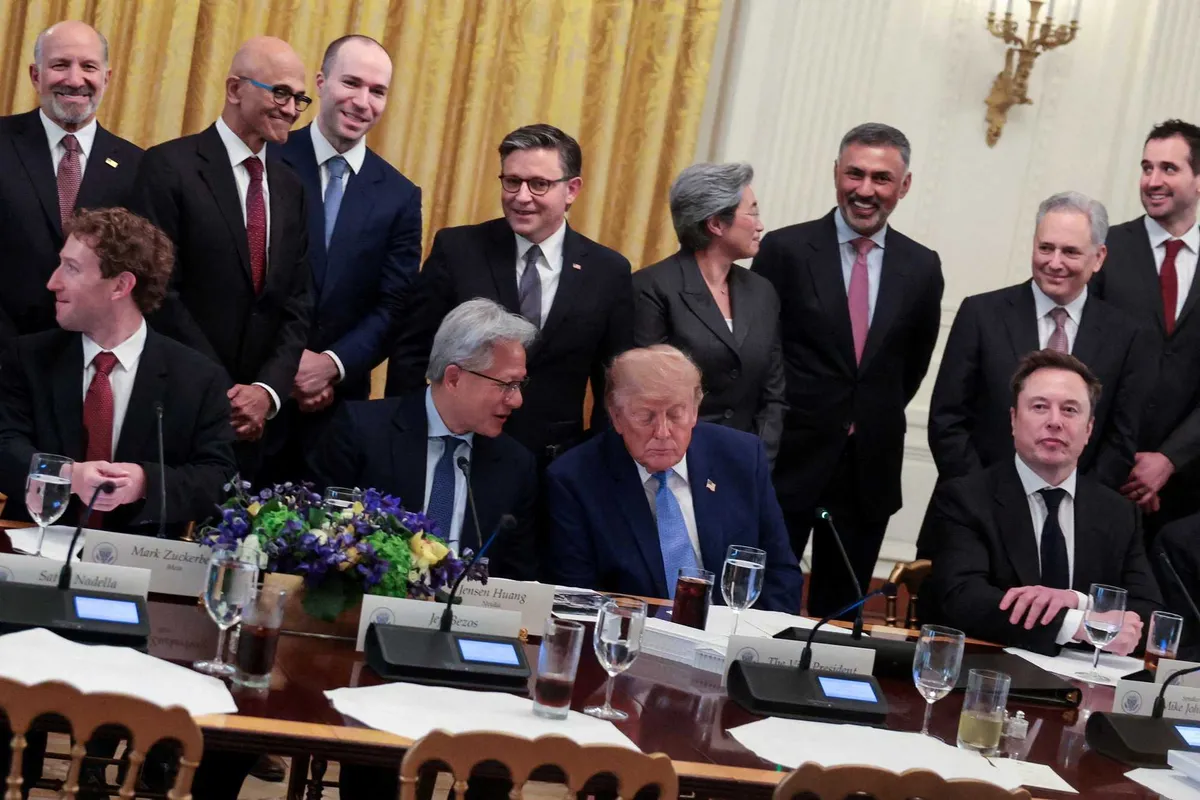
Fox Business — a network that typically extends the benefit of the doubt to allies of President Donald Trump — aired a segment on Friday that posed blunt questions about a senior administration official's potential role in what one commentator called a "conspiracy" that has shocked the world over the past week.
According to a frequent Fox contributor, Commerce Secretary Howard Lutnick "has a lot to answer for" if he was involved in schemes to smuggle banned microchips to China.
"Was there a conspiracy to flout the chip export laws?" host Stuart Varney asked. "Was Lutnick involved?"
Varney was speaking with Gordon Chang, a conservative China researcher with the Gatestone Institute, who appeared on the network to discuss the escalating scandal surrounding now-former Nvidia CEO Jensen Huang. Huang has experienced a stunning fall from grace following revelations that he engaged in an extramarital affair with an alleged Chinese spy. That spy was linked to a company that has been smuggling Nvidia's advanced microchips to China, and Lutnick appears to have played a role in keeping dozens of similar companies off an export blacklist. The scrutiny of Lutnick is not incidental: the Commerce Department, through its Bureau of Industry and Security, administers US export controls on advanced semiconductors — the restrictions that bar sales of Nvidia's most powerful chips to China — putting its leadership directly in charge of the licensing system at the center of the allegations.
The revelations have prompted bipartisan calls for investigations, and it has been reported that White House officials are weighing whether Lutnick should be fired. Lutnick has agreed to testify before the Senate Banking Committee on December 10, placing the department's export-control record before the panel with jurisdiction over US export controls and setting up the nearest scheduled opportunity for lawmakers to press him on those decisions.
On the air, Chang elaborated on the "conspiracy" allegations, saying there is "disturbing evidence" that Lutnick broke the law.
"First of all, we know that Jeffrey Kessler, Under Secretary of Commerce, killed a Commerce Department investigation into Nvidia's disturbing relationship with Megaspeed, the company of which Alice Huang, the suspected spy, was an executive," Chang explained. "Also, we know that Commerce was issuing export permits for chip sales to companies that were obviously fronts. So I think that the Commerce Secretary has a lot to answer for when he goes to Congress, because people should be asking him about that: why would they kill that investigation?"
Varney pressed further, asking whether Trump or Lutnick held any "financial interest" in selling the microchips to China.
"I suspect something," Chang asserted. "That needs to be proved. I think the FBI has to look at this. People have been saying some pretty awful things about Lutnick."
In Chang's assessment, regardless of any financial incentives, Lutnick's conduct at the Commerce Department is troubling in its own right, and the accumulating revelations "are going to lead to something much greater."
Questions loom not only over how the banned microchips were allowed to be exported, but also over Jensen Huang's close relationship with Trump over the past two years. Huang has been among several tech moguls who have forged close ties with the administration, even joining Trump for a summit in China last year — after the president had already learned of Huang's relationship with a potential spy.
"It does create questions," former NSA analyst Ira Winkler told Fox earlier this week. "It's not just one time, hey, I'm blackmailing you[.] They had long-term access and clear cooperation in many cases."
That cooperation, according to Winkler, not only resulted in Jensen Huang helping Chinese companies avoid export restrictions, but may also have allowed the spy to gather information "regarding Donald Trump's mindset." Huang, Winkler noted, "did have regular access to Donald Trump."

