Fox Business Analysts Cast Trump Economic 'Crisis' as Opportunity for 'High Earners'
Key Takeaways
- •UBS managing director Jason Katz said the Treasury bond sell-off presents a buying opportunity for high earners who can afford to invest and ride out the market turmoil.
- •Skepticism about the United States' ability to service its debts has driven down Treasury bond prices, pushing up the federal government's cost of borrowing.
- •Katz predicted third-quarter earnings reports would show growth similar to the prior quarter, with most of the gains concentrated in the artificial intelligence sector.
- •Artificial intelligence accounts for roughly one-third of U.S. economic growth and one-third of the stock market's total value, and experts have warned the AI bubble could burst or deflate.
- •Recent polls show only 17 percent of voters approve of President Trump's handling of the economy, while 65 percent say his policies have made it worse.
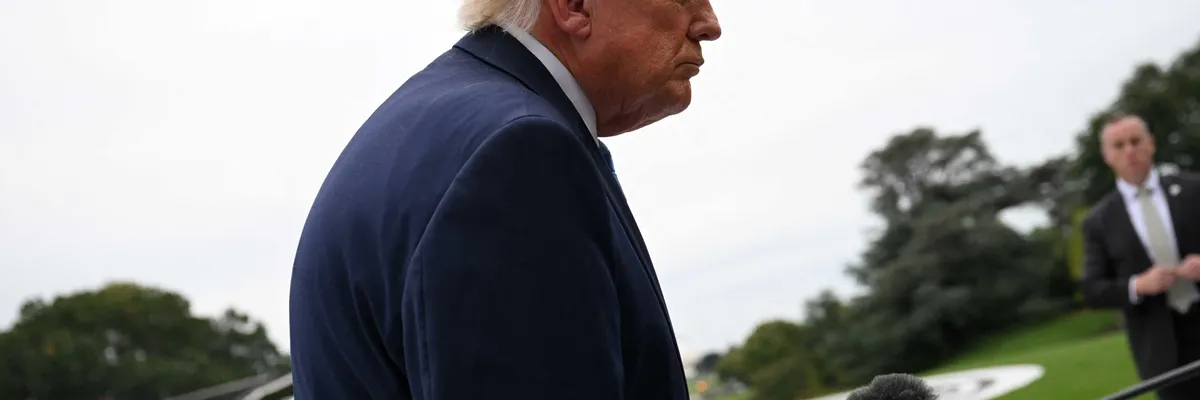
Fox Business spent Monday attempting to recast President Donald Trump's economic "crisis" as a positive development — so long as viewers happen to be "high earners." The caveat, per the network's analysts: the thesis holds only if artificial intelligence ultimately "pays off on the bottom line of America's corporations." If it does not, "we're in trouble."
The assessment came from Fox financial analyst Stuart Varney and his guest, UBS managing director Jason Katz. "So," Varney asked, "you say you've got a generational opportunity it comes to bonds?"
"At the risk of sounding overly dramatic, in crisis comes opportunity," Katz replied. "You need to buy from the fearful and sell to the greedy."
According to Katz, "People are freaking out about bonds." Indeed, Treasury bonds have seen a steep sell-off as skepticism grows over the United States' ability to service its debts — and because falling bond prices push yields up, that same skepticism translates into a higher cost of borrowing for the federal government itself. "The price is painful," Katz acknowledged, while arguing the situation is "not as bad" for a "high earner" with the means to invest in bonds and wait out the turmoil. In other words, the economic strain squeezing American household budgets was presented as a buying opportunity for those wealthy enough to act on it. "It wouldn't be so bad," Varney concurred. Katz noted broader economic "headwinds that are out there" but declined to elaborate, telling Varney, "We don't need to bore your viewers."
Katz went on to predict that the upcoming third-quarter earnings reports would show growth similar to the previous quarter, though he conceded that the bulk of that increase came from a single sector — artificial intelligence, by Varney's own accounting — that has grown increasingly unpopular with voters. "Essentially," Varney explained, "what we want to see is AI paying off on the bottom line of America's corporations." Katz underscored the point: "It's not what you want to see. It's what you have to see." Varney concluded, "And if we don't, we're in trouble." Those reports carry unusual weight given how concentrated AI's role in the economy has become.
AI accounts for roughly a third of U.S. economic growth and a third of the stock market's total value, and numerous experts have warned that the AI bubble could burst. "The economy is increasingly reliant on AI gains and the corresponding wealth effects boosting higher-income households' spending power to fuel recent growth," Michael Pearce, chief U.S. economist at Oxford Economics, told Fortune. "The economy remains sensitive to a sudden reversal of optimism on AI." That concentration is why a single sector's bottom line carries economy-wide stakes.
Public resistance to AI data centers has also intensified in recent weeks, with polls showing that 60 to 75 percent of voters oppose the facilities. According to Forbes, even if the AI bubble does not "burst," it may "deflate," leaving a wide field of economic "losers" in its wake. Trump, for his part, has argued that the country should "let Data Reign," claiming the only reason people oppose data centers is that they "want to end up being backwards and poor."
Whatever optimism Katz and Varney see for "high-end earners," it is not shared by most Americans. The latest polls show that only 17 percent of voters approve of Trump's handling of the economy, while 65 percent say his policies have made the economy worse. Consumer sentiment sits at an all-time low, and polls consistently rank the economy as voters' top consideration heading into the upcoming midterms. For readers weighing the analysts' framing against that mood, the third-quarter earnings season offers the nearest checkpoint on whether AI is paying off at the scale both analysts said the broader outlook requires.

