Texas' Most Right-Leaning County Is Shifting as Fort Worth Politics Change
Key Takeaways
- •Leigh Wambsganss, a Republican Texas State Senate candidate who once described herself as 'Ultra-MAGA,' has been removing references to President Trump and the word 'Republican' from her campaign website.
- •Wambsganss, previously the political director of Patriot Mobile, lost a February 2026 special election to Democrat Taylor Rehmet despite once being considered a strong favorite on the party's conservative fringe.
- •Rehmet said Republicans have lost support among moderates, noting that most residents are working people focused on jobs and family rather than political activism.
- •Tony Ortiz, publisher of the right-wing outlet Current Revolt, attributed much of the shift to hard-line Republican immigration policies, saying local concerns extend beyond Latinos to South Asians and Muslims.
- •Tarrant County's diversification began around 2015, though white residents still make up the majority of the county's population.
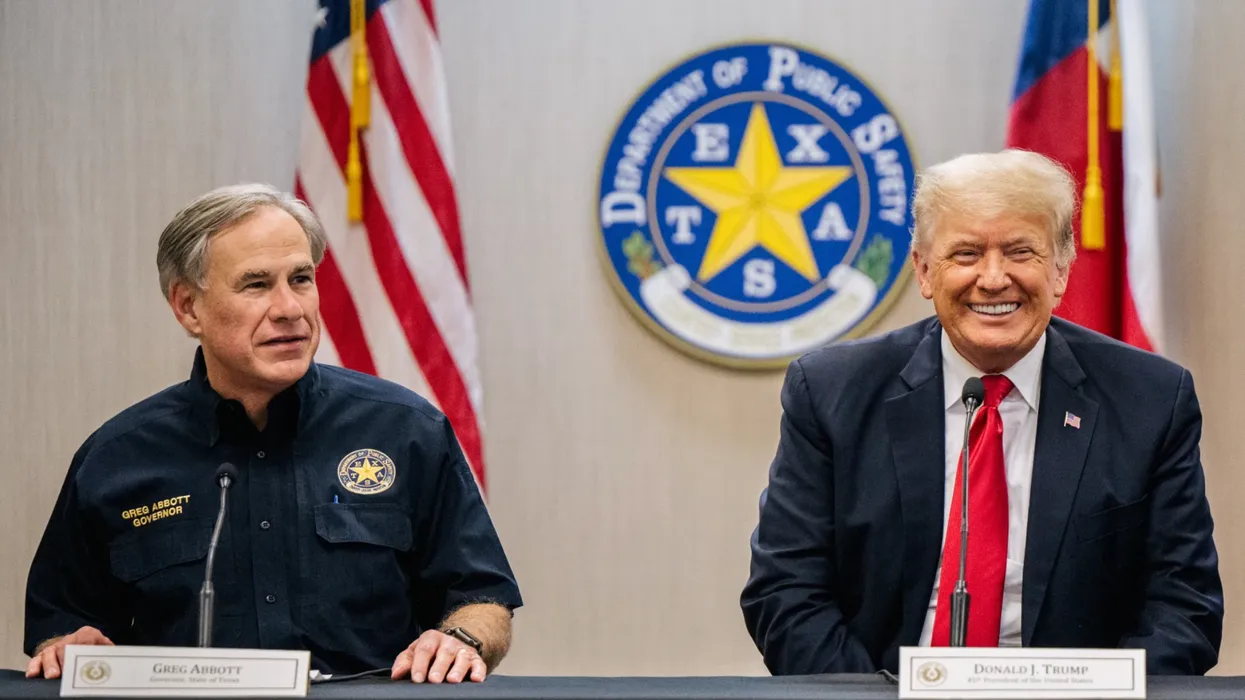
Fort Worth is not what it once was, and the political and demographic changes reshaping the city and Tarrant County are unlikely to end with the 2026 midterm elections, according to a column published Thursday by Houston Chronicle journalist and columnist Chris Tomlinson.
Tomlinson's report centers on Leigh Wambsganss, a Republican candidate for the Texas State Senate who once described herself not merely as a MAGA Republican but as "Ultra-MAGA." Like Rep. Byron Donalds (R-Fla.), she has begun scrubbing references to President Donald Trump from her campaign website — and is now removing the word "Republican" as well.
"The once bright red color is now dark blue," Tomlinson wrote.
"Wambsganss made her name as political director for Patriot Mobile, a Christian nationalist wireless provider that backed fundamentalists in school board elections," the Chronicle reported, citing the newspaper's earlier coverage of the company. "She was once considered a shoo-in on the party's conservative fringe, where Fort Worth politicians have traditionally done well."
Her trajectory changed in February 2026, when Wambsganss lost the seat to Democrat Taylor Rehmet in a special election. The report described Texas as experiencing one of the biggest political shifts since 1820, as changing demographics and economics drive social and political change. Wambsganss' campaign now looks much like Rehmet's, and Tomlinson wrote that her strategy of distancing herself from her own past "begs the question: Are voters leaving the Republican Party, or is President Donald Trump's Republican Party leaving them?"
Tomlinson placed Fort Worth's rightward tradition in historical context. Recalling a story passed down from his great-grandfather, he described a time when "white men chased Black Union soldiers from a polling station in Falls County." His grandfather belonged to the Dallas Ku Klux Klan, which believed "God intended for them to rule the world," and the Klan controlled both Dallas and Fort Worth. Of Texas' 254 counties, "Fort Worth and Tarrant County have always leaned hardest to the right," Tomlinson explained. The depth of those roots is what makes the February result stand out in the column: a shift registering in the county that has leaned hardest right for generations points to forces larger than any single candidate or campaign cycle.
Rehmet told Tomlinson that Republicans have shed support among moderates. "They've lost a lot of folks in the middle," he said. "We can talk here all day about Republican-Democrat, but most people are just regular working folks. They don't have the luxury to really be super politically active. They're working two jobs. They're taking care of their kids. And those are the folks that I think of whenever I'm ready to go serve, because that's the majority of this district."
Tony Ortiz, publisher of the right-wing daily newspaper Current Revolt, told Tomlinson that much of the shift stems from immigration, pointing to hard-line Republican policies aimed at removing anyone who may look like an immigrant, regardless of whether they are criminals or documented. He said the concern in North Texas is not limited to Latinos, noting that residents there are worried about "South Asians and Muslims."
Tarrant County's diversity shift began in 2015, though white residents still make up the majority of the county's population — a reminder that the political changes Tomlinson describes are playing out on top of a demographic transition roughly a decade in the making. Ortiz, who identifies as "brown" and embraces his Mexican American heritage, described the reaction among some residents as a late-arriving realization of demographic change.
"A lot of this is like a sudden realization of an entire demographic realizing that they are becoming the minority," Ortiz said. "You blink and you've got all of these temples and restaurants and mosques and different driving habits and different languages, and you think, 'Whoa, what happened?'"
"You think, 'I need to do something,' but you're a little late in doing something. You should have been doing something maybe five, seven or eight years ago," he added.
President Donald Trump and Vice President JD Vance are scheduled to appear in Texas this week, where they will celebrate the work they say they have done on "the economy," according to another Houston Chronicle report. Their visit lands as the questions Tomlinson raises — whether voters are leaving the Republican Party, or the party is leaving its voters — remain unresolved heading toward the 2026 midterm elections, the next scheduled test of Tarrant County's shifting political map.
This article is based on Alternet's report on Tomlinson's Houston Chronicle column.

