Former Bush-Appointed FTC Chairman Flags 'Fatal' Flaw in Trump DOJ Probe of TV Networks
Key Takeaways
- •The Justice Department announced an antitrust investigation into ABC, CBS, CNN, Fox News and NBC after the networks temporarily stopped sharing pooled White House video coverage in September.
- •The administration characterizes the networks' coordinated pause as an illegal group boycott that could violate the Sherman Act, the 1890 statute anchoring U.S. competition enforcement.
- •Former FTC Chairman William Kovacic described the DOJ's legal justification as "feeble" and warned that Trump's repeated public attacks on networks could be fatal to the case by reinforcing claims of political retaliation.
- •Other legal experts, including former DOJ antitrust chief Bill Baer and American Enterprise Institute senior fellow Clay Calvert, argued that an editorial decision about coverage does not constitute the commercial coordination the Sherman Act targets.
- •A federal judge ordered that the banned networks be allowed White House access, and pooled coverage has resumed, though restrictions on Air Force One pool assignments remain in place.
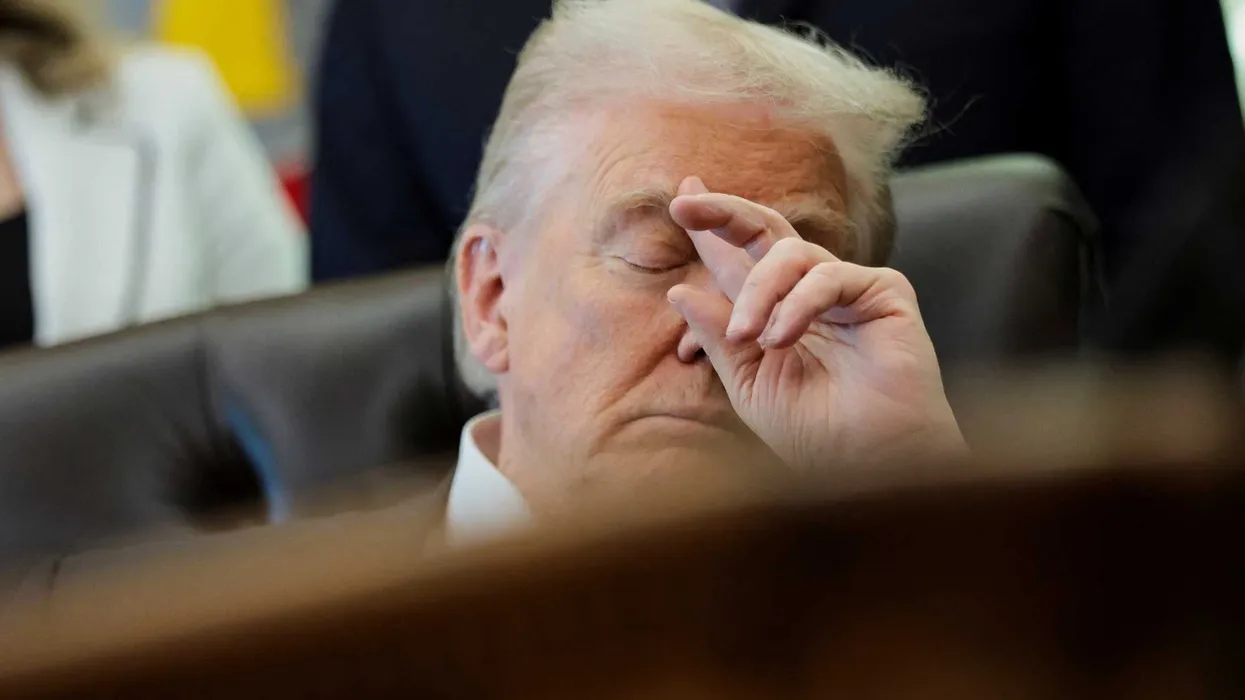
A former official in the George W. Bush administration says President Donald Trump's Justice Department may have already undermined its latest investigation into five television networks, a probe that could end up in court.
William Kovacic, whom Bush appointed as chairman of the Federal Trade Commission in 2008, described the DOJ's legal justification as "feeble" in comments to The Washington Post. The FTC he once led enforces federal antitrust law alongside the Justice Department, making his read of the government's theory a practitioner's critique of the statute in play.
Kovacic singled out Trump's own public statements about the news organizations as a problem in themselves. "This will be fatal to the case," he warned, arguing that the president's remarks bolster the networks' contention that the investigation is politically motivated.
The Justice Department announced over the weekend that it is investigating ABC, CBS, CNN, Fox News and NBC for possible antitrust violations. The probe followed the networks' decision in September to temporarily stop sharing pooled White House video coverage — a long-standing arrangement in which a rotating pool of journalists films presidential events and shares the footage with outlets that lack direct access. The move came in response to the Trump White House banning CNN, Politico and MS NOW from White House grounds and stripping the affected journalists of their press passes.
The administration character the networks' show of solidarity with their banned counterparts as an illegal boycott that could violate federal antitrust law — specifically the Sherman Act, the 1890 statute that anchors U.S. competition enforcement. Kovacic, however, does not believe the argument will hold up in court. He wrote that the networks could cite Trump's repeated attacks branding their reporting as unfair and "fake news" as evidence that the administration is punishing them for their coverage rather than for any legitimate legal reason.
Other legal experts echoed Kovacic's assessment. Bill Baer, who oversaw antitrust enforcement at the Justice Department under former President Barack Obama, said the investigation "looks like total retaliation."
Clay Calvert, a senior fellow at the conservative-leaning American Enterprise Institute, also questioned the White House's legal theory. "There's no boycott over a business activity," he argued. "It's a decision not to give him the coverage. They don't have to cover him in the first place."
Antitrust expert Diana Moss of the Progressive Policy Institute made a similar point, noting that illegal group boycotts typically involve efforts to restrict competition. Taken together, the experts' comments frame the dispute as turning on a threshold question: whether an editorial decision about coverage can amount to the kind of commercial coordination the Sherman Act targets.
A federal judge subsequently ordered that the banned networks be permitted access to the White House, and the networks eventually resumed pooled coverage. The ban affecting Air Force One pool assignments, however, remains in place.
The DOJ has defended its position by arguing that the boycott amounted to a coordinated effort among commercial competitors and could therefore violate the Sherman Act. A court has yet to determine whether the networks broke antitrust laws, and it remains to be seen how the investigation unfolds.
In a separate legal battle, ABC has challenged the Federal Communications Commission's review of its broadcast licenses, arguing that the administration is violating its First Amendment rights.

